Name/Title
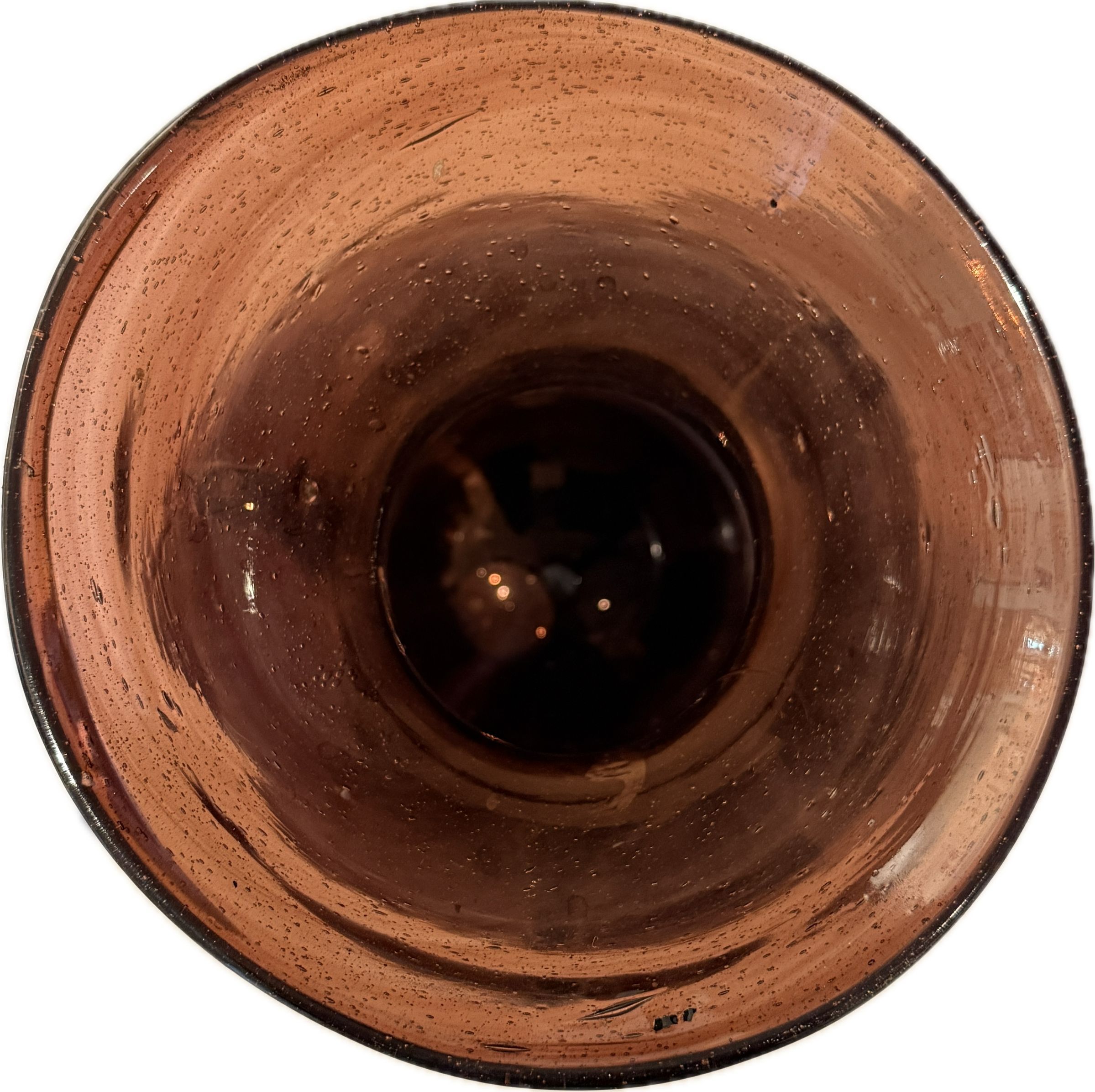
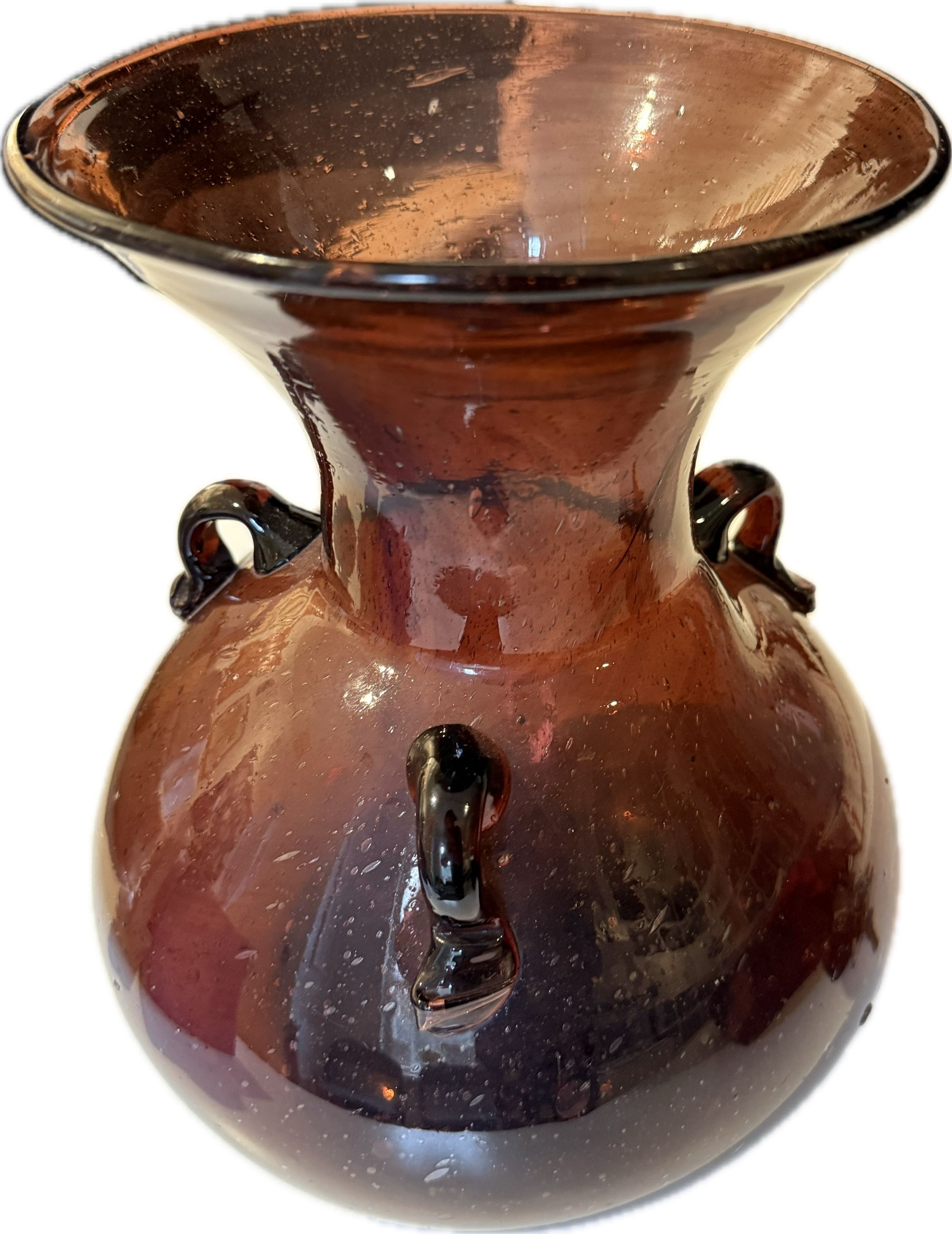
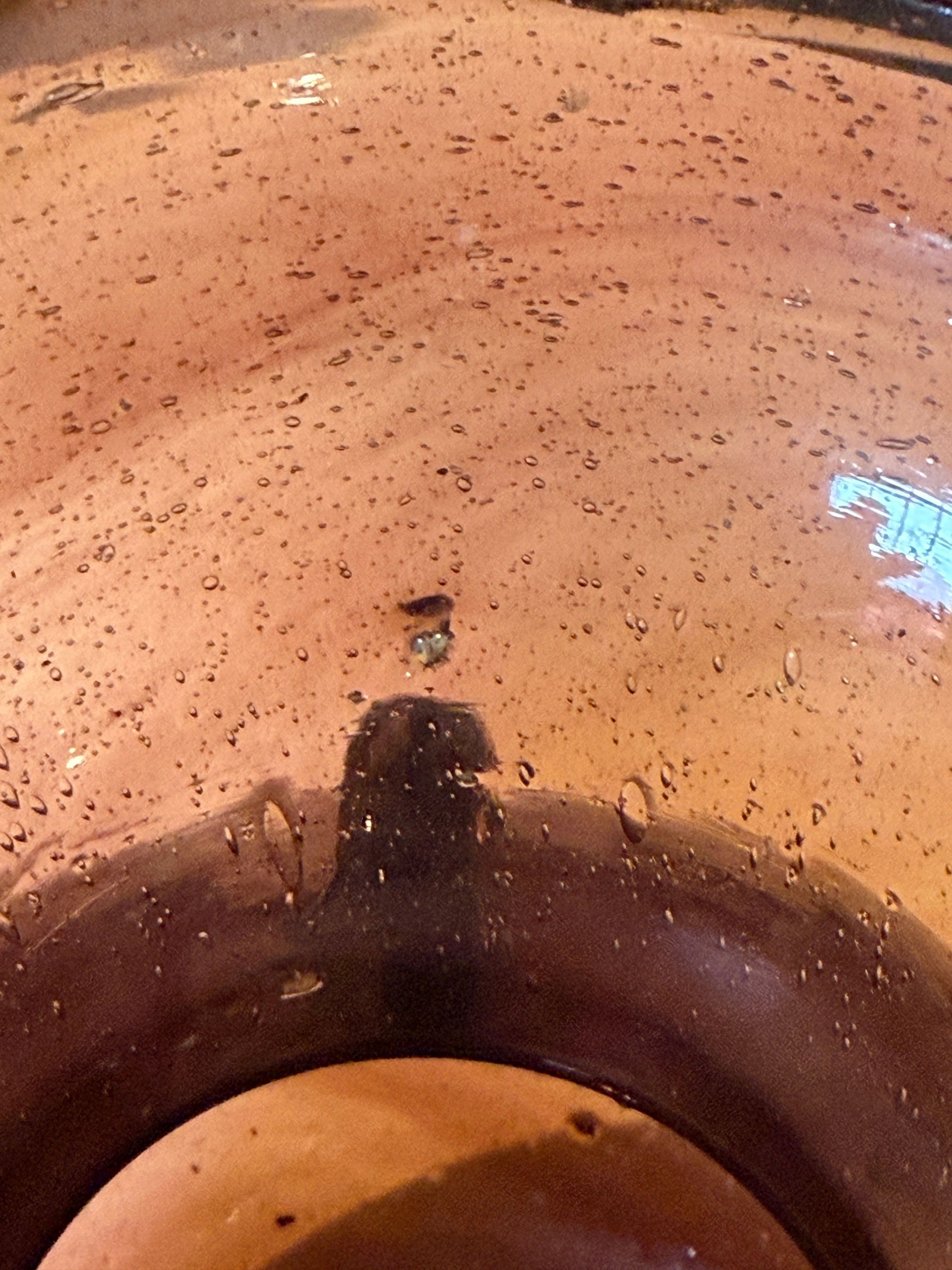
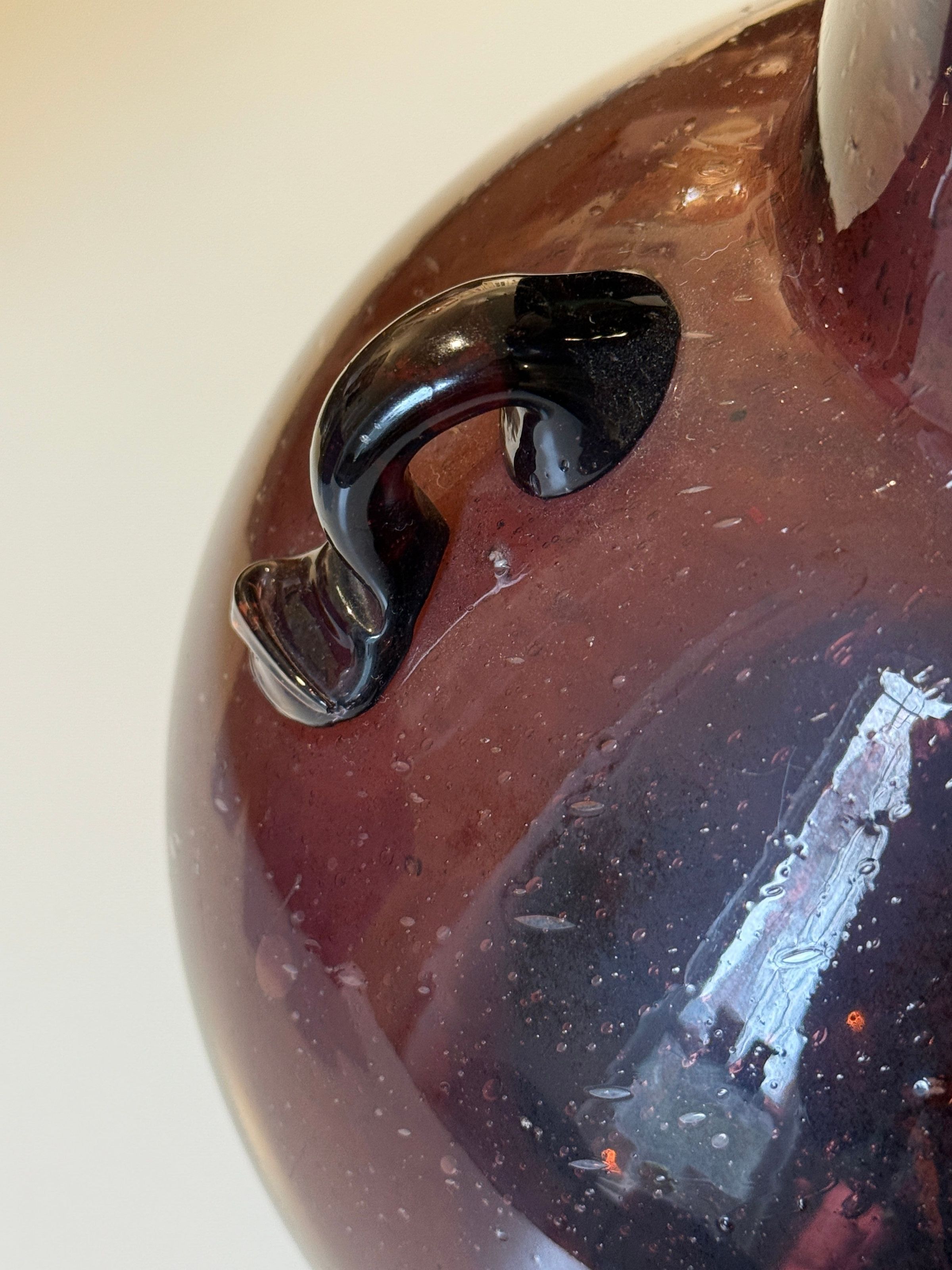
Armenian Glass Vessel, Hand blown (1960-1962)Entry/Object ID
2023.25.28Description
In 1922, Armenian artisans Neshan Balian and Megerditch Karakashian, having arrived in Jerusalem a few years earlier with master ceramist David Ohannessian, established their own workshop on Nablus Road under the name "Palestine Pottery." During the British Mandate period, the studio became known for producing a wide variety of decorative objects, including hand-blown glass vessels and ceramic tiles, blending traditional Kütahya and Iznik influences with local Palestinian and Christian motifs. These early decades were marked by experimentation with both ceramic and glass forms, catering to growing interest in handcrafted Middle Eastern decorative arts among residents, pilgrims, and tourists.
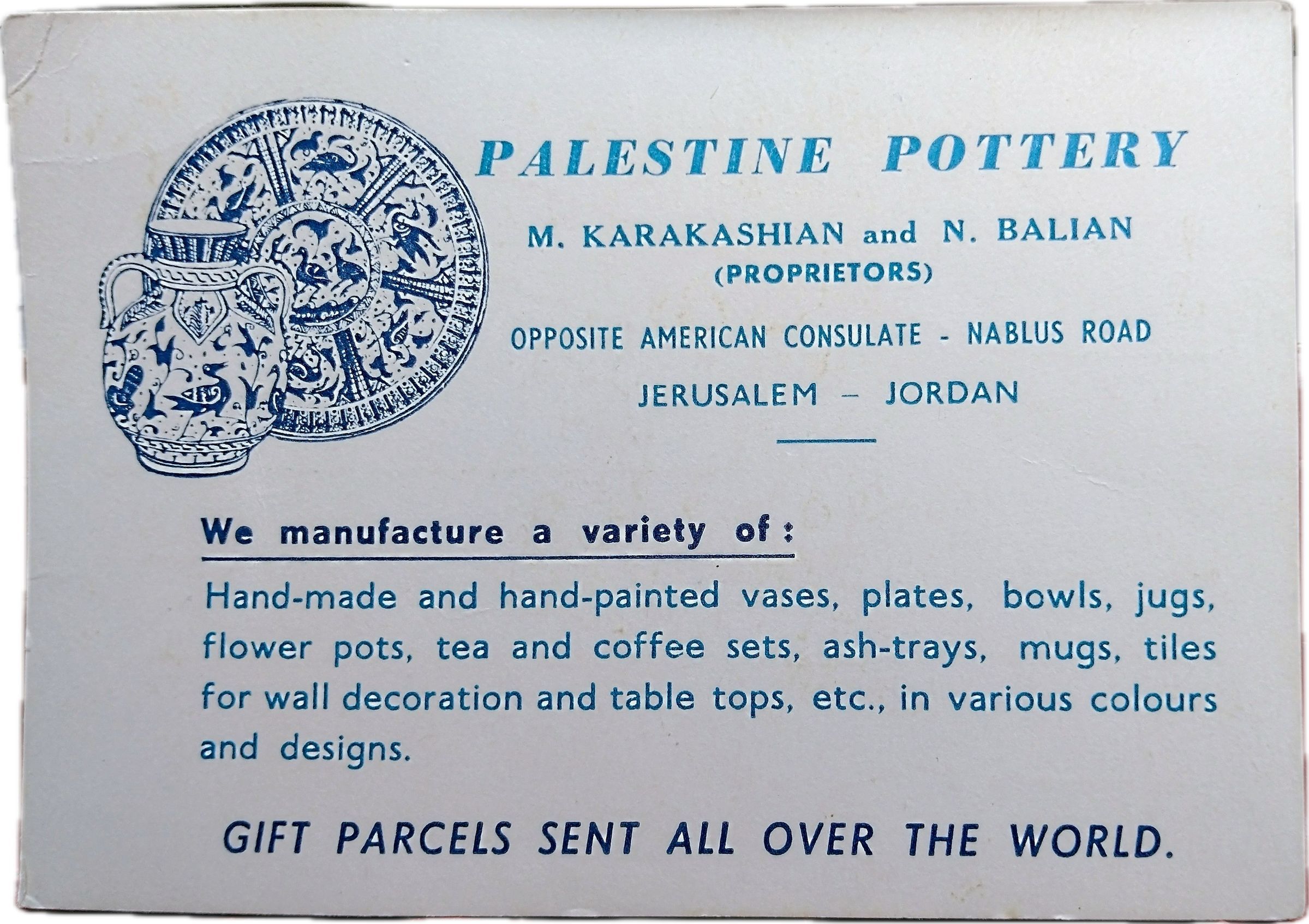
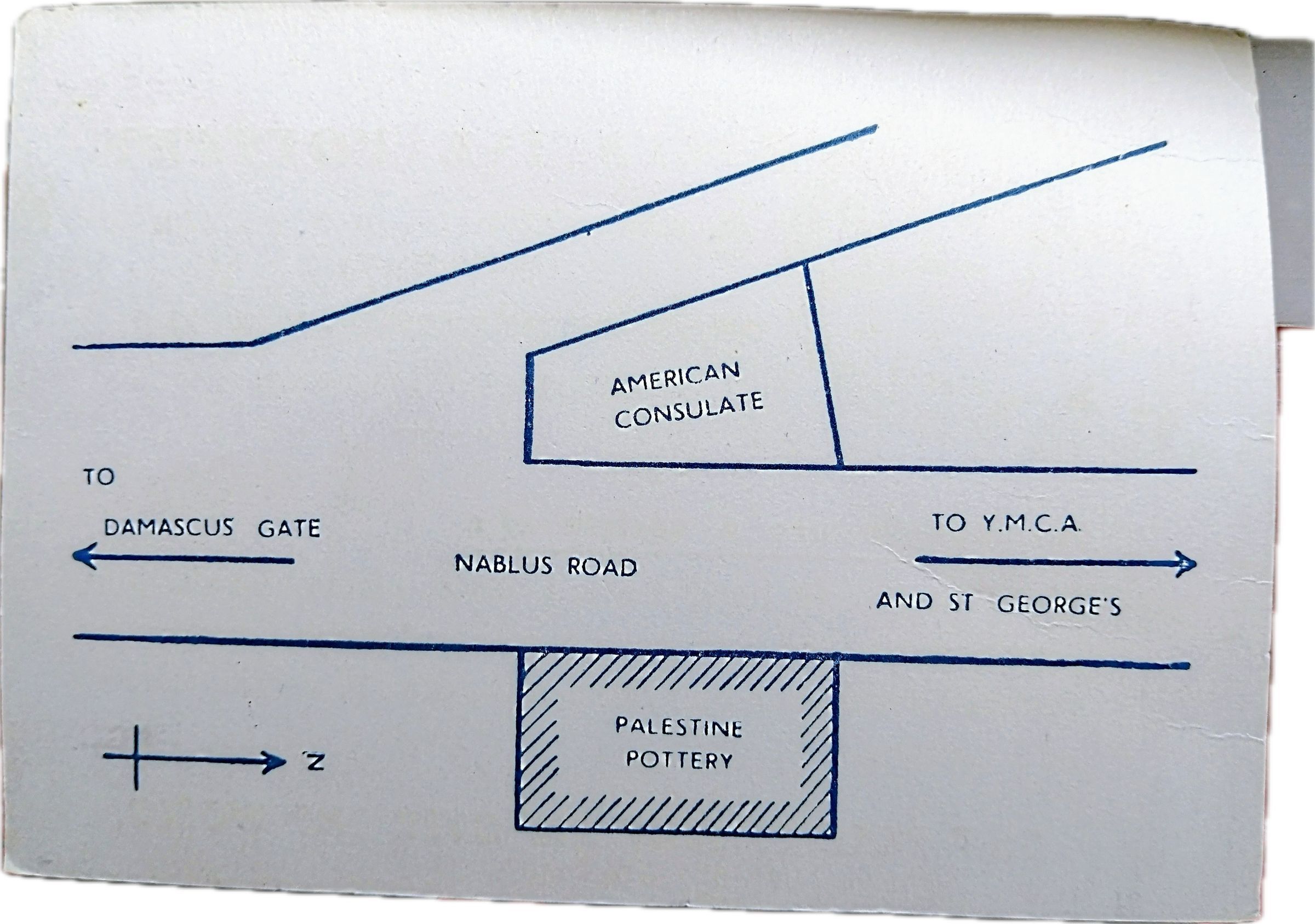
After 1948, the enterprise took on both names for a short time, then became Jerusalem Pottery, continuing under the Balian family, while the Karakashians later opened their own workshop nearby. The Levantine Ceramics Project notes that the enterprise founded in 1922 as Palestine Pottery “became known as Jerusalem Pottery” in 1948. However, extant ephemera demonstrates that the Palestine Pottery name persisted into the Jordanian administration of East Jerusalem (1948–1967). A business card accompanying the donation reads “Palestine Pottery, Jerusalem, Jordan,” indicating that the earlier name remained in use alongside—or perhaps interchangeably with—Jerusalem Pottery well into the 1960s.
Over time, the business shifted focus primarily to ceramics, with later generations, including the celebrated artist Marie Balian, elevating its tilework into large-scale mural art. Yet the period of "Palestine Pottery" remains significant for its role in expanding Jerusalem’s artisan economy, introducing hand-blown vessels alongside decorated tiles, and laying the foundations for what is now one of Jerusalem’s oldest continuously operating family craft studios.
Citations
Al‑Kharouf, Mustafa. “Four Generations and 100 Years of Ceramic Artistry: The Balian Design Studio.” Jerusalem Story, May 13, 2022. Accessed August 22, 2025.
https://www.jerusalemstory.com/en/blog/four-generations-and-100-years-ceramic-artistry-balian-design-studio
Tchekhanovets, Yana, and Doron Ben‑Ami. Kiln/Workshop: Palestine Pottery // Jerusalem Pottery, Jerusalem (Israel‑Palestinian Authority/Central Highlands). 20th century. Levantine Ceramics Project. Accessed August 22, 2025.
https://www.levantineceramics.org/kilns/186-palestine-pottery-jerusalem-potteryCollection
Permanent CollectionMade/Created
Artist
Palestine Pottery, M. Karakashian and N. BalianManufacturer
Palestine Pottery, M. Karakashian and N. BalianDate made
1960 - 1962Materials
Material
GlassMaterial Notes
Balian and Kirakoshian are Armenians in Jerusalem.Relationships
Related Places
Notes
type: component-origin
component: glass
date: 1960-1962
certainty: precise
notes: The glass vessel was made in Jerusalem, and purchased by Rose Jamushian Keilany. It may or may not have been transported to Damascus prior to the next location.Notes
type: travel
date: 1960-1967
certainty: approximate
notes: The glass vessel was transported to and stored in Rose Jamushian Keilany's home in Tennessee until 2025.Notes
type: travel
date: 2025
certainty: precise
notes: The glass vessel was acquired by Kerry Lansford.Notes
type: travel
date: 2025
certainty: precise
notes: Kerry Lansford donated the object to the museum.General Notes
Note
The original purchaser was contacted in the writing of this entry and indicated the following on August 26, 2025: "I was in Damascus 1960-62. I did visit Jerusalem but not recalling the exact date. It was under the governance of Jordan... Yes I would like name associated with this antiquity. I was working at the American Embassy in Damascus and taking many trips Beirut, Jordan, Egypt,Cyprus,. Also I am a descendant of the Armenian Genocide . Rose Jamushian Keilany. The vase was bought possibly in late 61 (not sure)."