Name/Title
Pendant of Imprisoned Palestinian in Ansar Prison, Handmade (1982-1984)Entry/Object ID
2024.10.14bTags
On ViewDescription
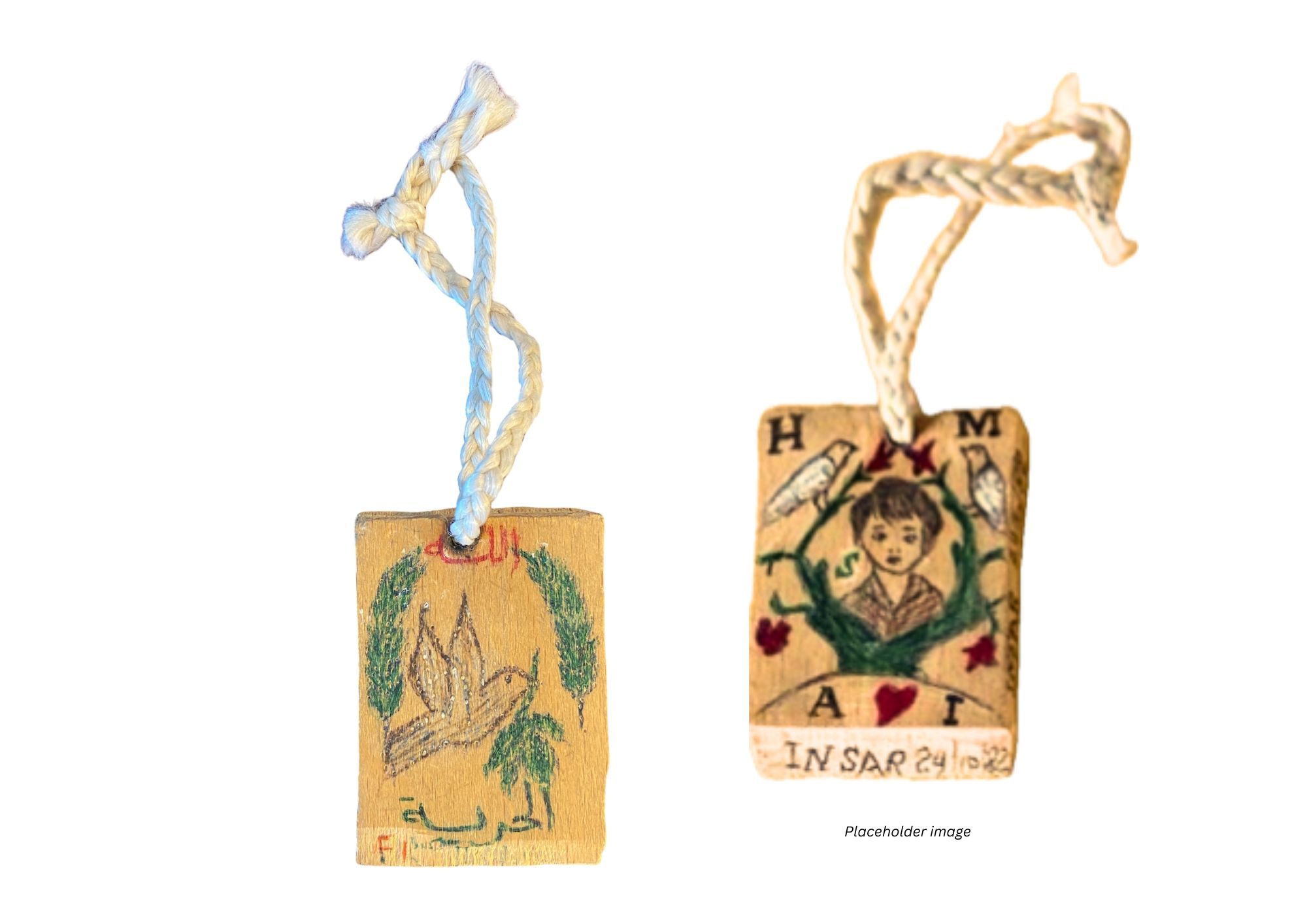
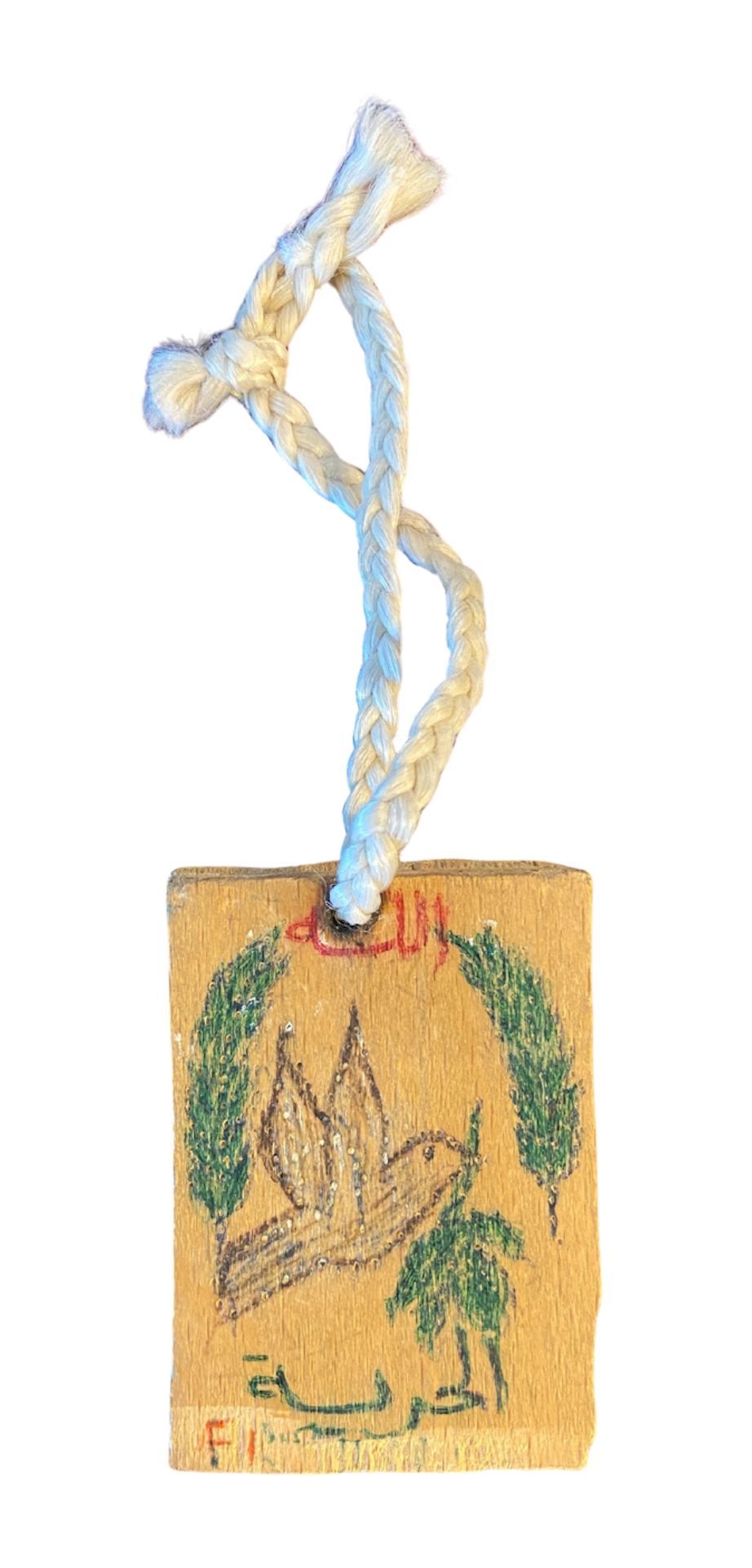
These are two hand-carved wooden pendants made by an imprisoned Palestinian in Ansar Prison in southern Lebanon. After the 1982 Israeli invasion of Lebanon, the occupation forces built a prison camp outside Ansar (Arabic: أنصار; also spelled Insar), where imprisoned people lived in small tents surrounded by four-meter-high barbed-wire fences. Ansar was known for its extremely poor conditions and its abusive treatment that included torture, rape, and starvation. Twelve thousand detainees passed through its gates; the youngest was twelve, the oldest was eighty-five, and nearly ninety percent were civilians. Despite these conditions, small materials circulated inside the camp—ink pens, wood scraps, bits of cord, and improvised tools—accessed only sporadically through guards, visitors, or shared prisoner supplies. Each pendant is cut from a thin scrap of wood and decorated with red, green, and black ballpoint-pen ink, drawn with the steadiness and intention of someone working with extremely limited means.
Side 1: Dove and Laurel
The first side of the pendant depicts a dove carrying a branch, framed by an arch of green leaves that may reference laurel, olive, or another emblem of steadfastness. Beneath the dove is a small red mark and faint Arabic writing, possibly the word al-hurriya (freedom). The drawing carries the layered symbolism common in prison-made art: the dove as a messenger, the branch as peace, return or reconciliation, and the wreath-like arc as a gesture toward victory. As with all such objects, the specific intention is unknown—whether it referenced the maker’s own hopes, a person waiting for him outside, or an idea of peace held privately during captivity.
Side 2: Portrait and Initials
The second side of the pendant features a central portrait of a young boy, framed by a green vine or wreath, with two birds or doves at each side and scattered red stars. At the top appear the initials H and M, with the letter S placed nearest to the boy; this arrangement of H M S echoes the same initials found on the wooden comb (2024.10.14a) in the museum’s collection. Below the portrait appear the letters A and I with a red heart between them, and the bottom edge is inscribed INSAR 24 18 82, anchoring the object directly to Ansar and possibly marking a date of imprisonment, release, or commemoration. The initials raise questions that will remain unanswered: Who was H M S? Who was the boy? Who were A and I? Was this portrait drawn from memory, from longing, from grief—is the child still alive?Collection
Permanent CollectionRelationships
Related Places
Notes
type: component-origin
component: wood, ink
date: 1982-1984
certainty: precise
notes: The wooden pendant was made by an imprisoned Palestinian man in Ansar Prison, and given to another imprisoned Palestinian man, Mahmoud Kassem.Notes
type: travel
component: wood, ink
date: 1984
certainty: precise
notes: Mahmoud Kassem was released from Ansar and carried the wooden pendant, along with other objects, to Ain al-Hilweh Camp, where he worked in a small health-care unit with the donor, Marcia Stone, and it was there that he gave the objects—including this wooden pendant—to Stone.Notes
type: travel
component: wood, ink
date: 1985-2024
certainty: precise
notes: Stone eventually retires in Seattle, Washington and determines that she would like to donate the object to the museum.Notes
type: travel
component: wood, ink
date: 2024
certainty: precise
notes: Stone donates and ships the objects to the Museum of the Palestinian People.Related Entries
Notes
2024.10.14a
2024.10.14c
2024.10.14d
2024.10.14e