Note Type
Historical NoteNote
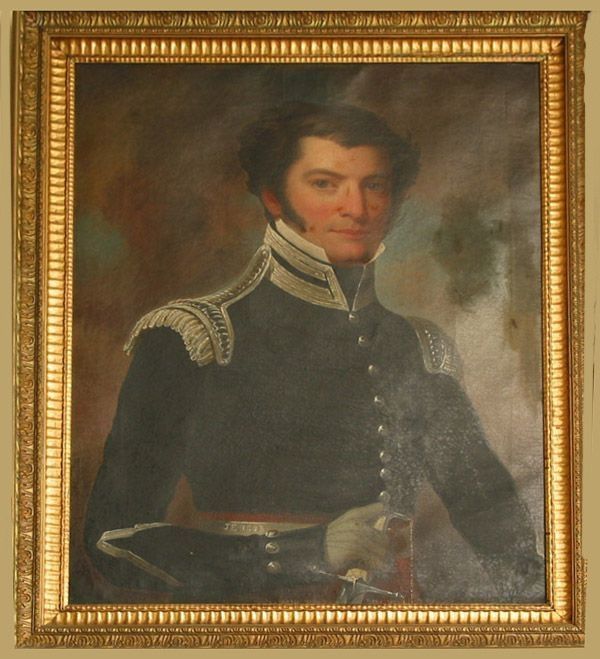
Pierce Mason Butler was born on April 11, 1798, at Mount Welling Plantation, the family estate in Edgefield District, to William Butler and Behethland Moore Butler. Butler attended Moses Waddel’s academy at Willington and graduated from South Carolina College.
On August 13, 1819, Butler was commissioned a second lieutenant in the US Army. Three years later Butler was promoted to first lieutenant and transferred to the U.S. Seventh Infantry Regiment at Fort Smith, Arkansas Territory. Butler married Miranda Julia Duval on May 22, 1826.
On October 1, 1829, Butler resigned his commission and returned to South Carolina. He established residence near Columbia at Dogwood Plantation, a 154-acre plantation worked by twenty-seven enslaved people. In 1830 he secured an executive position with the Columbia branch of the Bank of the State of South Carolina, serving as branch president from 1833 until 1836.
In September 1832 the voters of Richland District elected Butler to the state nullification convention. Butler attended as a dedicated nullifier and served on the “Committee of Twenty-One,” which drafted the Ordinance of Nullification. Butler retired from public affairs to concentrate on his business concerns.
During the Second Seminole War, Lieutenant Colonel Butler. commanded the South Carolina Mounted Volunteers. However, he spent most of his tour of duty at Tampa Bay as commandant of a munitions depot. In April 1836 he was granted an honorable discharge due to crippling arthritis.
On December 19, 1836, the General Assembly elected Butler to the governorship, where he served until 1838.
In August 1841 President John Tyler appointed Butler federal agent to the Cherokee. He held this position until 1845, when ill health forced his resignation. At the outbreak of the Mexican War in 1846, Butler was appointed colonel and commander of the Palmetto Regiment. On August 20, 1847, while leading his troops against a Mexican position at Churubusco, Butler received a serious leg wound. Despite the injury, he remained with his command. Several minutes later he was killed instantly when a musket ball penetrated his skull.