Name/Title
Judge John OvertonEntry/Object ID
Overton, Judge John2Description
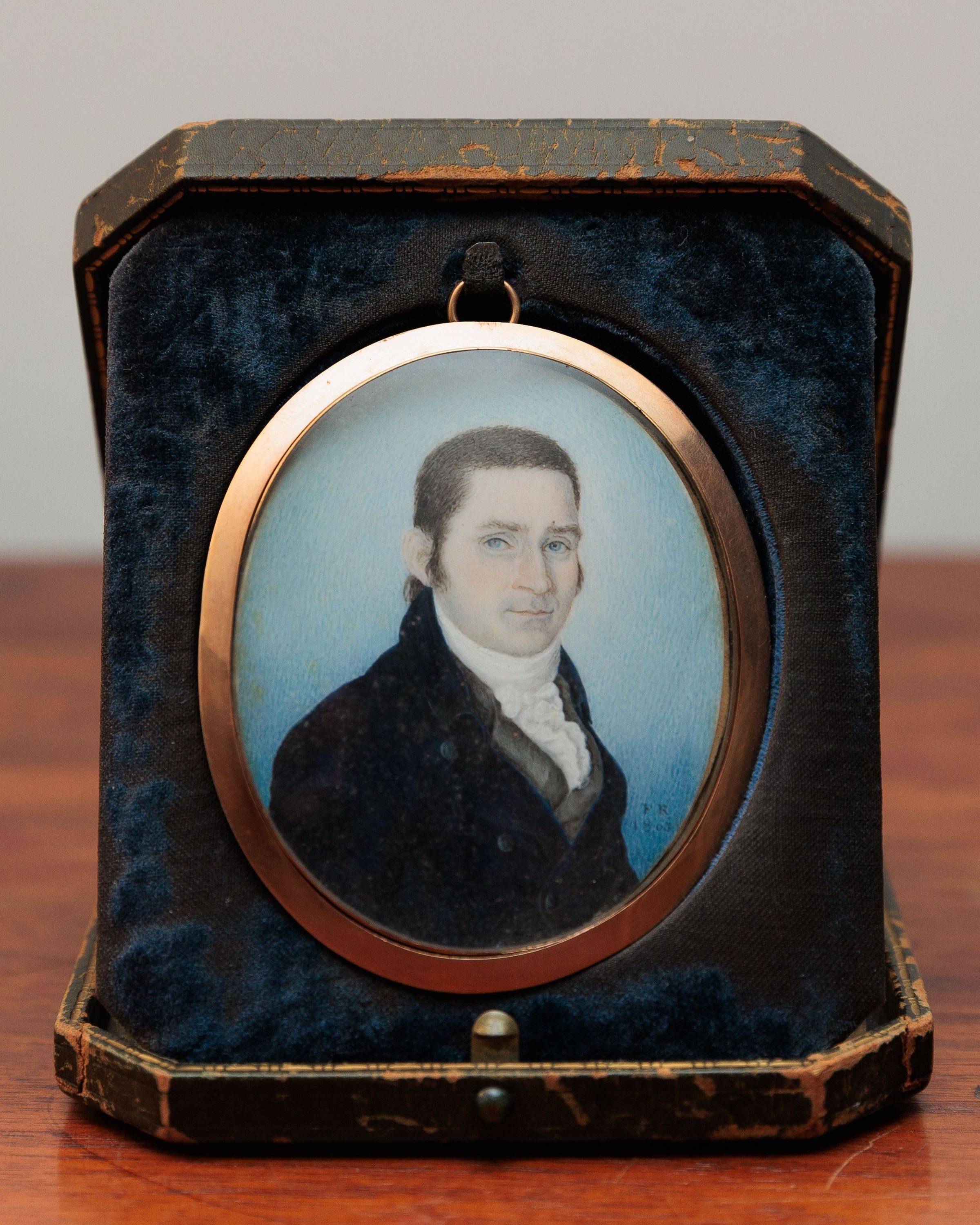
Miniature portrait of Judge John Overton at about the age 37. He is dressed in a dark coat over a white ruffled shirt.Type of Painting
Portrait MiniatureContext
French Artist Francis Rabineau is known to have worked in New Jersey, New York, Philadelphia, North Carolina, and VirginiaCollection
Travellers Rest Historic House MuseumMade/Created
Artist Information
Artist
Rabineau, Francis, active 1775-1808Role
PainterDate made
1803 - 1804Inscription/Signature/Marks
Type
Date, 1803Location
FrontTranscription
F.R.Type
InscriptionLocation
Back of caseTranscription
Judge OvertonType
DateLocation
Back of caseTranscription
1804General Notes
Note Type
Historical NoteNote
John Overton was born in Louisa County, Virginia, on April 9, 1766, to James Overton and Mary Waller Overton. He moved to Nashville in 1789 to pursue law. That year, he represented Sumner County as a delegate to ratify the Constitution in Fayetteville, North Carolina. Overton was responsible for hand-copying some of Tennessee's earliest land records from archives in North Carolina to ensure proper title claims upon statehood. He served as Tennessee's collector of the first excise tax on whiskey, records of which reside with the State Library in Nashville. In 1810, he was elected to succeed Andrew Jackson on the Superior Court, the precursor to today's Tennessee Supreme Court. His work on the court ushered in Overton's Reports, a legal digest of cases heard before the Superior Court. He married Mary McConnell White May, the widowed daughter of Knoxville's founder James White, in Knox County on July 28, 1820. He began work on his home, Travellers Rest outside of Nashville, where he enslaved at least 50 men, women, and children to work the land and care for the household. His extensive land dealings include the ownership of a 5000 acre tract which would eventually become the city of Memphis. Overton served as close advisor to Andrew Jackson during his campaign and first term as president. He died on April 12, 1833 and is buried in Mt. Olivet Cemetery in Nashville.Create Date
January 10, 2026Update Date
March 25, 2026