Name/Title
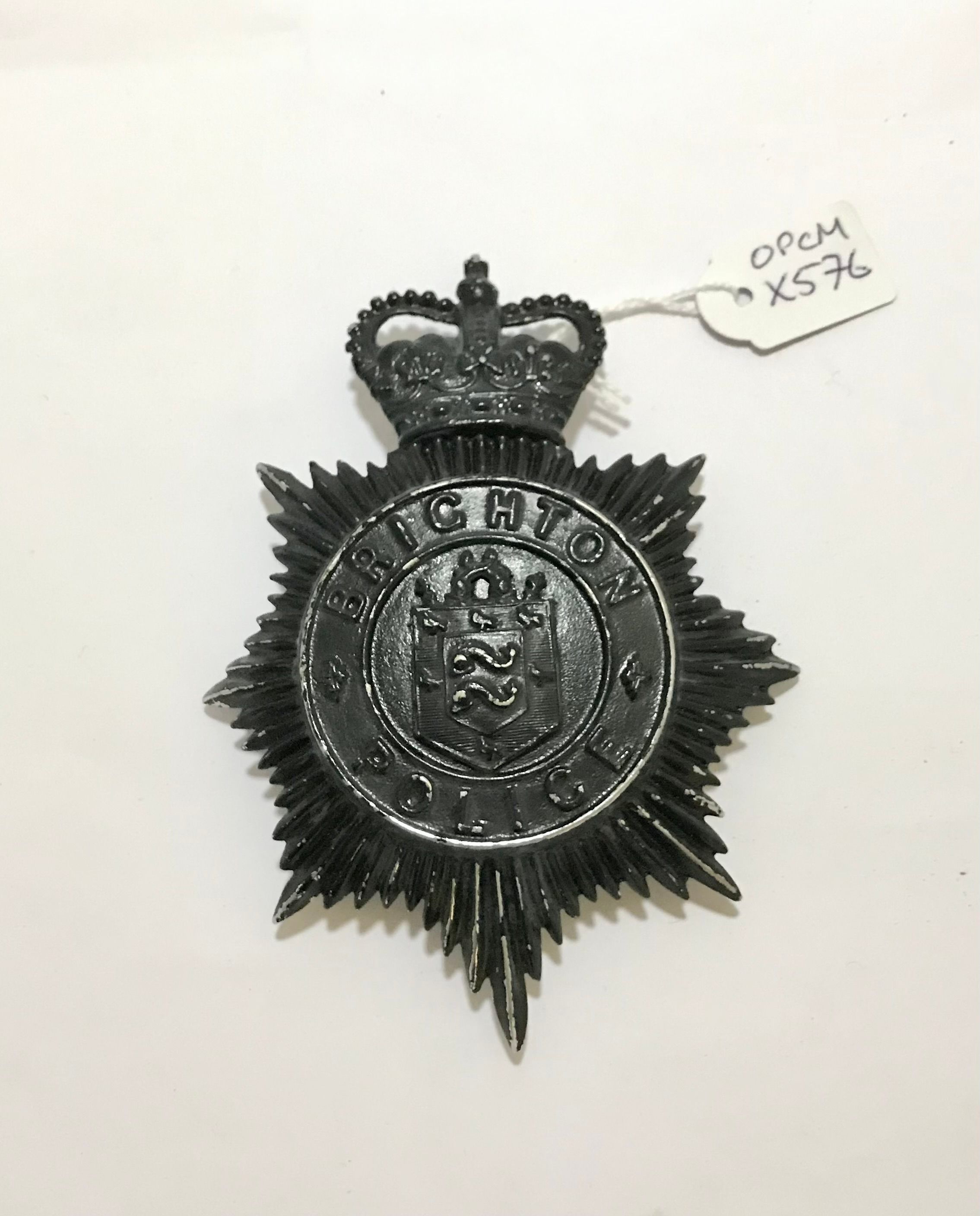
Brighton Borough Police black painted night helmet plate 1952-1967Entry/Object ID
576Description
Black painted Brunswick Star Queen's Crown Brighton Borough Police helmet plate, marked "Brighton Police", with seperate coat of arms centre also painted black.Use
For use on a police helmetContext
The use of a "Queen's" or St. Edward's Crown on this helmet plate, dates it from 1952-1967. Generally speaking black painted helmet plates such as this were intended for use during nightime, with almost identical chrome or white metal ones being used during the day. The rationale was that a black helmet badge would not reflect as much light at night and alert a criminal to an officer's presence, and this was the practice in Brighton, with different helmets being worn at night and during the day.
This particular plate is a little unusual in that normally black helmet plates are painted black over the base metal and have a separate chrome or white metal plated detachable centre. This example appears to have been a chrome plated badge that has been completely painted black. The fact that the museum has at least 2 other similar completely black Brighton helmet plates from this period suggests this was common practice, with Brighton foregoing the normal practice of having chrome or white metal centres, instead painting either them or the whole chromed badge black. Reports from officers who served in Brighton in the late 1950s indicate that new officers were instructed to paint white metal badges black to use at night, themselves, and this DIY approach probably explains the various shades of black that were used (compare this badge to item 575). Totally black Brighton badges dating to before 1952 with King's crowns are also exist, so this practice seems to have been relatively long established in the force. It is not known how prevalent it was in other areas, as photographs of officers at night are rare and most black police badges in collections have white metal centres.
This style of badge is called a Brunswick star and its use on police helmets goes back to the 1870s. However it only became more common after 1934 when the Home Office attempted to standardise police uniforms and insignia.