Name/Title
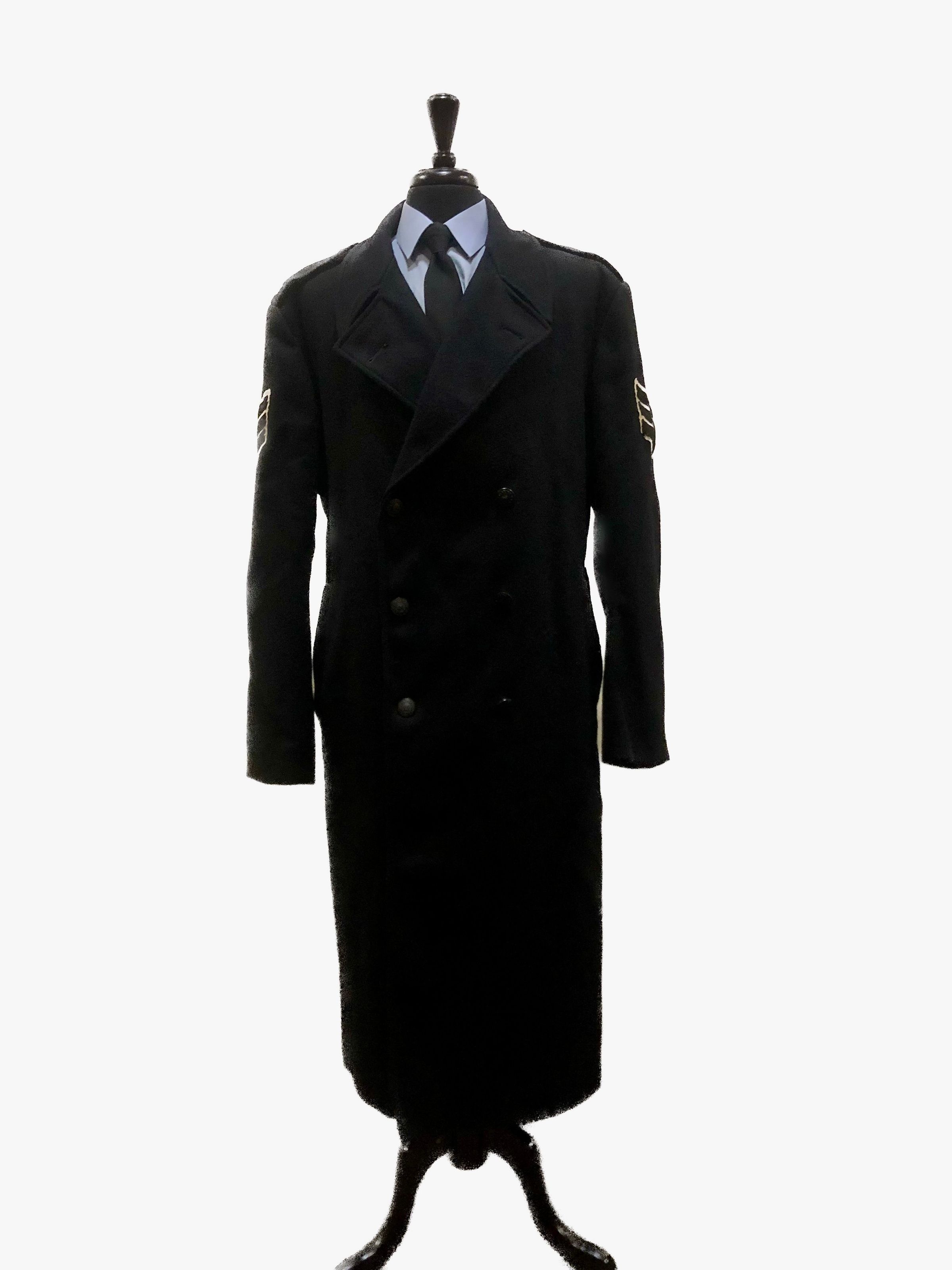
Brighton Borough Police sergeant's overcoat c1960Entry/Object ID
18Description
Blue/black wool double breasted overcoat, with two rows of three black composite/plastic buttons at the front, and an additional two similar buttons under each lapel. There are epaulettes on each shoulder, each secured with a small composite/plastic button, and with the chrome plated metal numbers "358" attached. There are two scalloped hip pockets, each secured with small black composite/plastic buttons. All buttons are marked "Brighton Police" with a Queen's crown. Each upper sleeve has a three chevron badge, made up with a white backing on which are attached three back chevrons. Inside is a paper label marked "John Hammond & Co Ltd 291 Brighton Police Constable Overcoat" and written in ink " 358 Creese" along with various measurements.Use
For a Brighton Borough Police male sergeant to wear during cold weatherContext
Single or double breasted overcoats were worn by police officers throughout the 20th century, until they were superseded by Gannex style raincoats in the 1960s and 1970s. Whilst woollen overcoats, or greatcoats as they were often called, were warm they were not water resistant and became very heavy when wet, which is why overcoats made of the much lighter and waterproof, Gannex material became popular.
This particular overcoat is clearly identified as having been used by Brighton Borough Police, the buttons dating it to between 1952 and 1967, and the chevrons signifying the rank of sergeant. The number "358" and the label inside confirm that it was issued to PC Creese, who was according to the 1967 ""History of the Brighton Police" roll call, still a PC in 1967, though it is believed that he did subsequently become a sergeant whilst serving in Sussex Constabulary/Police after 1968. His Sussex Constabulary warrant number being AC 863. If he had been a sergeant in Brighton Borough Police he would have been allocated a lower warrant number on promotion. Woollen overcoats were not issued by Sussex Constabulary and in any case this example has PC Creese's Brighton warrant number on the epaulettes, which he would not have used in Sussex Constabulary after the 1968 amalgamation (Amalgamation Memorandum 1967). The most likely explanation for the presence of the sergeant's stripes and a PC's number, could be that he was acting as a sergeant and had not yet been promoted.
The stripes themselves are of an interesting design being of black chevrons on a white background, totally different to the thin white chevrons on a black background that were normally used on tunics at the time.