Name/Title
Decorated truncheon marked "L.P" c1837 -70Entry/Object ID
988Description
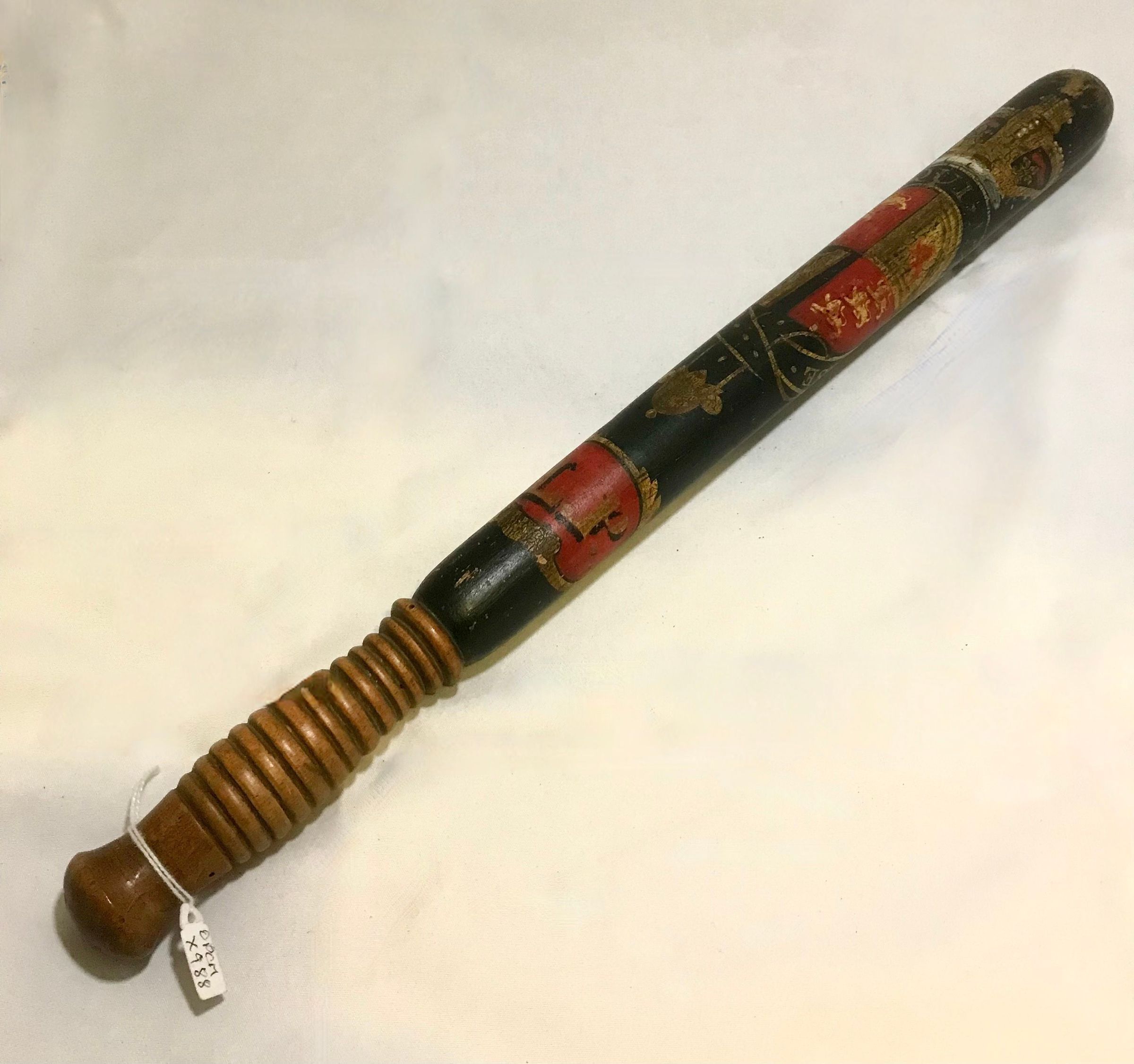
Wooden decorated truncheon, with unpainted multi turned handle 18 inches (45)cm long, painted black, with crown at top, over a Victorian royal coat of arms in a garter, over a red cartouche containing the letters "L.P". No markers's mark.Use
For a police officer to use as protection and as a symbol of their authority.Context
The earliest police truncheons tend to be 17-20 inches (43-51cm)in length and are often highly decorated, usually with a crown and sometimes (as in this case) with the addition of a royal coat of arms. This was because in the days before warrant or ID cards the truncheon was the officer's badge of office and symbolised his authority from the crown for carrying out his duties. As well as being a symbol of authority decorated truncheons like this were designed to be used in self defence and were not just ornaments.
This truncheon does not have the cypher of a monarch but has a coat of arms used during the reign of Queen Victoria, who came to the throne in 1837. The letters "L.P" indicate the place the truncheon is from, the "P" most likely standing for "Police", though it could be short for "Parish". The exact origins of this truncheon are unknown, though it did come to the museum from Sussex Police. If it did originate from Sussex it is possible that it may be an early Lewes Borough Police truncheon, though this is speculation. Before the formation of East Sussex Constabulary in 1840, Lewes had its own small police force of parish constables, which was subsequently amalgamated into the new county force.
By the 1870s the public were well used to the concept of uniformed police and the need for decorated truncheons declined. In the 1880s warrant cards were introduced as a form of ID and the truncheon became less symbolic. At the same time there was a move towards smaller 14-15 inch truncheons that could be carried in a pocket sewn into the trousers. By the 1890s most Police forces had discontinued decoration in favour of plain truncheons of this shorter length.