Name/Title
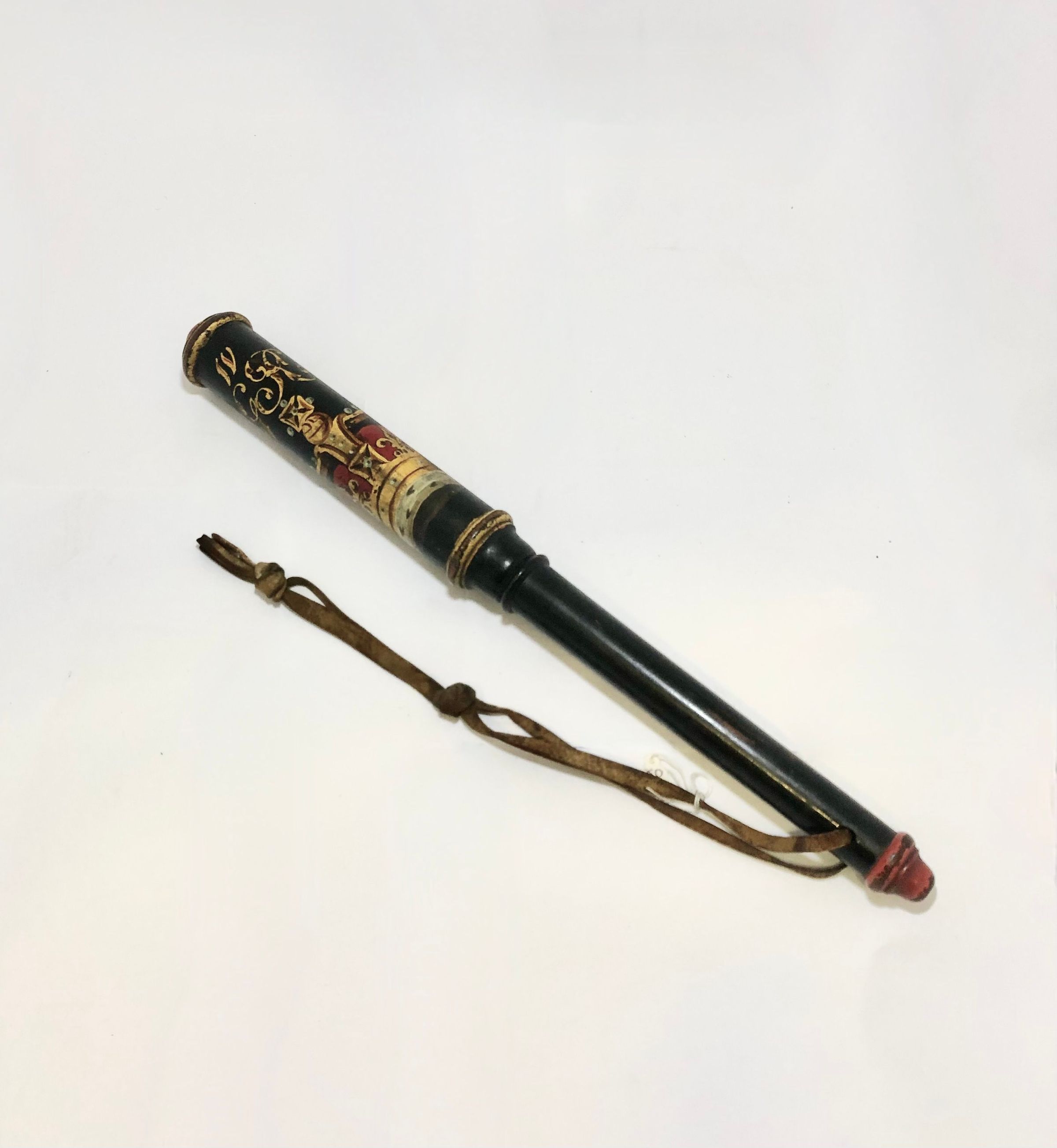
Decorated wooden George IV truncheon 1820 - 1830Entry/Object ID
1131Description
Decorated black painted baluster-style truncheon with red painted tapered ends and gold coloured hoops, 15 1/4 inches (39cm) long. Painted in gold with "IV" over "GR" over a large crown in gold white and red paint. Stamped with small number "4" on handle end, but no other makers markings. Fitted with what seems to be an original knotted leather wrist strap. Donated by a former Deputy County Secretary of West Sussex, so may have provenance as a West Sussex parish item.Use
For use by a parish constable or other law enforcement officialContext
Before the establishment of regular full time uniformed police forces, responsibility for law and order and keeping the peace, mostly fell upon unpaid parish constables who were usually appointed on an annual basis. Like the later full time uniformed police constables. these parish officers carried decorated truncheons which acted as their authority for carrying out their duties. At the same time these truncheons were also designed to be used for protection and were not simply ceremonial items.
Other law enforcement officials, such as high constables and magistrates also had decorated truncheons and batons of office, some more ceremonial than others.
This particular truncheon could either have been used by a parish constable or a higher official, as it is of an elaborate shape. It has the cypher of George IV, which dates it between 1820 and 1830. As is usual with decorated truncheons it is painted with a crown which represents the authority of the monarchy, which is bestowed upon the person using it. Its size and the fact that it has a wrist strap suggests that it was intended to be used as a truncheon. Smaller similarly shaped batons are often used as tipstaffs, which though they give the holder certain authorities, are not intended to be used as weapons. It was donated by a former Deputy County Secretary of West Sussex County Council and may therefore have been used somewhere in West Sussex.