Name/Title
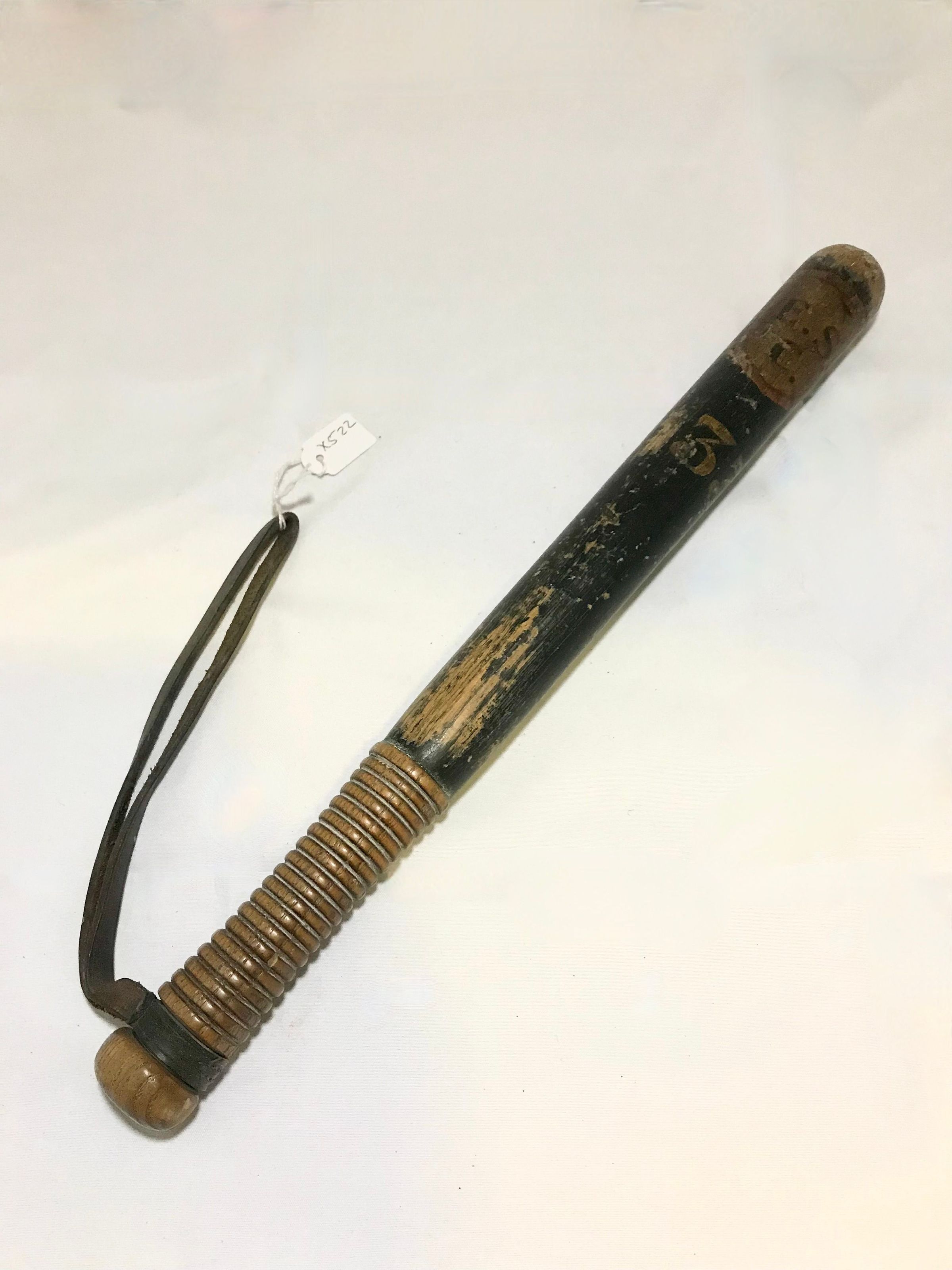
East Sussex Constabulary painted truncheon "33" c1880Entry/Object ID
522Description
Black painted wooden truncheon, 15 1/4 inches (38 cm) long, with black painted letters "E.S.C" within a gold shield, under which is the number "33" painted in gold. The handle has a multi turned grip, to which is attached a leather wrist strap.Use
For use by a police officer for protectionContext
The earliest police truncheons tend to be 17-20 inches (43-51cm) long and are often highly decorated, usually with a crown and sometimes with the addition of a royal coat of arms. This was because in the days before police warrant or ID cards, the truncheon was the officer's badge of office and symbolised his authority from the crown for carrying out his duties.
However by the 1870s the public were well used to the concept of uniformed police and the need for such decorated truncheons declined. By 1880 warrant cards were issued as a form of ID and the truncheon became less symbolic. At the same time there was a move towards smaller 14-15inch truncheons, that could be carried in a pocket sewn into the trousers. By 1890s most police forces had discontinued decoration in favour of plain truncheons of this shorter length.
This truncheon is one of a number of similar known examples from East Sussex Constabulary and is thought to date to c1880. The style and lack of a maker's mark suggests that these truncheons were locally made. The painted number represents an officer's collar number. These truncheons are thought to date from the 1880s, East Sussex Constabulary adopting 14 inch truncheons in 1882 for summer use and shorter ones for all year use in 1886, following changes in uniform tunics (Kyrke 1969 78-79). Many of these ESC truncheons have numbers and the letters "SC": stamped on the end of the handles. This particular one does not.