Name/Title
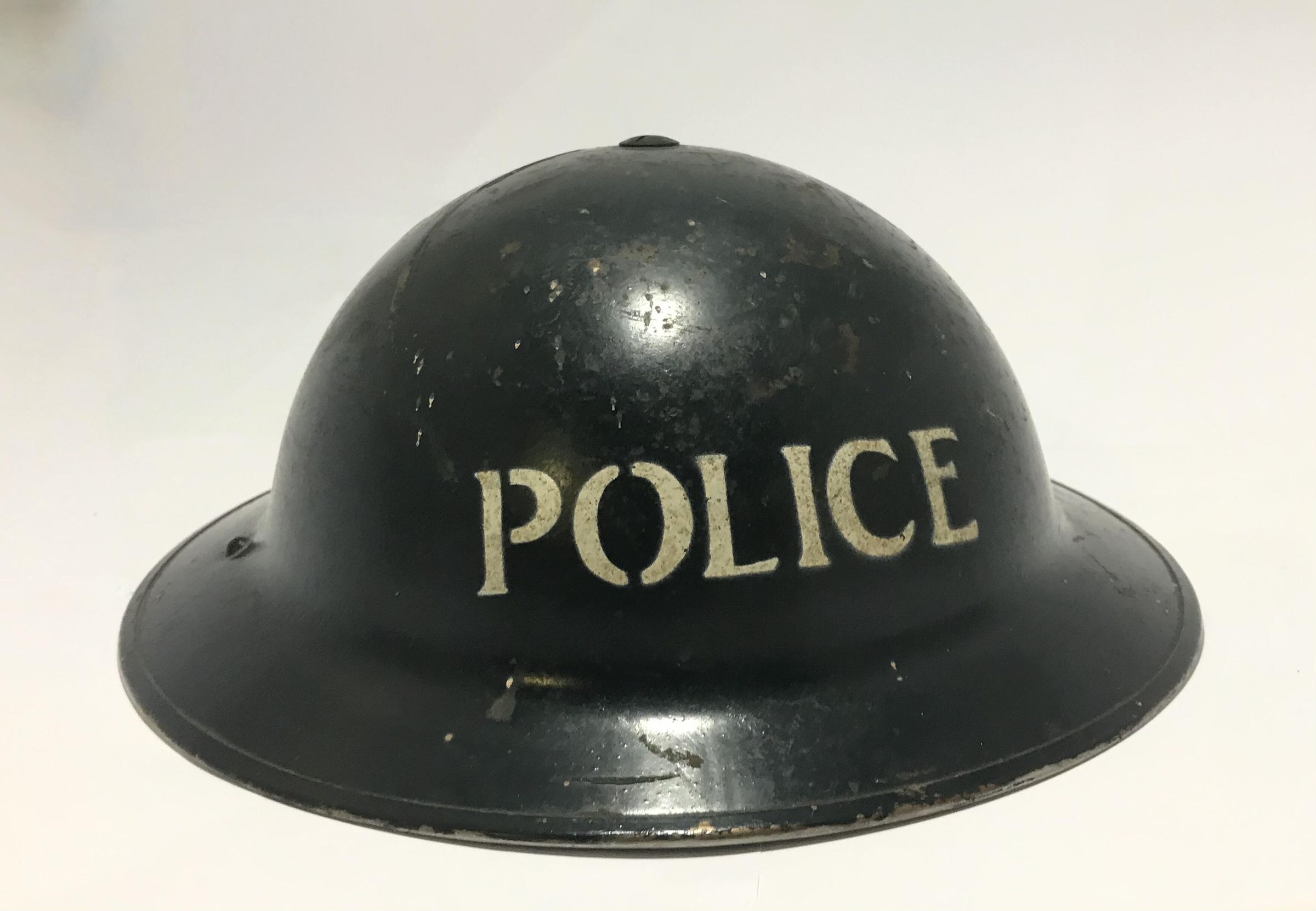
East Sussex Constabulary steel hemet 1939Entry/Object ID
653Description
Blue painted Mark II "Brodie" style steel helmet with stencilled "POLICE" lettering in white paint. The webbing chinstrap is stencilled or stamped "East Sussex Police" and the shell is stamped under the rim "TDII HBH 1939". Complete with liner.Use
To be worn on the Home Front by police in World War Two as protection, especially during air raids.Context
By the late 1930s civil defence preparations were quite advanced because of the threat of war with Germany and in 1938 and 1939 police officers were issued with gas masks and steel helmets for protection in the event of German air raids and gas attacks. These helmets were of identical construction to those issued to the armed services. Most officers were issued with blue painted helmets with white stencilled lettering and some more senior ranks were issued with white helmets with blue stencilled lettering and transfer printed rank insignia. The white helmets are scarcer. Most police steel helmets have the type of font shown here, though there are some, possibly later examples, that have a transfer printed square font.
The chinstrap marking on this helmet indicates that it was issued to East Sussex Constabulary. The museum has a senior officer's white steel helmet, with the same "East Sussex Police", strap mark and an additional "C.C" mark. The helmet shell markings indentify the maker and date of manufacture. In this case "HBH" for "Harrison Brothers and Howson'" and the date 1939.
Helmets identical to this were issued across the country to police forces for use by all ranks. Occasionally they have additional stencilled markings, such as "SC" for "Special Constable" or stencilled rank insignia, but this is the commonest type.
On 1st April 1943 under the Defence Regulations, all of the Sussex Police forces were amalgamated to become part of the wartime "Sussex Police Force". This was to make best use of the available officers and resources. Many regular officers were serving with the armed forces and there were no replacements, their numbers being supplemented by special constables and war reservists. This amalgamation lasted until 1947.