Name/Title
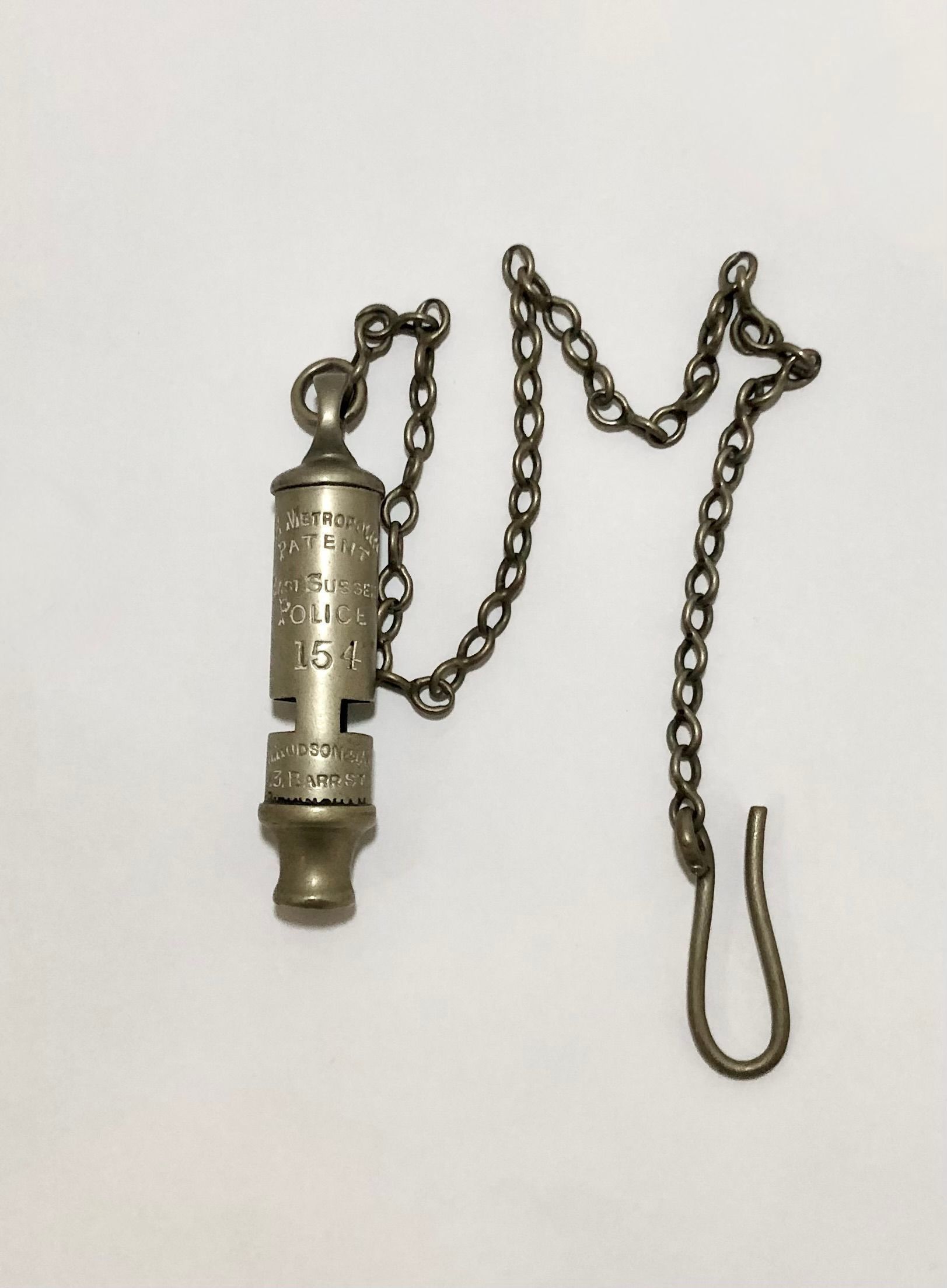
East Sussex Constabulary whistle and chain 1898 - 1908Entry/Object ID
102Description
Nickel silver whistle stamped "The Metropolitan, Patent, East Sussex Police, 154, J.Hudson and Co. 13 Barr St. Birmingham", attached to a nickel silver whistle chain and button hook.Use
For a police officer to raise the alarm and attract the attention of other officers.Context
The use of the whistle by police to replace he rattle as a means of raising the alarm, only became widespread after 1884, when whistles were adopted by the Metropolitan Police in London.Joseph Hudson and Co. supplied these whistles to the Met. and the "Metropolitan" trademark was registered to reflect this, the connection being used heavily n the company's marketing. To begin with a number of Birmingham based companies produced whistles for the police but Hudsons soon became the largest manufacturer. The company was formed in 1870 and is still in existence as the Acme Whistle Company. Whilst most famous for producing whistles, Hudson and Co. also manufactured other items of police equipment until the 1950s.
East Sussex Constabulary first began supplying whistles in October 1885 (Kyrke 1969 page79) and a number of slightly differently marked examples were issued over the next 40 years.
This particular whistle can be dated to between 1898 and 1908. The company were using the 13 Barr street address from 1888 to 1909 and they stopped using cast tops, as on this whistle, in 1908. It can be dated from 1898 because its internal construction uses a part patented in that year, a particular type of disc or "diaphragm".
The number "154" is most likely an asset number, rather than an officer's collar/ID number. However another example of this exact same type of whistle is known that has "Sergeant 26", instead of "154" stamped on it, and in all other respects the marking is identical. This use of rank may indicate that these numbers were collar numbers. Generally the use of ranks and collar numbers on police whistles is rare, as it meant they were harder to re issue. Where is does occur it tends to be on earlier examples. This whistle retains its original solid nickel silver finish, though in common with other whistle types from the county, examples of this batch of whistles are known to have been chrome plated later in their lives.
The use of the name "East Sussex Police", the official force title only from 1967, should not confuse dating, it simply reflects that on items of equipment, not always in public view, full official constabulary names were not always used.