Name/Title
Electric battery L.E. No.4 lampEntry/Object ID
59Description
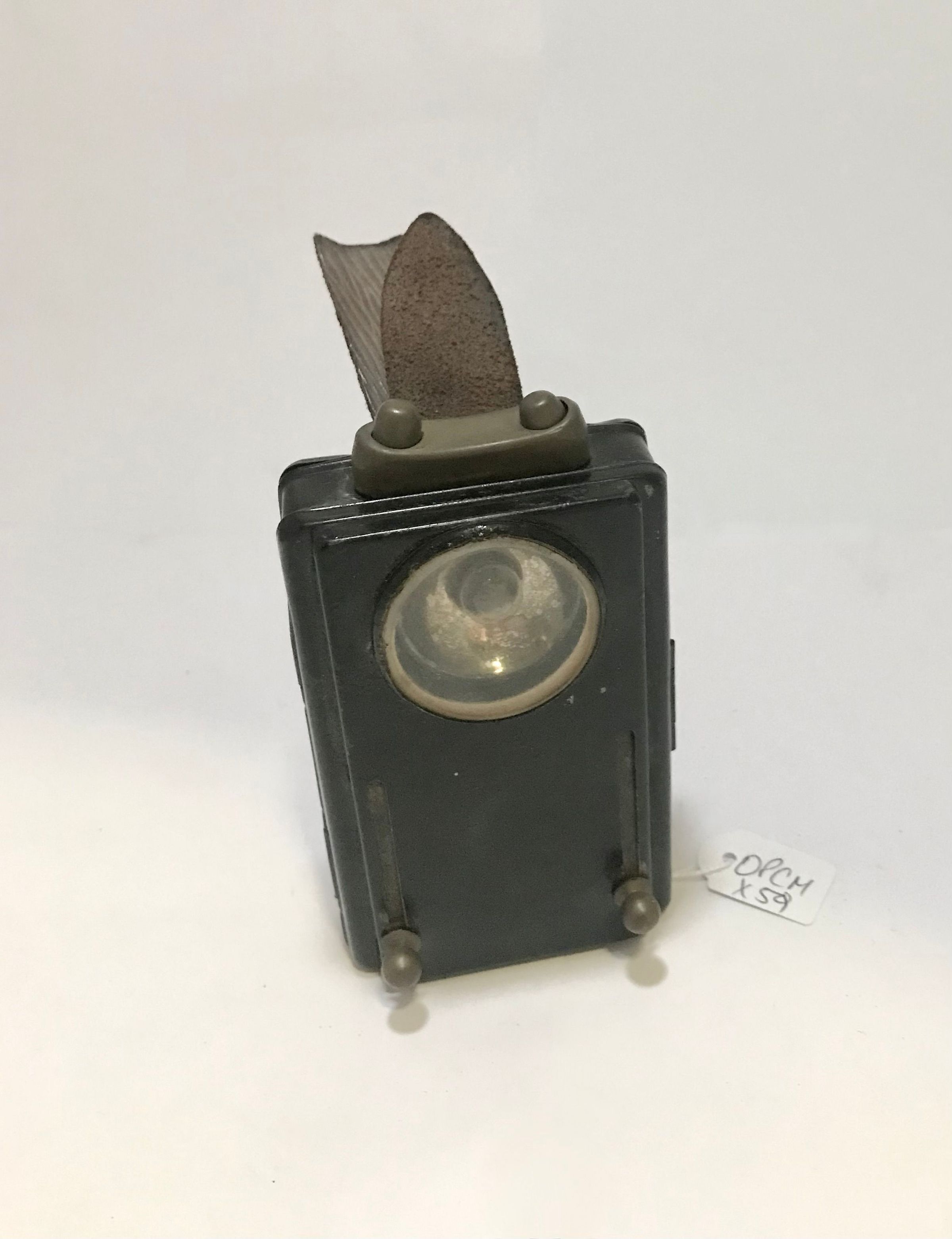
Pressed metal black painted electric dry cell lamp, with leather belt strap, and green and red filters. The switches and filter buttons are made of brass. Marked on rear "D.B. Ltd L.E. No.4"Use
For use at night for illumination and for traffic controlContext
In the 19th and early 20th centuries police officers still used oil lamps for night duty, which were hung on their belts. These were both messy and expensive to maintain but were more reliable and cheaper than the first battery powered torches invented c 1899. However after the First World War technology had improved and electric lamps began to be adopted by police forces. The Metropolitan Police began using them in 1920 (Fido and Skinner) and East Sussex Constabulary in 1921 (Kyrke 1969).
What is interesting about the designs of these early battery lamps and those used later, is that they often retained features of the old oil lamps, usually having handles at the rear and a clip to enable the lamp to be hung on a belt. They also tend to be box shaped. It was only in 1962 that the Metropolitan Police adopted cylindrical torches (Fido and Skinner).
The "L.E. No.4" lamp was designed for use by the British military during the second half of World War Two as a replacement for the "L.E. No.1". The "L.E." stands for 'Lamp Electric" and these lamps are thought to be direct copies of German made military examples. This lamp would have originally been painted khaki green. Though it does not have any direct police provenance, it came as part of a collection of police related items from across Sussex, and the fact that it has been painted black may indicate that it was re-purposed for police use either during or after the Second World War.