Name/Title
First World War medal group for Private A.J.V. Field 1918 - 1919Entry/Object ID
384Description
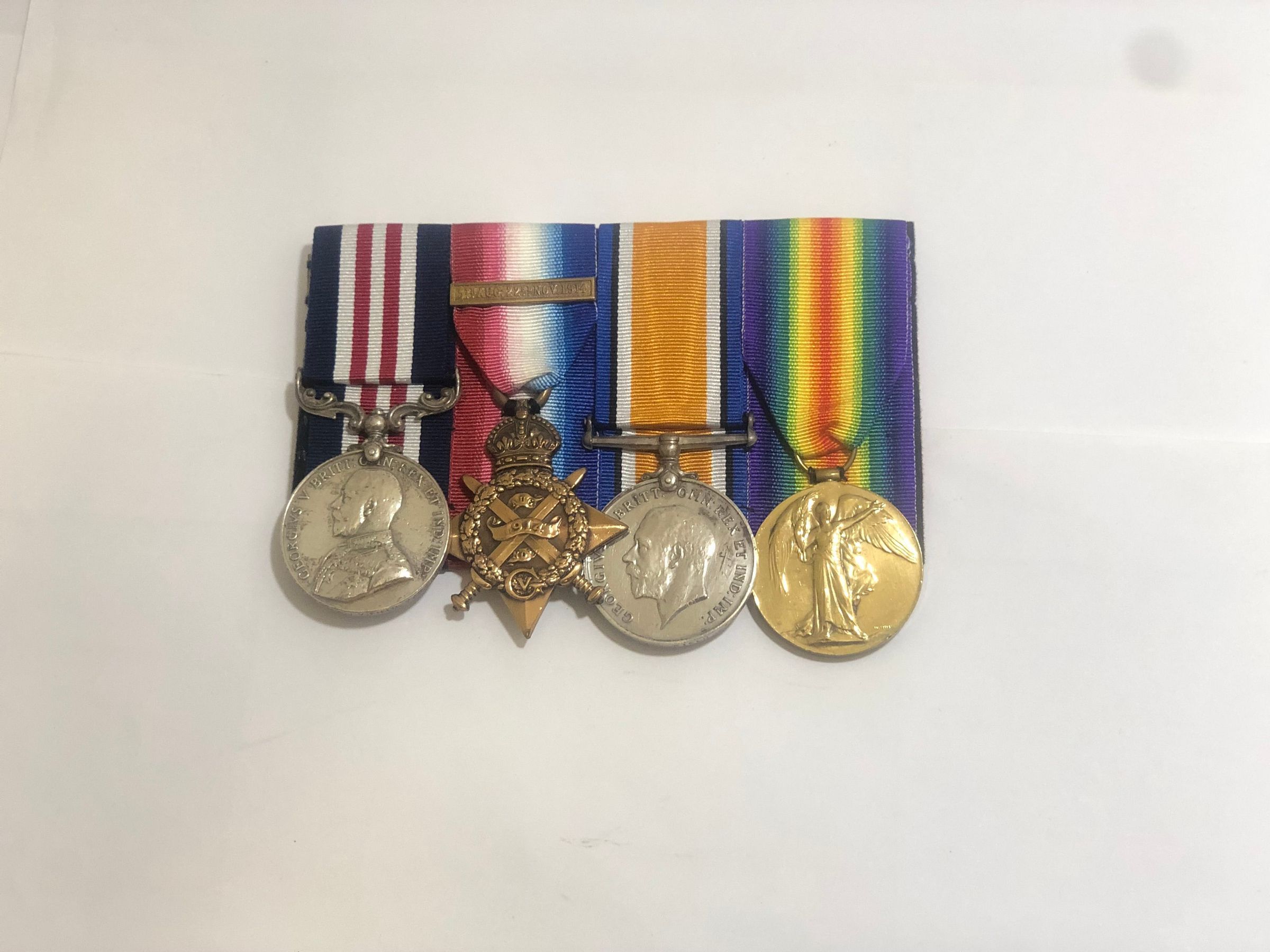
Mounted First World War medal group consisting of: a Military Medal, a 1914 Star with clasp, a War medal, and a Victory Medal. The medals are marked "D 7240 PTE AJV Field 7/GDS" and the clasp on the star is marked "5th Aug-22nd Nov 1914". The mount has a rear pin.Use
To be worn on special occasions to recognise gallantry and military serviceContext
The 1914 Star was instituted in November 1917 to recognise military service in France and Belgium between 5th August and 22nd of November 1914. The clasp was instituted in 1919 and awarded to all personnel who had come under enemy fire or operated within the range of German artillery. The War Medal was instituted in 1919 and awarded to all military personnel who had served during the war. The Victory Medal, also instituted in 1919, was awarded to those personnel who had actually served in any theatre of war. These three medals are those that were normally awarded to military personnel during the war. The Military Medal, though is a gallantry medal that was instituted in 1916 and warded to non commissioned ranks for acts of gallantry and devotion to duty under fire.
These medals were awarded to Alfred John Victor Field born on 16th June 1896 in Brighton, who served in the 7th Dragoon Guards and according to his medal records was awarded the medal on 18th December 1918, though it must have been for actions before the end of the war on 11th November. He is recorded as having been married in Brighton in August 1917. The next reference to him being in Brighton is in 1939 when he is recorded on the electoral role as working as a Laundry Vanman. He died in 1946.
There is no direct connection between Alfred and the police, but his younger brother Harold, born on 12th June 1898 in Brighton, did serve as a special constable in Brighton during and after the Second World War.