Name/Title
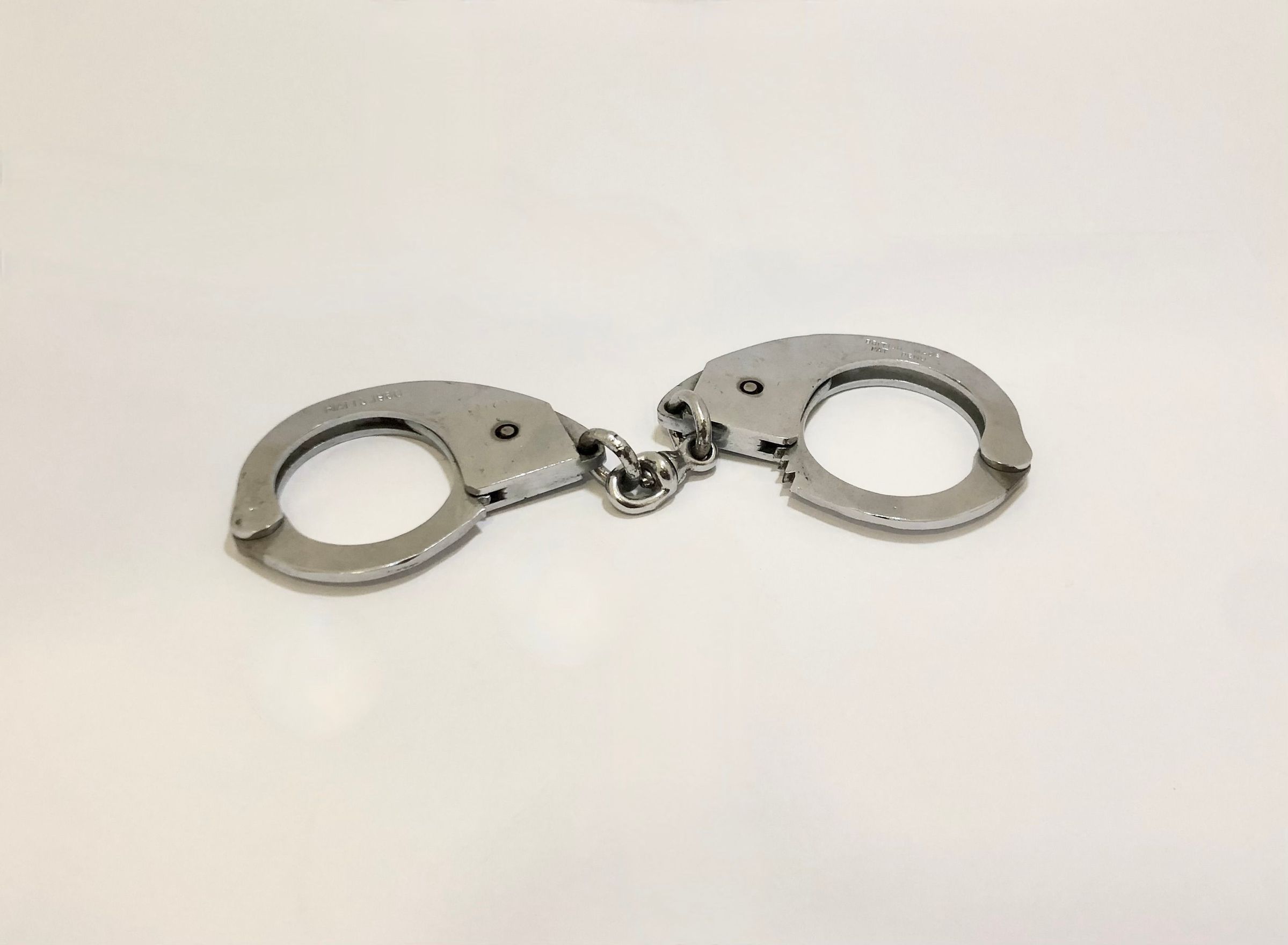
Hiatt 1960 model handcuffs c1960sEntry/Object ID
657Description
Pair of swinging bow style chrome plated handcuffs. Marked "Hiatts 1960" on one cuff and "British Made Pat. Pend" on the other. No key.Use
To restrain prisoners and of a type used by police in Sussex between the 1960s and the mid 1990s.Context
The 1960 model of handcuffs made by Hiatt was the first widely adopted British designed model of "swinging bow" type handcuffs. The name describes the fact that the moving part of the "cuff" moves 360 degrees making it easier to place the handcuffs on the wrist. Hiatt's previous swinging bow design, "The Reliant" model of 1953, had been a failure. Swinging bow handcuffs had first been patented the US in 1912 and Hiatt had made versions of these from the 1930s under licence from the US company Peerless. Only with the introduction of the 1960 model did swinging bow handcuffs widely replace "Darby" style handcuffs in the UK.
This model was made by Hiatt until 1997, though in the UK by then far more modern handcuffs were in general use. This particular pair are marked "Pat. Pend" meaning that they are the earliest version of this model made by Hiatt and probably date to the 1960s.
Hiatt were a Birmingham based company that made restraints from at least 1780, and whilst best known for handcuffs, they manufactured other police equipment throughout the 19th and 20th centuries. The company ceased UK production in 2008 following increased scrutiny over some of its products and their use abroad.
In Sussex, after the 1968 amalgamation, the Hiatt 1960 model were the first type of handcuffs to be personal issue to all officers, from the late 1970s/1980 onwards. Prior to that handcuffs were only allocated to vehicles and police stations, and not issued to each officer. Some Sussex examples are stamped with warrant numbers. This model continued to be re-issued to officers in Sussex, along with more modern Hiatt models until the mid 1990s when all handcuffs were recalled and replaced with the Chubb "Detainer" model.