Name/Title
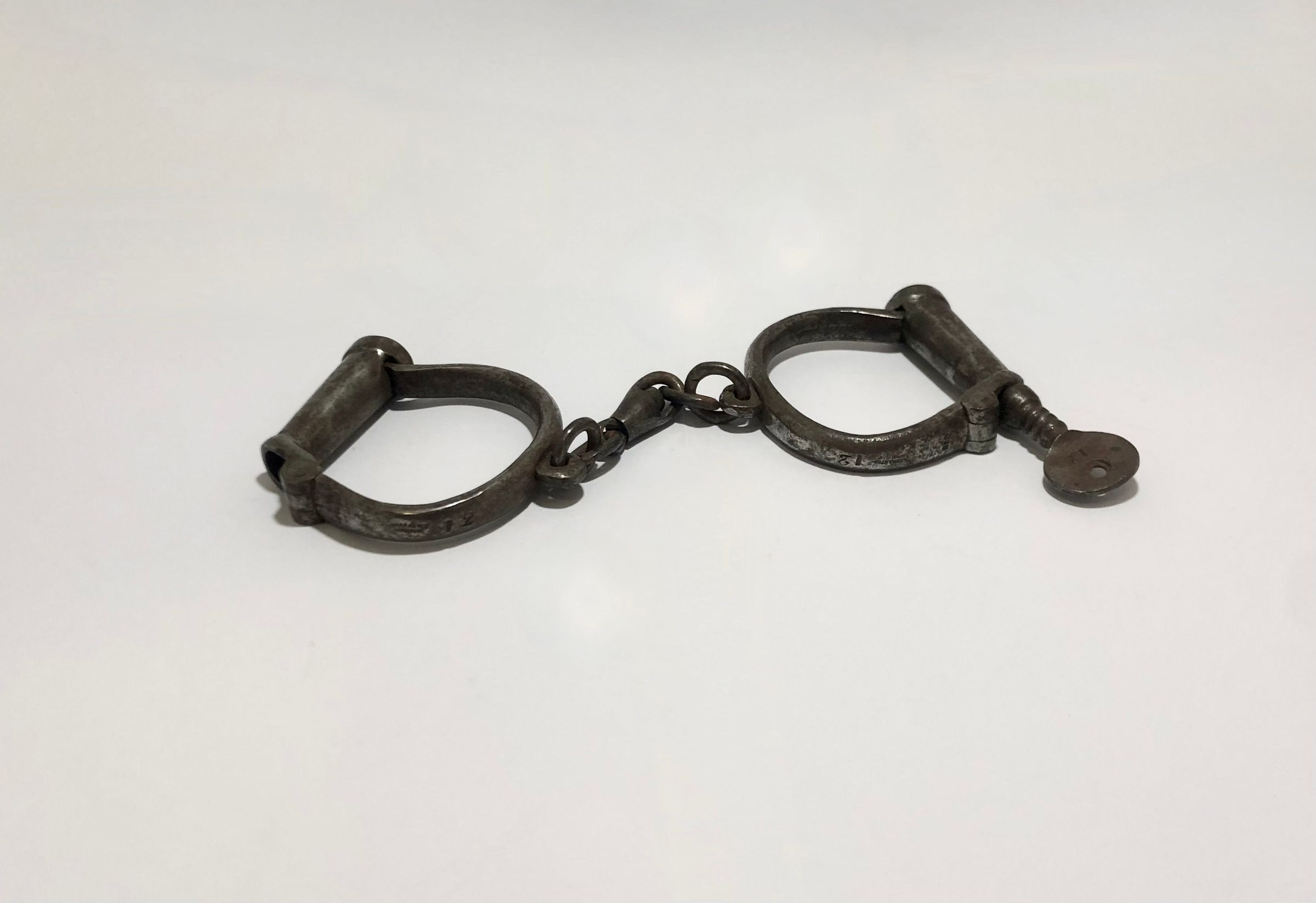
Hiatt "Superintendent" Model Darby handcuffs c1930-1945Entry/Object ID
732Description
Darby style heavily worn nickel (?) plated handcuffs and key, stamped on both cuffs " Best", "Warranted wrought" and "12". The key is also marked "12".Use
To restrain prisoners. This type was in use across Sussex from at least the mid 19th century until the 1960s.Context
These type of fixed handcuffs are known as "Darbies" or "D" cuffs. "Darbies" is a 17th century word used to refer to all types of hand/wrist restraints and "D" refers to the shape of this style. This type, which were made by various makers, do not have a lock in the strictest sense as they have a simple bolt which is released by screwing in the "key". This simple robust design probably explains why these type of handcuffs were in use for over 100 years.
This particular pair are the Hiatt "Superintendent" model, which was a more lightweight version than there company's standard Darbies. Though not marked "Hiatt", these are clearly to the "Superintendent" design, which had two versions of linkages, with either two or four links. These have four links and the museum has another pair of this model with only two links (item 272). They were probably made before 1945, as after World War Two, Hiatt introduced a much less cumbersome swivel design ( Nichols 2002 page 34).
Hiatt were a Birmingham based company that made restraints from at least 1780, and whilst best known for handcuffs, they manufactured other police equipment throughout the 19th and 20th centuries. The company ceased UK production in 2008 following increased scrutiny over some of its products and their use abroad.
Darby style handcuffs were used by police across Sussex until at least the 1960s when more modern ratchet types were introduced. This pair came from a Sussex Police senior officer and are thought to have been used somewhere in the region.