Name/Title
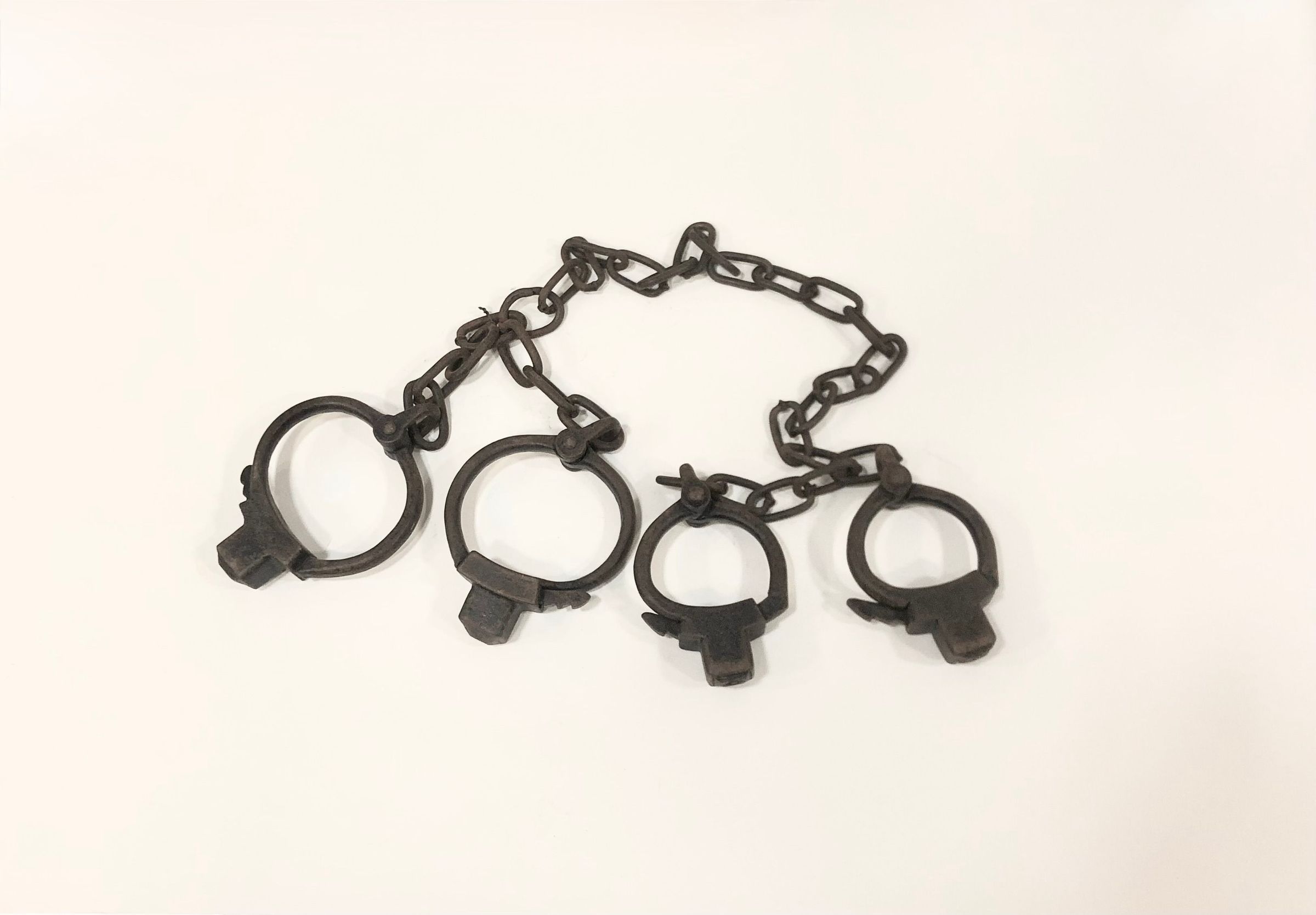
Muhlenfeld 310 combination handcuffs and leg irons c1900Entry/Object ID
651Description
Black painted steel combination lockable hand cuffs and leg irons joined by welded chain, all with a coating of surface rust. The restraints are ratcheted and therefore adjustable and the locks are in a distinctive raised housing. No maker's mark, but there appears to be "13" stamped into body of one handcuff adjacent to lock. No key.Use
To secure a prisoner by the hands and feetContext
Whilst handcuffs were in common use in the UK police from the 19th century onwards leg iron and combination restraints were rarer. They would only have been used to transport particularly dangerous prisoners or those believed to be at the greatest risk of escape, and such restraints would have been more commonly used in prisons.
This particular combination set of handcuffs and leg irons is not of a typical Victorian or later UK design. It is secured by actual locks rather than with some form of screw or screw released bolt and has a chain constructed of relatively thin welded links, quite unlike those favoured by most British manufacturers such as Hiatt.
At first it was suspected that this set was some form of reproduction, but research has suggested they were made by the German company of Muhlenfeld and are certainly made to that company's model 310 design. The "13" stamp appears to confirm their authenticity as it is known to appear on other restraints made by Muhlenfeld. The company was based in the village of Barmen, which is in what is now the City of Wuppertal. If they are by Muhlenfeld they would date to the late 19th/early 20th century. They came to the museum from Sussex Police, so may have been used in one of the old Sussex police forces. They are very unusual to find in the UK, as they are thought to be a rare model.