Name/Title
New York Police Dept. sergeant's overcoat c1949Entry/Object ID
2276Description
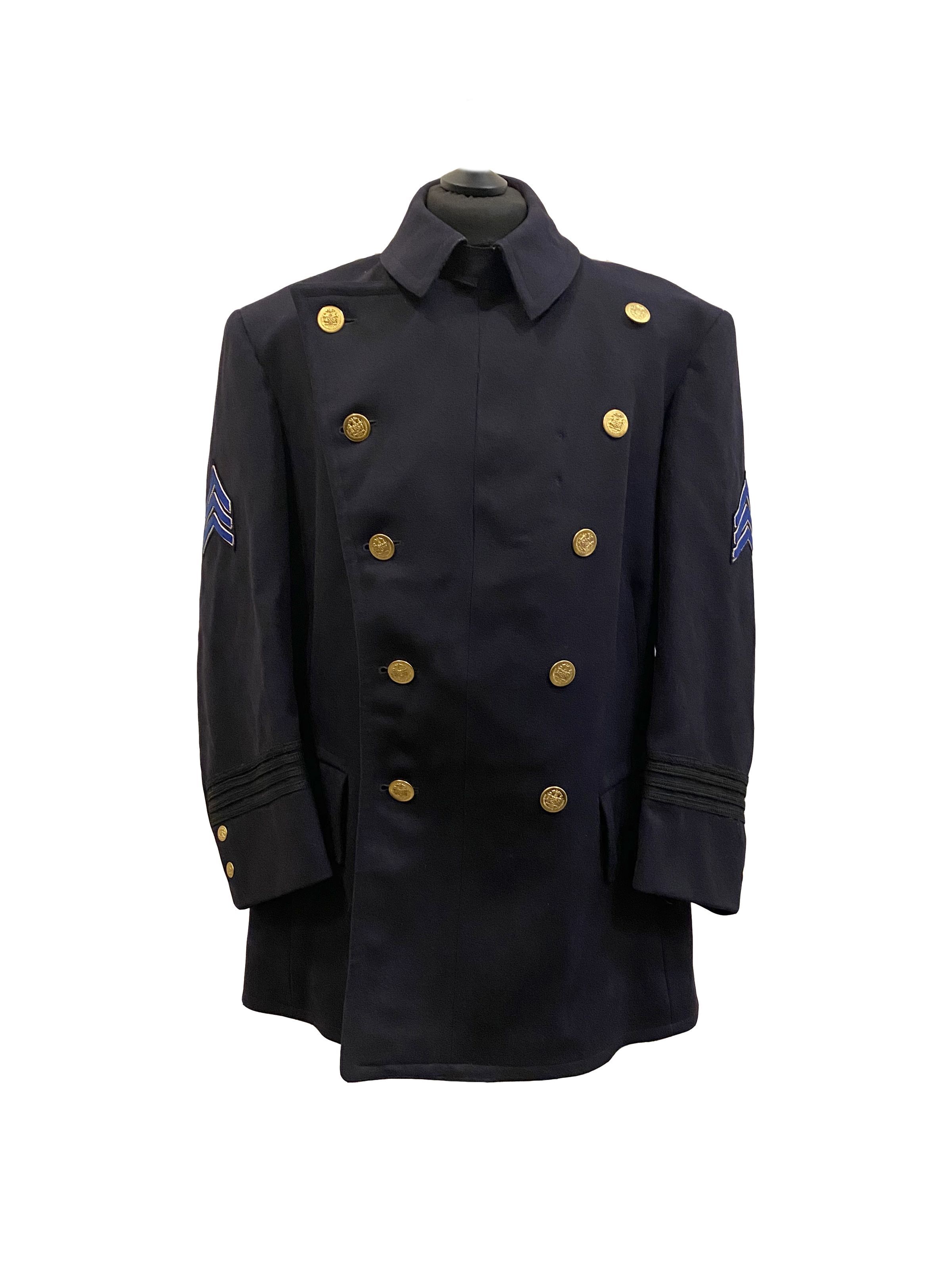
Heavyweight blue wool short length double breasted overcoat, with turned down collar, two rows of five large gold coloured buttons to the front, two smaller gold coloured buttons on each cuff and two hip pockets each with a small gold coloured button. All buttons are decorated with the seal of the City of New York. There are 4 black coloured braided loops around each cuff and two embroidered holes on the left breast for attaching a police "shield" badge. On each sleeve is a cloth badge of 3 blue white edged inverted chevrons or sergeant's stripes. Inside is a cloth label marked "Ralph Palmieri, Uniforms 4784 Third Ave. Cor. Fordham Road Bronx, N.Y." On this label are various handwritten sizes and the date "10/20/49". Also inside is stencilled "Regulation P.D.N.Y. 1894(?)6.Use
For a New York Police sergeant to wear over a tunicContext
New York Police Department officers wore heavy overcoats such as this until the early 1970s when they were replaced with an open necked reefer or pea type coat. This particular coat does not have any insignia or marks where there may have been insignia on the collar. Photographs from the period show similar overcoats worn both with and without Precinct numbers or specialist department letters on the collars. The stripe badges indicate that this was a sergeant's coat and the black braids around each cuff are thought to be length of service bands. This were later replaced with blue bands, the same colour as the stripe insignia, sewn onto the lower arm as a short diagonal line. Usually each band signifies 5 year's service, suggesting that this overcoat was worn by a sergeant with at least 20 years service. This example is shorter than those that were normally issued to beat officers and that may indicate that it was for use in a vehicle or in some other specialist role.
Often shorter overcoats such as this are mistaken for the iconic NYPD closed high collared winter blouson or "choker" tunic. However the turned down collar and exterior pockets clearly identify this example as on overcoat and not a tunic, though both had the same arrangement of front buttons.
The length of service braids suggest that this is an earlier example and the label inside would appear to date it to 1949. How this item came to the UK is not known but it does provide a useful comparison to UK police uniform from the period. Double breasted overcoats were used at the time, there having been research from the 1930s indicating that they led to fewer chest infections among officers. However in the UK brightly coloured buttons were not used on overcoats, with black plastic/composite ones being the norm. Also at the time when this coat was made UK officers still wore capes and continued to do so until the 1970s.