Name/Title
Sussex Police PSU officer's shin pads 1984Entry/Object ID
2442Description
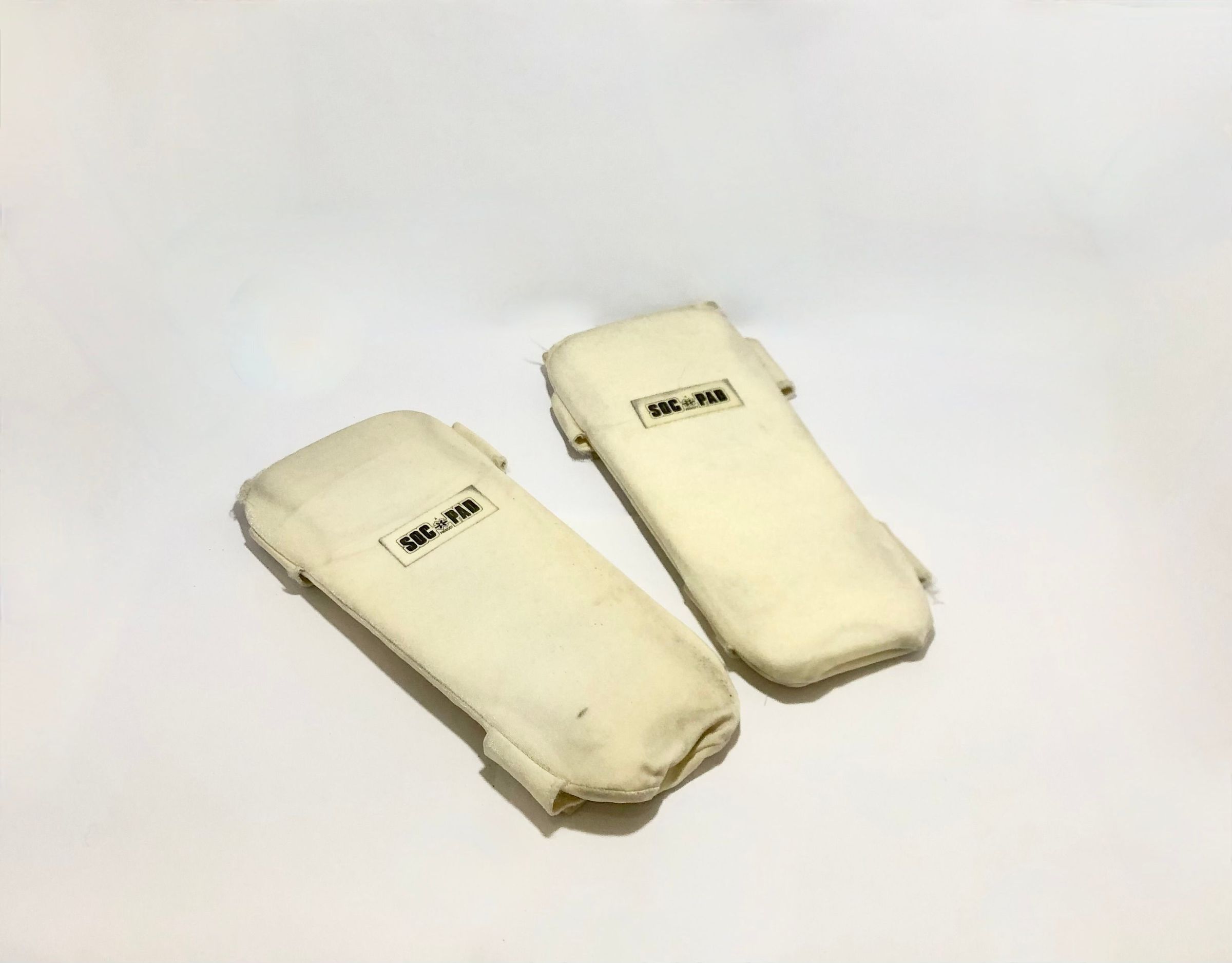
A pair of white cotton/nylon shin pads with elasticated loops to rear. Marked to the front "SOC*PAD Product".Use
For a PSU constable to wear during a public order situationContext
Following a number of riots and violent public order situations in 1981, police in the UK began to be equipped with specially designed protective equipment. This included so called "riot" helmets, shields, arm and leg pads and fireproof clothing. Until this time all that was generally available were re-enforced "custodian" versions of the traditional police helmet. Along with the equipment came better training and tactics that have evolved over the intervening years. Officers that receive additional training are organised into Public Support Units (PSU's) which normally consist one inspector , three sergeants and 21 constables, including three drivers. Each PSU is subdivided into three "serials" consisting of one sergeant and six constables, with their own customised mini bus and a driver. Several PSU's are usually commanded by a suitably trained officer, usually a chief inspector, who themselves have specially trained "Tactical Advisors".
These particular shin pads were issued to PC Ian Borthwick who served in Sussex Police between 1976 and 2007. They were worn by him during the policing of the 1984 to 1985 miner's strike. The scale of this industrial action led to large numbers of officers from around the country to be drafted to various mining areas, especially in Nottinghamshire and Yorkshire, in order to assist local police forces. Over the length of the dispute, Sussex Police sent a total of 416 Police Support Units to assist, representing a total of 56,901 officer hours (Poulsom, Rumble and Smith 1987).
The marking on these pads "SOC", as well as their simplicity suggests that they were actually commercially available shin pads for playing football. They would have been worn underneath trousers, and most of the officers working during the miner's strike only wore normal everyday uniform trousers and tunics. This gives a good indication of the type of protective equipment that was available at the time. It was only over time that purpose made arm and leg guards were produced for police officers in public order situations.