Name/Title
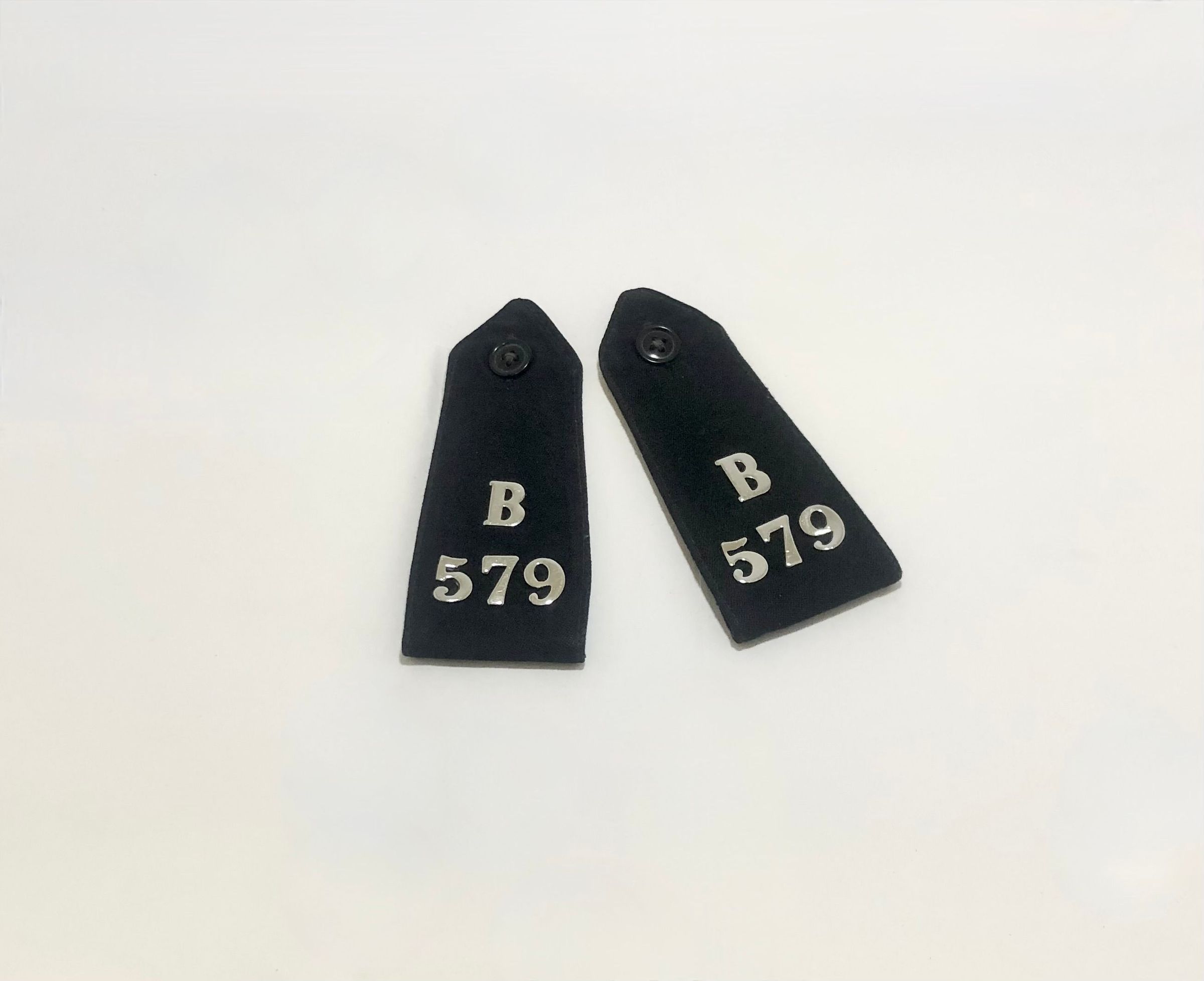
Sussex Police shirt epaulettes 1976 - c1995Entry/Object ID
2436Description
A pair of dark blue cotton epaulettes with chrome plated metal letter and numbers "B 579", attached with screw fittings, each with a small blue plastic buttonUse
For a constable to wear on a uniform shirt.Context
By the late 1950s most if not all of the police forces in Sussex allowed their officers to wear shirts without tunics in some capacity. This meant that epaulettes were needed to display a constable or sergeant's warrant number on their shirt, with sergeants having the addition of rank insignia as well. Ranks of inspector and above, did not display numbers but only rank insignia as was the case on tunics.
When Sussex Constabulary was established in 1968, it was initially not intended for officers to have numbers on their uniforms (Amalgamation Memorandum 1967) even though they were each allocated an alpha numeric warrant number. These warrant numbers consisted of a letter "A" or "B" to designate an officer's sex ("A" for male and "B" for female"), followed by the first letter of their surname and then a number between 1 and 999. These combinations were intended to be unique to that individual and not re-used, but not to be displayed on uniforms. It was only after complaints from the Home Office that these warrant numbers were attached to uniforms, with the omission of the first letter, "A" or "B", which designated sex.
These epaulettes were issued to PC Ian Borthwick who served in Sussex Police from 1976 until 2007, and the use of metal letters and numbers dates them to before the mid 1990s after which embroidered ones were used.
In September 2018 Sussex Police abandoned the use of this warrant numbering system, instead adopting gender neutral numbers for all new recruits beginning with numbers prefixed "EA". After the first 999 numbers are issued the prefix will change to "EB" and so on. As well as all new officers being given "EA" numbers, any existing officer that wanted to have a gender neural number was also given the option of being allocated one.