Name/Title
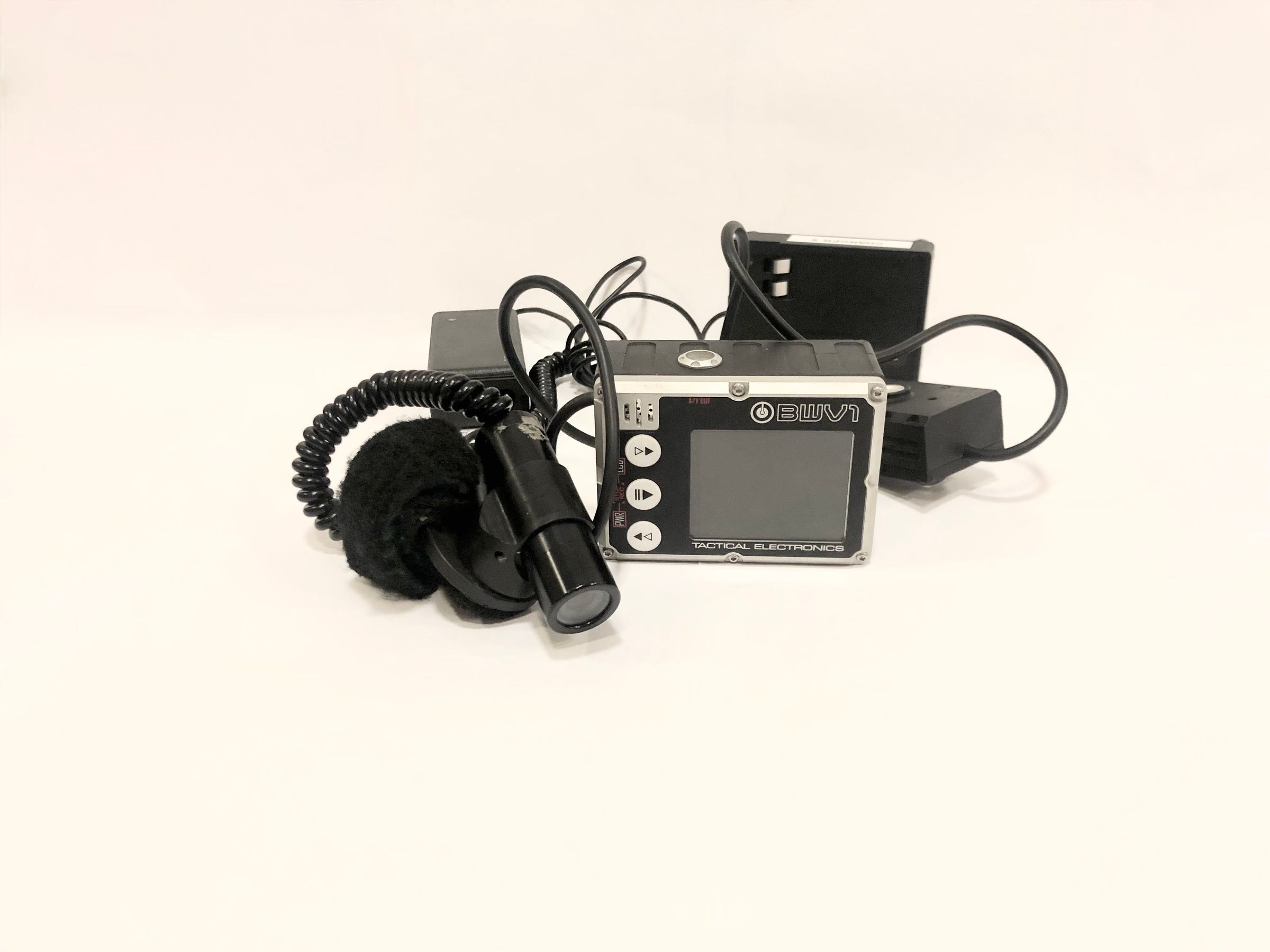
Sussex Police Tactical Electronics body worn video camera 2008Entry/Object ID
2505Description
Cylindrical video camera, attached by wire to recoding unit, complete with battery charger and transformer. The camera is on a swivel mount with velcro fastening to attach to clothing or headwear. The recording unit is marked to the front "BWV" and "Tactical Electronics", and has a separate switching unit, with a large on off button and a small pinhole reserve camera. The battery at the rear is marked "Battery 6". The battery charger is marked to the rear "04052985".Use
For an officer to use to record relevant interactions with the publicContext
The use of body worn video equipment began in the UK in 2005, when Devon and Cornwall Police began a trial. Further trials elsewhere followed as the Home Office became increasingly interested in the potential of these cameras.
Their first use in Sussex Police was in 2008 when the Home Office offered police forces grants of £80,000 to purchase equipment. The Sussex trials began in Worthing by officers including PS Russ Phillips and PC Scott Walters, using early units such as this one, manufactured by a company called "Tactical Electronics". Both officers went onto help develop subsequent BWV programs within Sussex Police. These early units had separate cameras and recoding units, a 6 hour battery and recorded the footage onto SD cards. The switch box which was attached to the chest had an additional reserve pin hole camera should the larger one become unattached, especially during a struggle.
The initial Worthing trials were successful and the use of similar equipment was extended to other parts of Sussex on a limited basis. They were not personal issue and were used in pool systems.
At the time, the biggest challenge was noted to be a cultural one, persuading officers that the cameras were not there to monitor them, but to protect them and support any evidence that they should provide.
Units such as this were replaced in 2010 by more compact ones, with longer battery lives manufactured by Reveal.