Name/Title
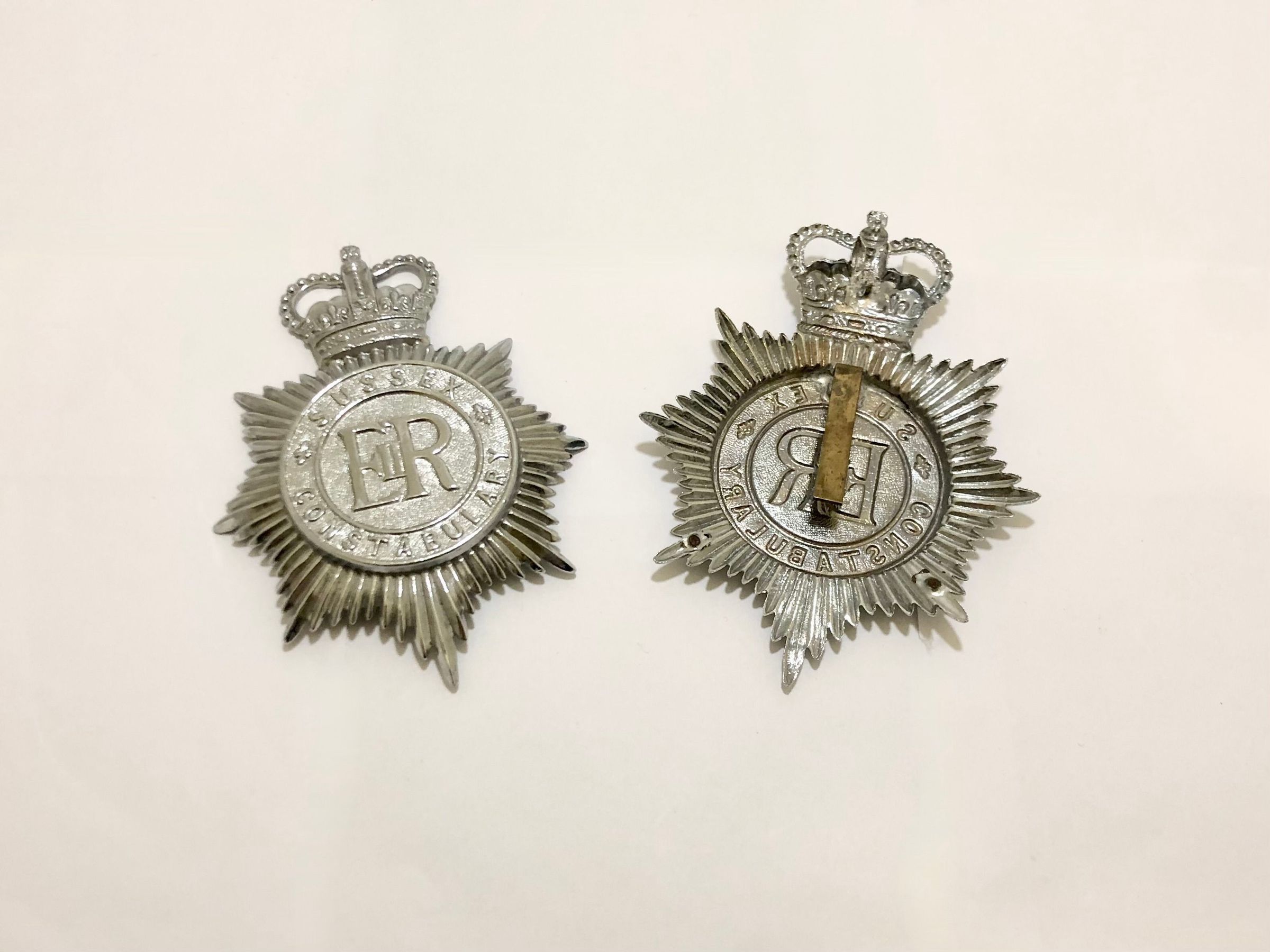
Two Sussex Constabulary helmet badges adapted for lightweight motorcycle helmets c1968 - 1974Entry/Object ID
2522Description
Two one piece chrome plated Brunswick Star helmet plates each with a Queen's Crown and marked "Sussex Constabulary" and "EllR" in a solid centre. Both of these have had the rear lug fittings removed and replaced with a vertical slider fitting.Use
For use on re-enforced police helmets for motorcycle use in Sussex ConstabularyContext
When the remaining Sussex police forces were amalgamated to form Sussex Constabulary on 1st January 1968 these helmet plates and corresponding cap badges were introduced. No separate black painted helmet plates were made, as this chrome plated version was for both day and night use.
When the Force name was changed to Sussex Police in 1974, this helmet plate was replaced with a very similar one bearing the word "Police' instead of "Constabulary"(see item 279).
The "EllR" is the royal cypher for Queen Elizabeth ll and the use of the reigning monarch's cypher has been used as an alternative to a coat of arms on police badges since the first helmet plates were used during Queen Victoria's reign.
This style of badge is called a Brunswick Star and its use on police helmets goes back to the 1870's. However it only became more common after 1934, when the Home Office attempted to standardise police uniforms and insignia.
These particular badges are unusual in that they have had the normal "lug" fittings on the rear for attaching to a helmet removed. These have been replaced by a vertical strip of metal that has been soldered on. The explanation for this is probably that they were modified to allow them to be fitted to a re-enforced helmet specifically designed for motorcycle wear, when riding a lightweight motorcycle. In the 1950s the Metropolitan Police adopted lightweight Velocette motorcycles for officers to use for urban patrolling, and many other police forces followed their lead. Officers were instructed not to attempt to salute any senior officers that they happened to come across for fear of loosing control, but instead were told to acknowledge the officer with a nod of the head. Consequently these motorcycles became know as "Noddy Bikes". Special re-enforced versions of the traditional police helmet were produced for officers to wear when riding these motorcycles, which were squatter than a traditional helmet, with leather chin/neck harness to keep them on. Such helmets are called "Noddy helmets" and often they had a special slot in them for attaching a badge with a slider fitting. This was because in London the Metropolitan Police had a special hemet badge produced especially for these helmets, which was smaller than the standard helmet badge and did not have lugs but a slider fitting. It appears that whilst Sussex Constabulary used the smaller lightweight helmets, it did not have special badges made for them but used adapted versions of their normal helmet badges. Whether the alterations were done by the manufacturer or in house is not known. For an example of a Sussex Constabulary "Noddy" helmet see item 654.