Name/Title
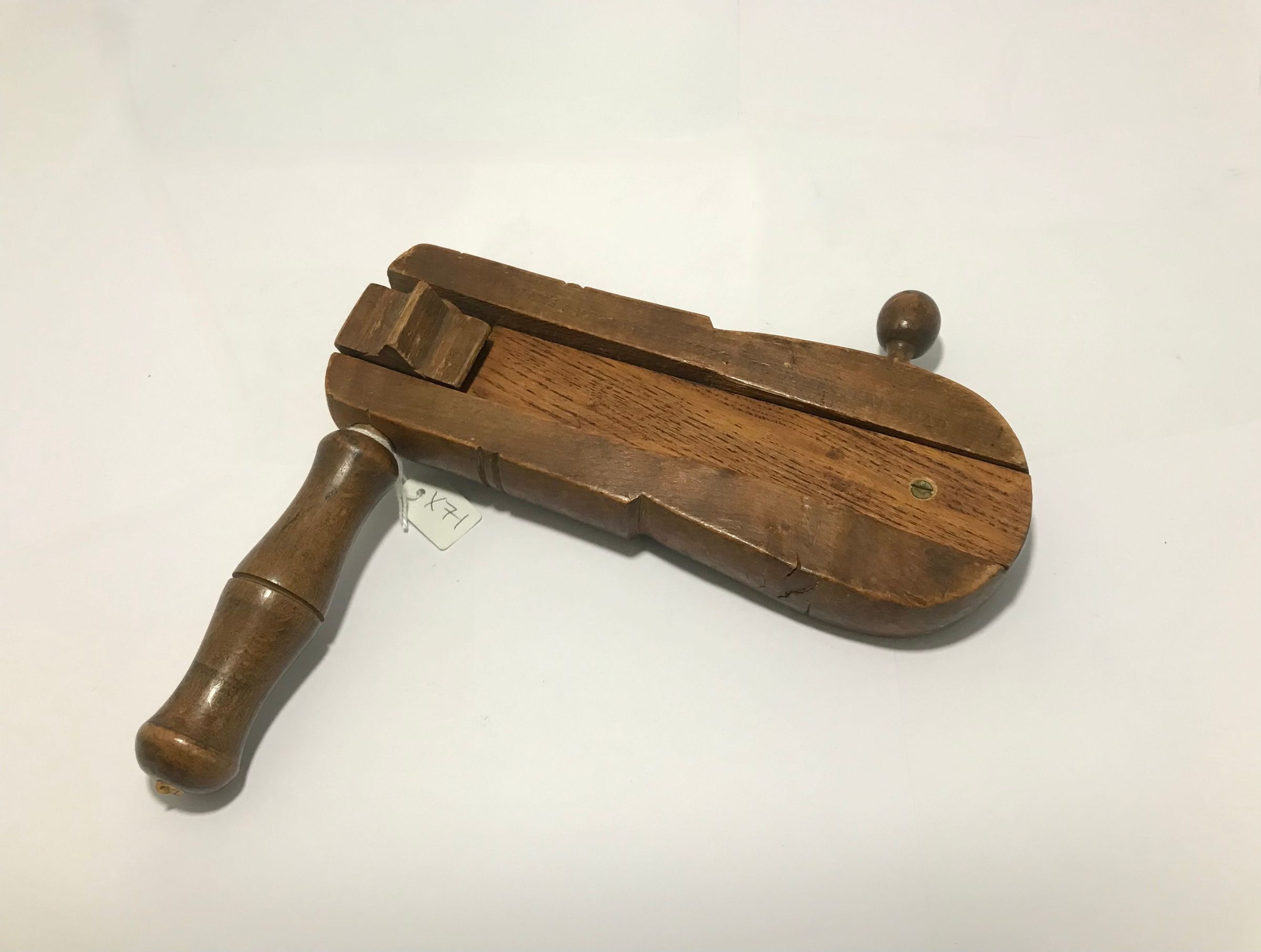
Wooden police rattle with turning knob c1860Entry/Object ID
71Description
Wooden rattle with fixed handle, no weights and a turning knob attached to the top. Stamped on one side "Williams 6 Ferdinand Terrace Hampstead Road". There is also written in red ink "R4656" and a small circular collector's type sticker with the number "24" written on it.Use
To raise the alarm and summon the assistance of other officers.Context
Rattles were used since at least the 17th century as a means of raising an alarm. They were used by the first Metropolitan Police officers in 1829, as they had been by the watchmen they replaced. The type of rattle pictured is of an early type used by police in the UK. It is not designed to be swung to spin it around, instead it has a small handle on top with which it was turned. These rattles are though to precede smaller weighted ones (item 1182), because they are larger and require two hands to operate. Similar style rattles are thought to have been used by the original London watchmen. Rattles were only phased out by police with the widespread introduction of the police whistle in the 1880s.
This particular rattle was apparently manufactured by a maker called "Williams" of "6 Ferdinand Terrance Hampstead Road". At this time not much is known about this company and it is not one of those usually associated with police equipment in the Victorian period. However newspaper advertisements from 1859 and 1860 (Marylebone Mercury December 1859-March 1860) show a John Williams operating from this address. He is described as a cocoa-nut-fibre matting manufacturer, and a maker of brushes and brooms. Given that broom and brushes manufacture would have involved turning and woodwork, it seems likely that he also made rattles as well, perhaps as a sideline. The adverts state the company was formed in 1847. Given the dates of the advertisements this rattle probably dates to c1860. The fact that it came from Sussex Police suggests it may have been used by police and the circular sticker indicates that it was part of a collection of items.
Whistles replaced rattles because not only were they easier to carry than bulky rattles but experiments in London showed they could be heard over a much longer distance than a rattle.