Antique Copper Printing Plates
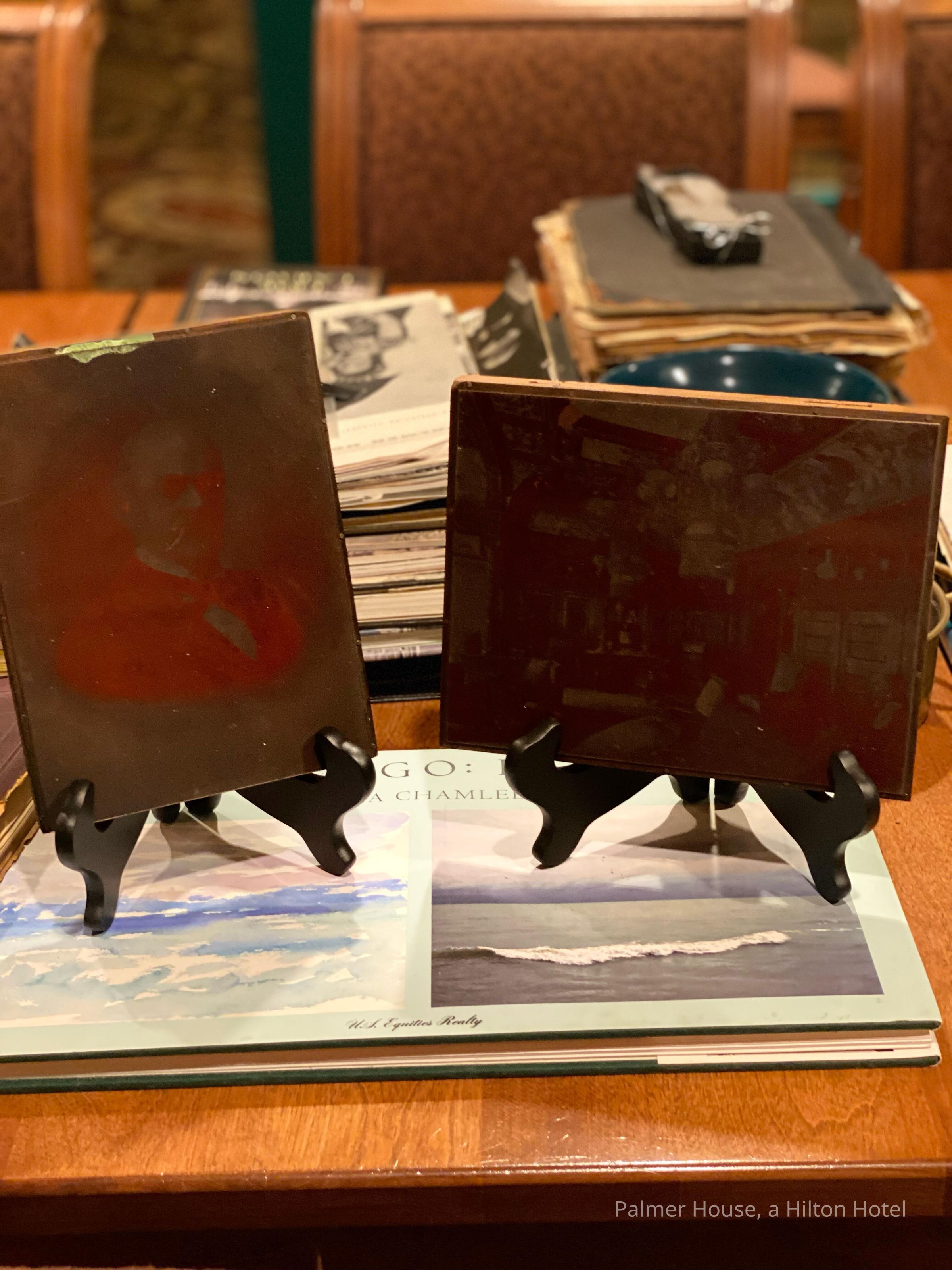
Potter Palmer & Salon of the Palmer’s Castle: Palmer Castle’, inside and out, was quite a piece of work. The interior was a mixture of styles; French drawing room, Spanish music room, and English dining room, where as many as fifty were regularly entertained at a seated dinner.

In these decades before women had the vote, Bertha, campaigning passionately for woman's equality, also made Palmer Castle available on numerous occasions for feminist meetings, and lectures to educate poor working girls. So what if a few silver spoons went missing? To cope with Mrs. Palmer's exhaustive social and charitable schedule of Castle events, Mr. Palmer would also often go missing, escaping in his private elevator, (the first in Chicago) to an eighty foot ivy-covered tower, the most dramatic feature of the Castle
Potter Palmer & Salon of the Palmer’s Castle

Palmer Castle’, inside and out, was quite a piece of work. The interior was a mixture of styles; French drawing room, Spanish music room, and English dining room, where as many as fifty were regularly entertained at a seated dinner. In these decades before women had the vote, Bertha, campaigning passionately for woman's equality, also made Palmer Castle available on numerous occasions for feminist meetings, and lectures to educate poor working girls. So what if a few silver spoons went missing? To cope with Mrs. Palmer's exhaustive social and charitable schedule of Castle events, Mr. Palmer would also often go missing, escaping in his private elevator, (the first in Chicago) to an eighty foot ivy-covered tower, the most dramatic feature of the Castle

Name/Title

Antique Copper Printing Plates

Description

A method of printing with engraved copperplates was developed in Ireland in 1752 and then brought to England. Prints from copperplates produced designs with even finer details, almost equal to the quality of a print on paper, but they were limited to one color To create copperplate or engraved print, the image to be reproduced is first engraved onto a copper plate. Nowadays this is normally achieved through computer typesetting, but hand tooling may still be employed to capture fine detail or rout out larger areas. The plate is then inked and stamped against a sheet of paper at pressures of up to two tons per square inch, causing the image to be transferred to the paper stock. The extreme force used in the copperplate printing process presses the paper deep into the engraved areas of the printing plate, creating an impression on the paper surface. It is this impression that imparts the finished image with its unique, three-dimensional character and tremendous tactile appeal. In addition because copperplate printing inks are opaque, they produce crisp, well defined images in colours that are exceptionally clear and true. Their opacity also allows the engraving of light-coloured images on darker paper stocks.

Artwork Details

Subject

Potter Palmer & the Palmer Castle

Made/Created

Artist

Unknown

Time Period

19th Century

Create Date

December 2, 2021

Update Date

December 2, 2021