Notes
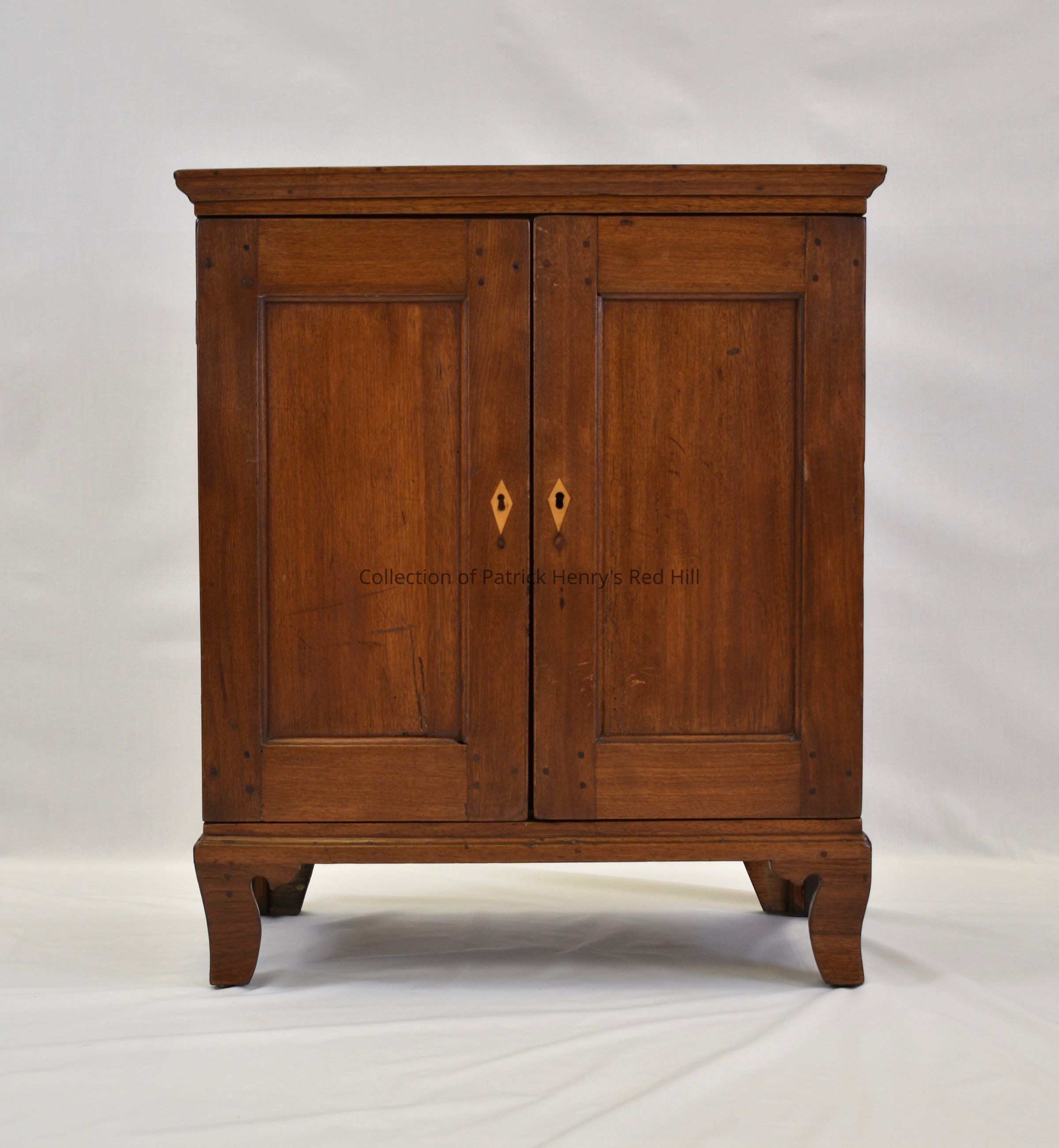
This document or ledger cabinet is said to have been used by Patrick Henry.
The exterior walnuta and yellow pine cabinet is part of a small group of attractive and distinctive furnishings made in or immediately around Winchester, Virginia. It is a rural Chippendale form, dating from circa 1790. Its diminutive size and excellent, appealing design make it a very desirable and rare form.
The interior case of drawers is of heavy and overt construction of white pine, featuring prominent dovetails at all joints of both case and drawers and thick wood stock. This work is typical of Germanic Pennsylvania craftsmen, and more specifically of work by that group during the early- and mid-19th century. It's estimated to have been made in the first half of the 19th century. White pine was the first choice of rural Pennsylvanian (but not Virginian) furniture makers. The case of drawers was added sometime after Patrick Henry's death. Henry's original cabinet would likely have been completely vacant on the inside.
The cabinet is likely listed in the Red Hill estate inventory in 1799 as "1 Small Cabinet" worth £3. Following Henry's death, at an unknown time, the cabinet passed to Henry's grandson, Patrick Henry Scott (1815–1865). Scott's sister, Elizabeth "Bessie" Scott Arendall (1879–1967), sold the cabinet to Frank Liipfert Horton (1918–2004) in 1939 for $40. Horton, founder of the Museum of Early Southern Decorative Arts, placed the cabinet on loan to the museum from 1969 to 1998. Mr. Horton then gave the cabinet to Virginia Shaw English (1909–2006), a board member of the Patrick Henry Memorial Foundation.
Virginia English gifted the cabinet to the Patrick Henry Memorial Foundation on July 10, 1998.