Notes
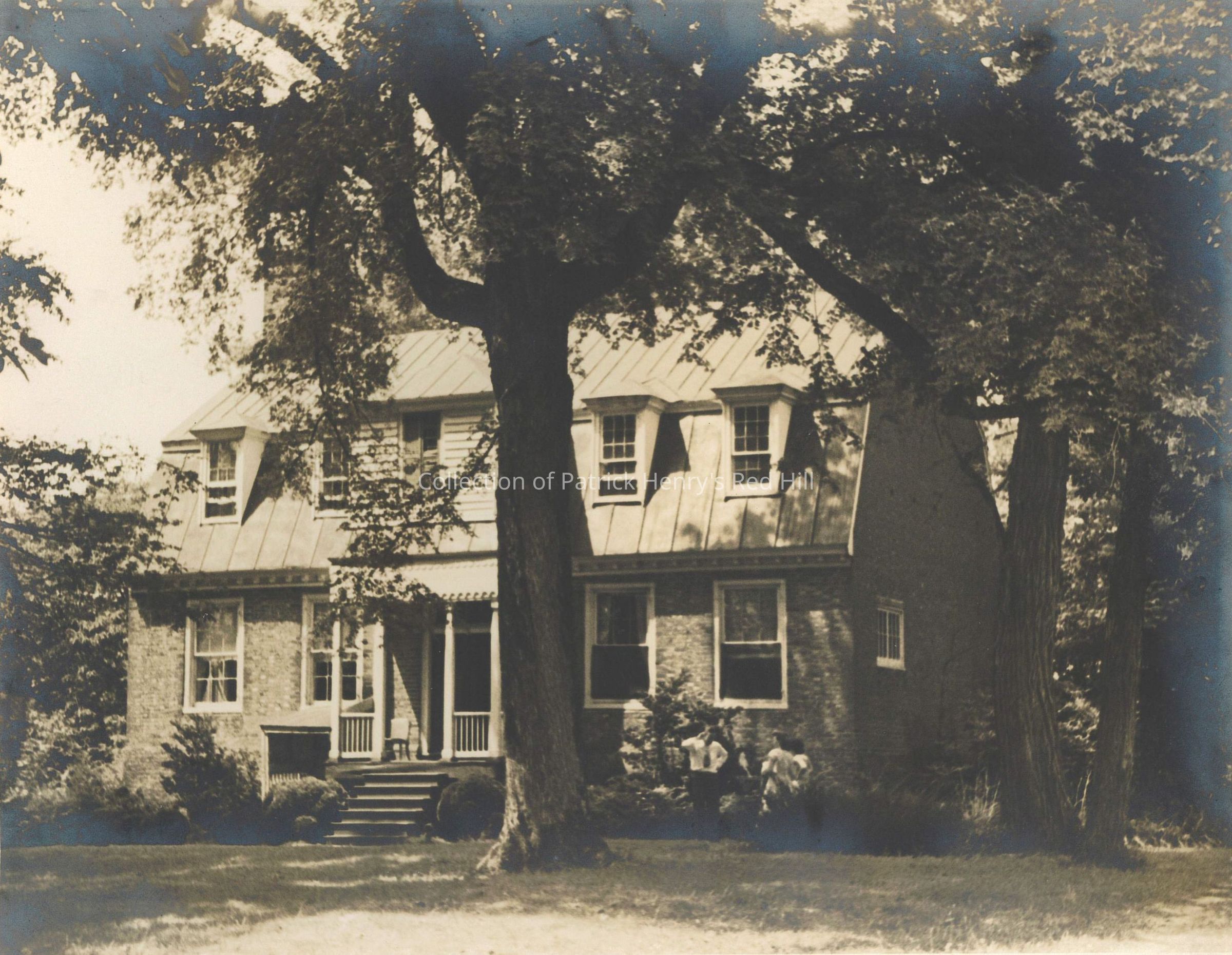
This photograph shows the house at Rural Plains plantation in Hanover County, Virginia.
Situated on a hill overlooking Totopotomoy Creek, Rural Plains is the ancestral home of the Sheltons of Virginia. Rural Plains is unusual in that it has remained within the same family for close to three centuries. According to Shelton tradition, the farmhouse was built upon a 5,000-acre land grant that was bestowed to the Shelton family by James I in 1609. Although 1670 is the usual date given for the construction of Rural Plains, its Flemish bond, glazed headers, and gambrel roof suggest that the present home was probably built in the early or mid-18th century, probably for John Shelton, the grandfather of Sarah Shelton. Upon Mr. Shelton’s death the property passed to his son, John, who married Eleanor Parks, daughter of Williamsburg printer William Parks.
In the autumn of 1754 Patrick Henry married John and Eleanor Park’s youngest daughter, Sarah. As Studley plantation—Henry's birthplace and family home—was located just a few miles east of Rural Plains, it is likely that Patrick and Sarah had known each other since childhood. According to family tradition, Reverend Patrick Henry performed the ceremony in front of the fireplace in the parlor of Rural Plains. Upon their marriage, John Shelton presented the young couple with six enslaved persons and a 300-acre tract carved from the eastern portion of his property known as Pine Slash.
Professor Bernard Drell took this photograph during a visit to Rural Plains. One subject in the image is Dr. Robert Douthat Meade (1903–1974), author of the two-volume biography of Patrick Henry, "Patrick Henry: Patriot in the Making" (1957) and "Patrick Henry: Practical Revolutionary" (1969).
Bernard Drell donated the photograph to the Patrick Henry Memorial Foundation in 1947.