Notes
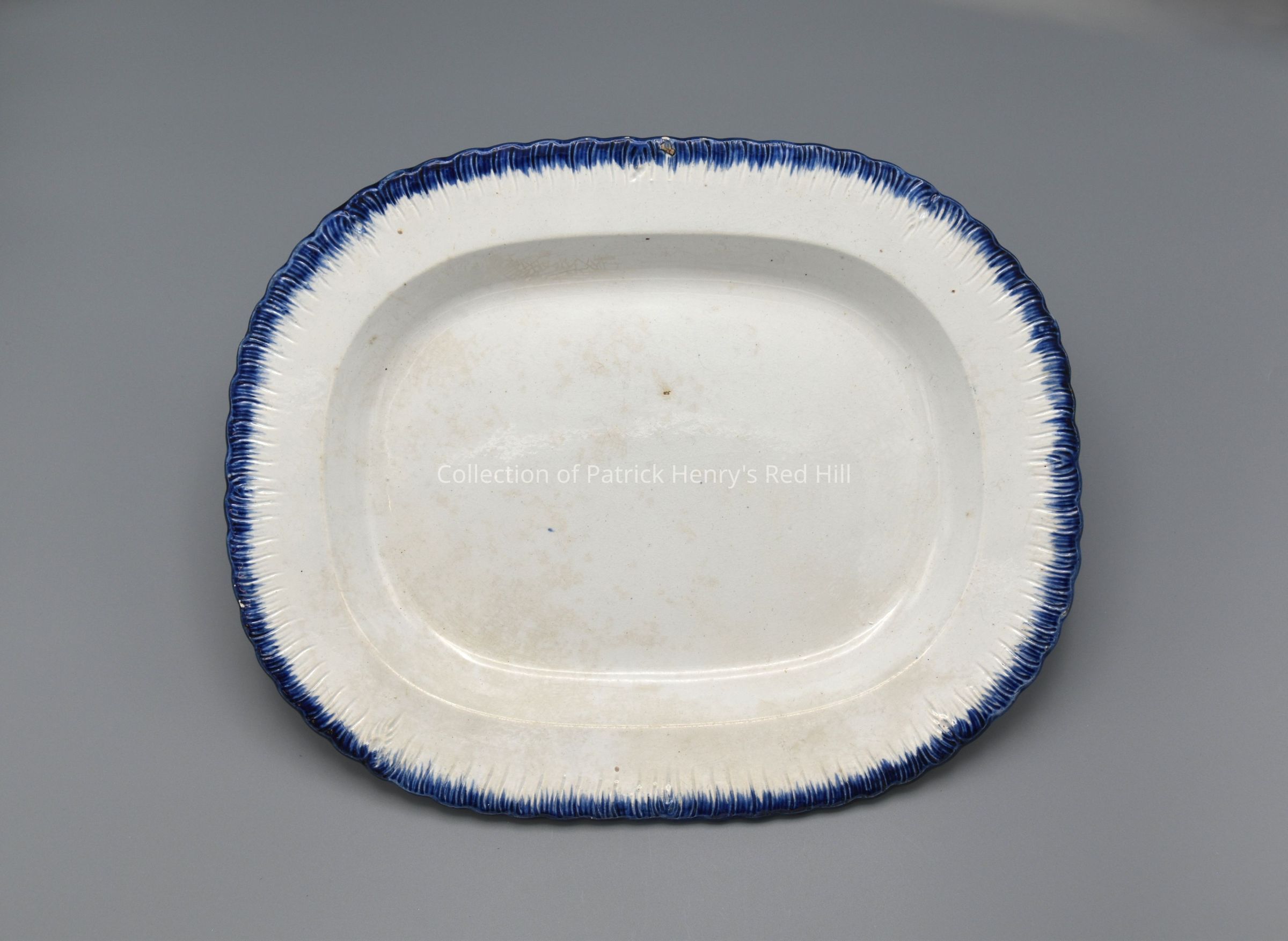
This platter is part of a set of pearlware ceramics. Pearlware is a fine glazed earthenware pottery introduced in the late 18th century. Known for its bright, “pearly” glaze, achieved by adding small amounts of cobalt oxide, pearlware was created as a refinement of creamware.
Shell-edged earthenware, popular in North America from 1790 to 1860, was inexpensive tableware decorated with rococo-inspired shell motifs. First introduced by Josiah Wedgwood in the mid-1770s on creamware, the style was soon adopted by other English potteries.
Patrick Henry owned a large set of shell- or feather-edged plates at Red Hill, which likely looked much like this one. According to the estate inventory of Red Hill, taken on September 11, 1802, Henry possessed seven blue-edged earthen breakfast plates and 16 blue-edged earthen plates.
Preservation Virginia transferred this platter as part of a collection of shell-edged ceramics on April 24, 2025.