Early 20th Century Telephone
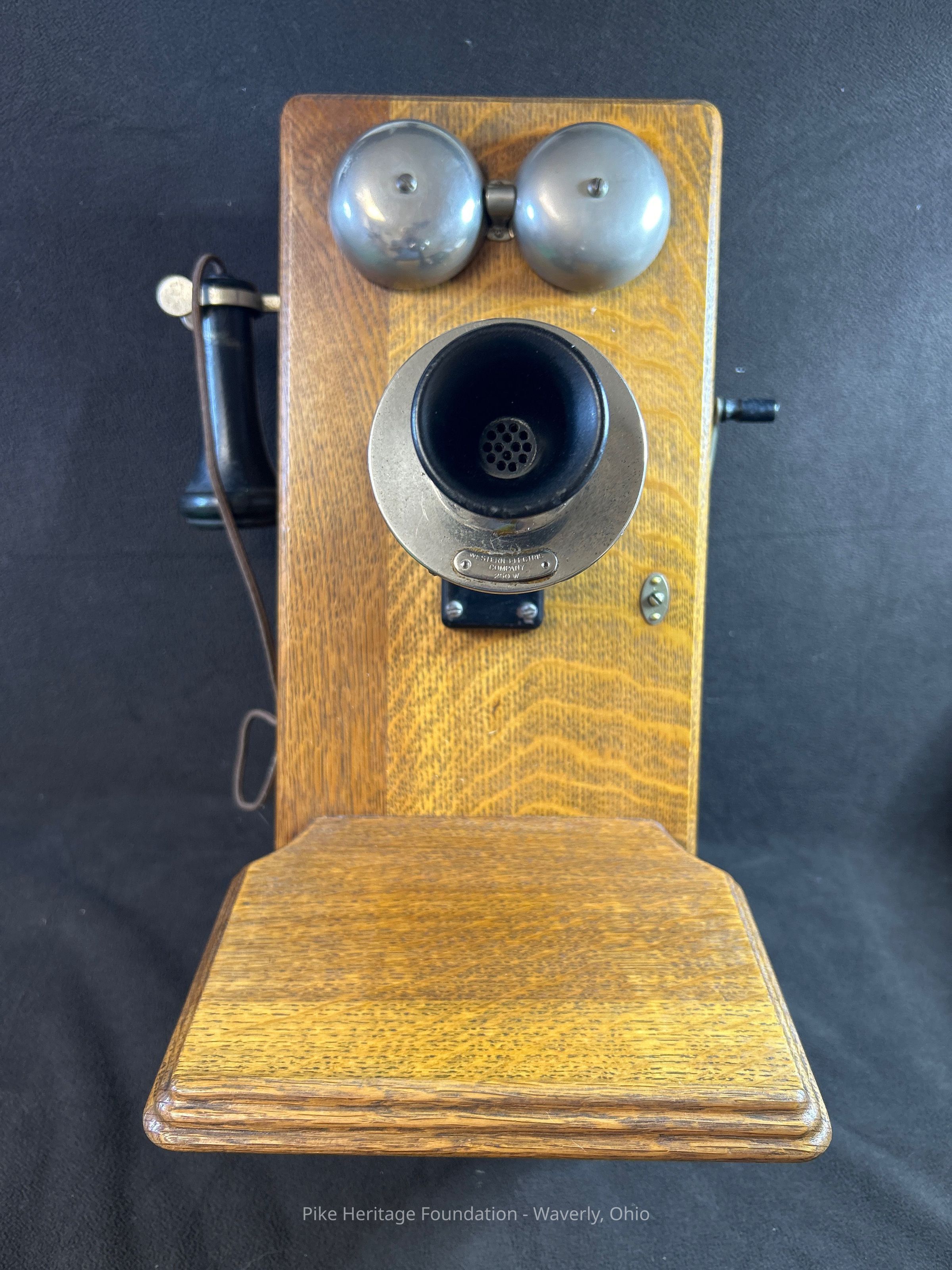
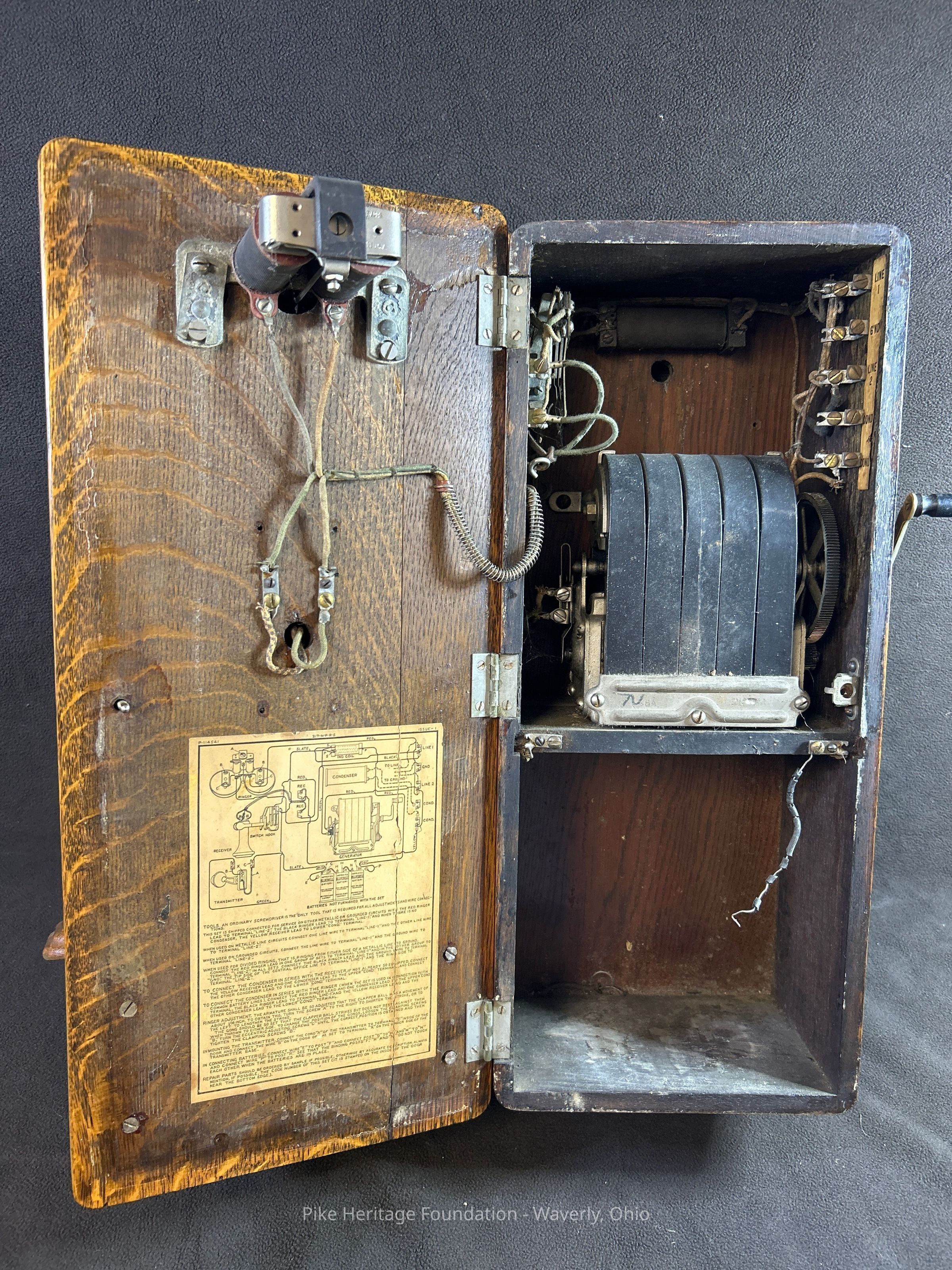
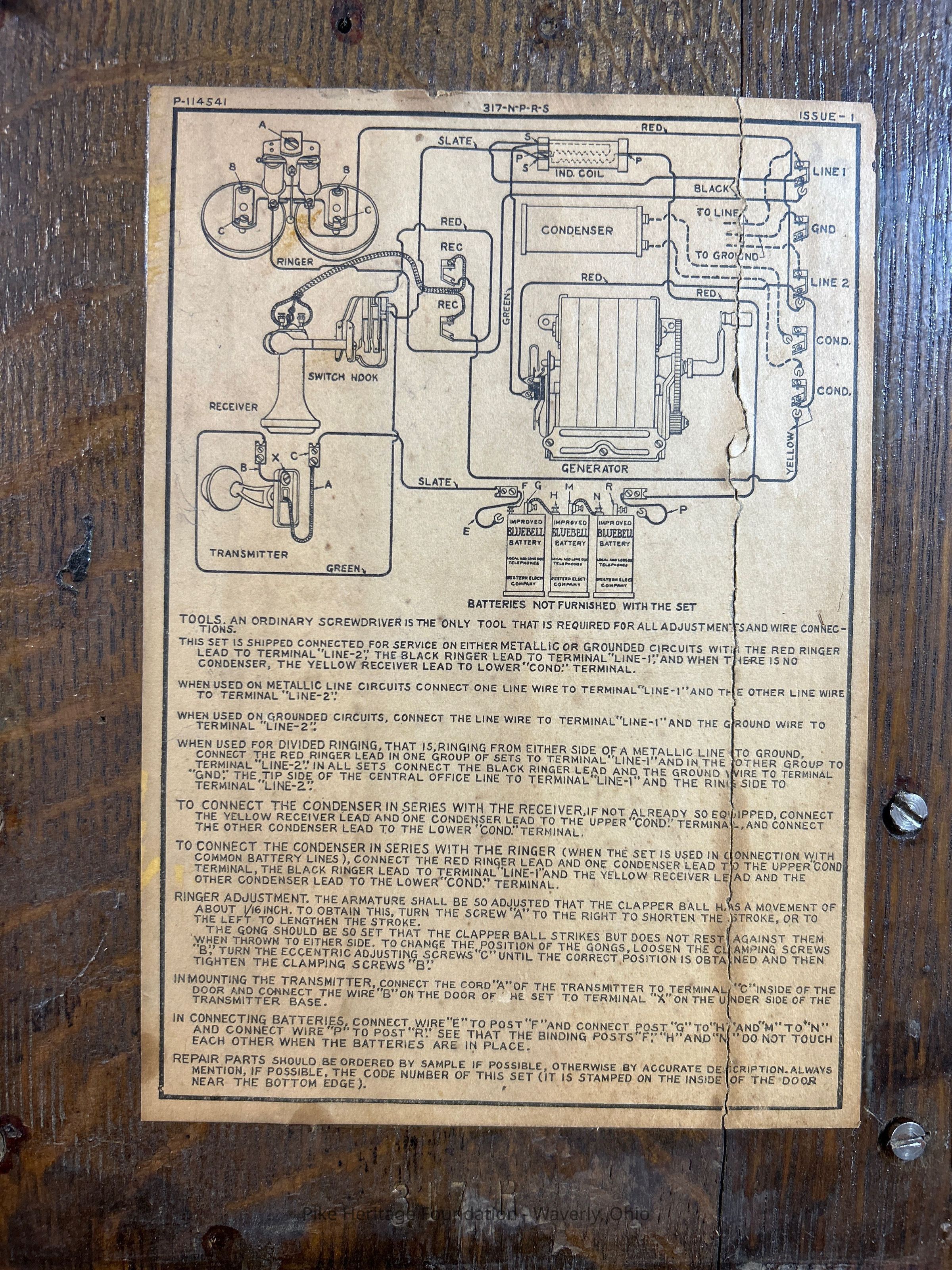
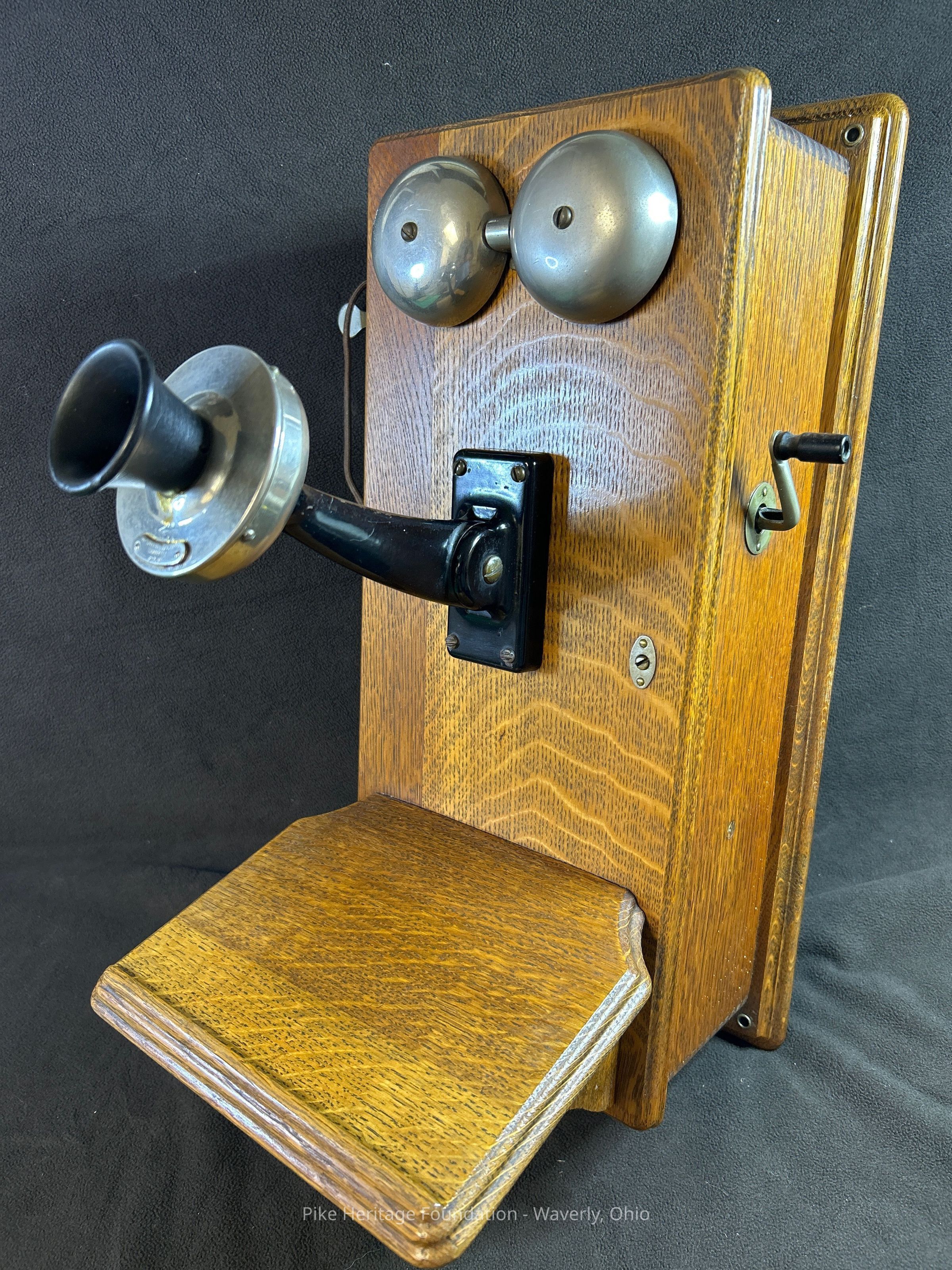
Western Electric Model 317 Wall Telephone
This is a classic example of a Western Electric Model 317 wall telephone, often referred to as a "cathedral" or "fiddle-back" style depending on the specific woodwork, though this particular flat-top design was the workhorse of rural American telecommunications in the early 20th century. Here is a breakdown of its features and history: Key Components • Magneto Crank: The handle on the right side was used to manually generate an electrical current to ring the operator or other parties on a "party line." • External Bells (Ringer): The two nickel-plated bells at the top provided the audible alert. • Mouthpiece (Transmitter): This is a "long-distance" transmitter, likely a Western Electric 250W model (as indicated by the plate). • Receiver: The black "pony" receiver hanging on the left was held to the ear. • Writing Slope: The wooden shelf at the bottom was designed for users to take notes during a call—a luxury in an era when most calls were brief and functional. Historical Context • Era: This model was primarily produced between 1907 and the 1930s. • The "Party Line": These were commonly used on rural party lines where multiple neighbors shared a single circuit. Each house had a specific ring pattern (e.g., two shorts and a long) so you knew when a call was for you. • Construction: The cabinet is typically made of quartersawn oak, prized for its durability and the "flake" or "tiger stripe" grain pattern visible in the photo.