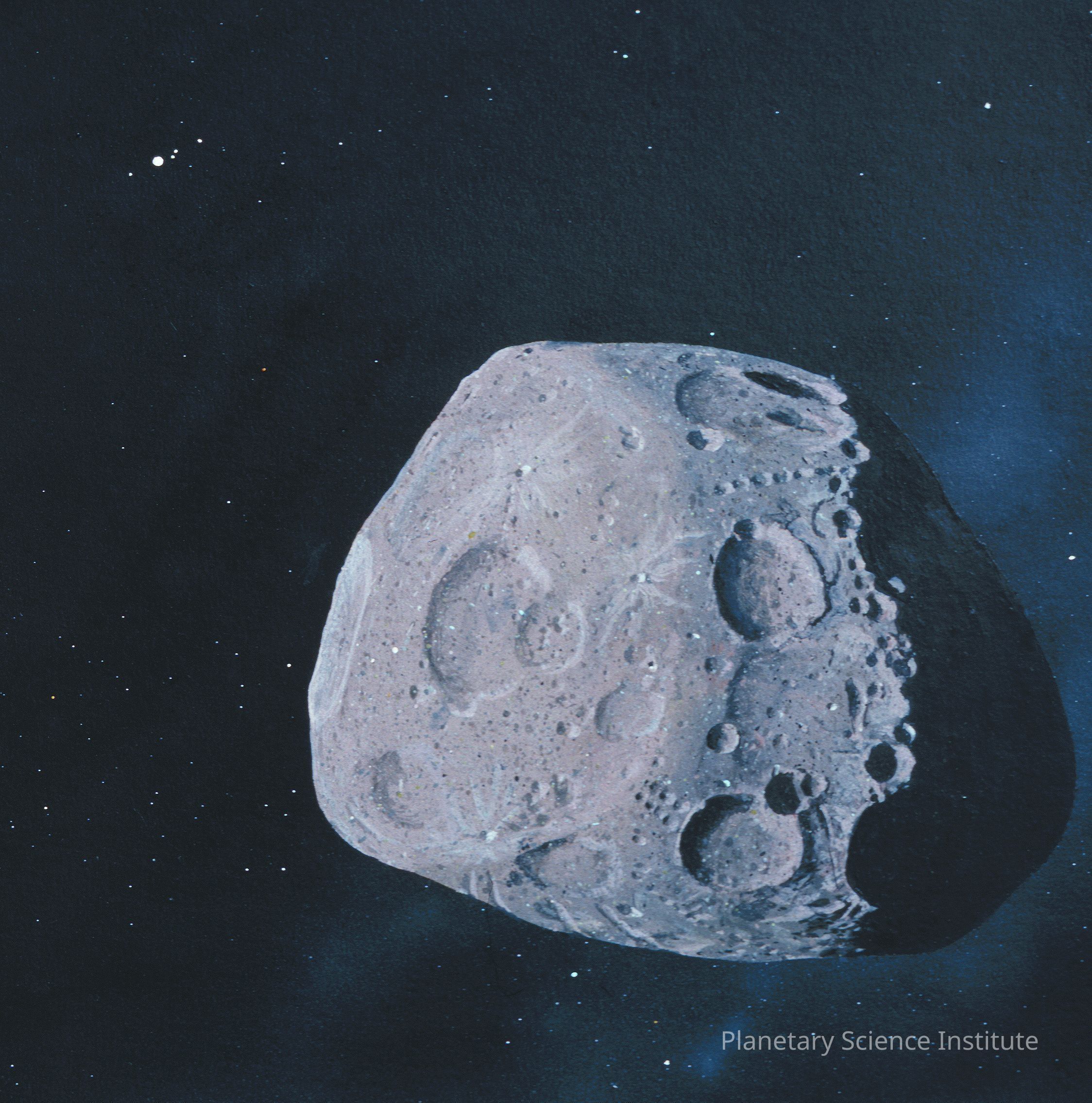
The coloration of this D spectral class asteroid is believed to come from a mixture of black carbonaceous material and reddish-brown organic compounds. The Trojans orbit the Sun 60° ahead of and behind Jupiter, which makes them further from Jupiter than the Earth is at opposition. In this extreme case, Jupiter can be seen in the distance.