Name/Title
Burner, IncenseEntry/Object ID
1955.003.004Description
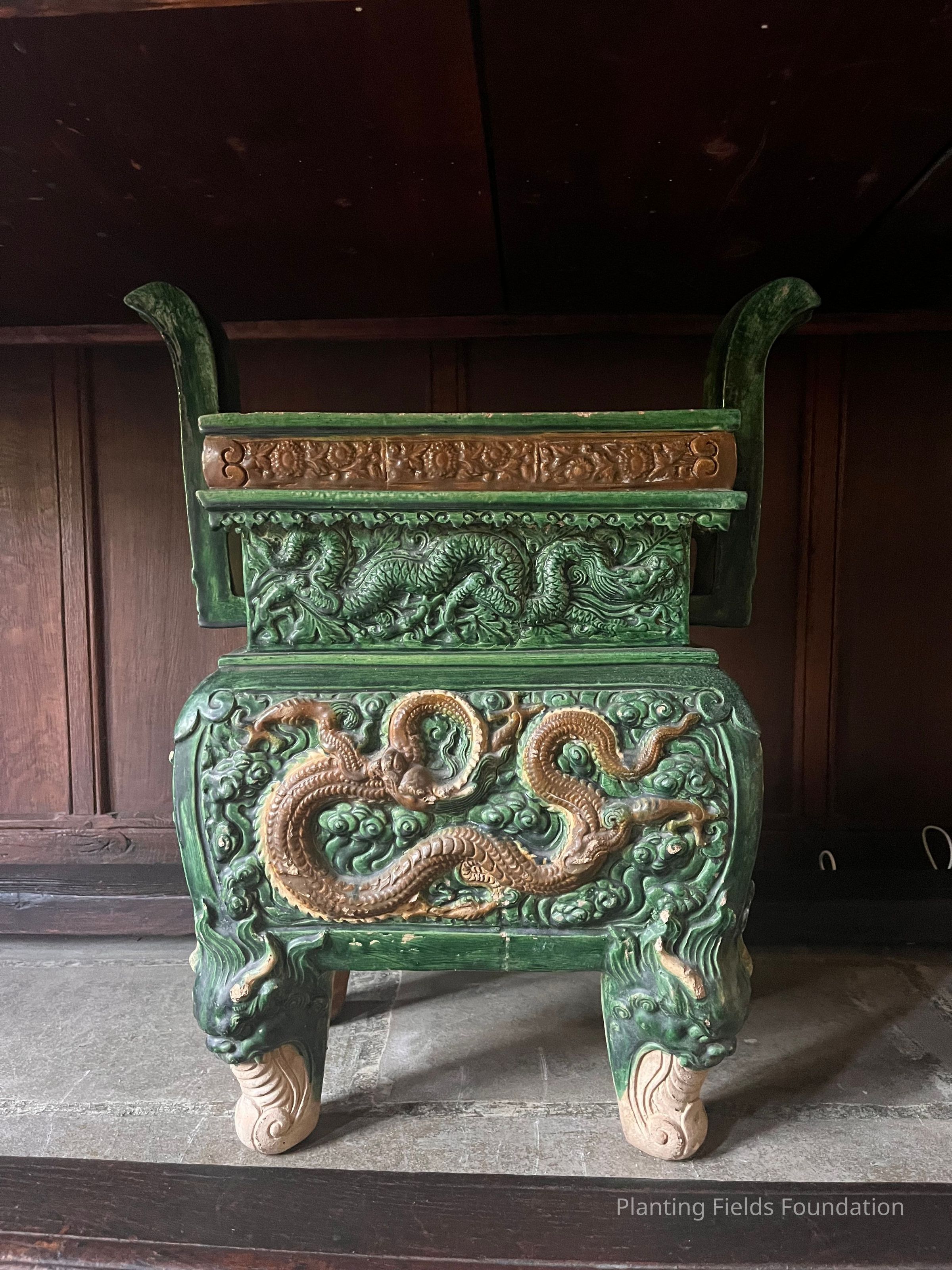
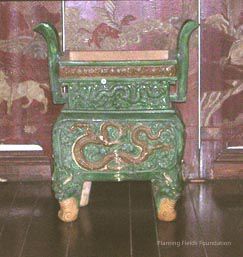
Green and ochre-glazed incense burner, having rectangular form with overall cast dragon and foliate designs, supported on four earth-spirit or animal masque legs.Collection
Planting Fields FoundationCataloged By
CannarsaAcquisition
Accession
1955.003.004Source or Donor
Coe Estate, from another buildingAcquisition Method
Found in CollectionMade/Created
Notes
Date: 18th Century-19th CenturyLexicon
Nomenclature 4.0
Nomenclature Secondary Object Term
Burner, IncenseNomenclature Primary Object Term
Dispenser, FragranceNomenclature Sub-Class
Other Household AccessoriesNomenclature Class
Household AccessoriesNomenclature Category
Category 02: FurnishingsDimensions
Height
24 inWidth
12 inLength
19-1/2 inMaterial
Ceramic, Slip Decoration, Ceramic: Glazed TerracottaLocation
Location
Room
GalleryBuilding
Main HouseCategory
PermanentDate
August 16, 2023Location
Room
Dining RoomBuilding
Main HouseCategory
PermanentLocation
Room
Great HallBuilding
Main HouseCategory
PermanentLocation
Room
Writing RoomBuilding
Main HouseCategory
PermanentInventory
Inventory Project
INV2024.1Inventoried By
Amanda MassimillioInventoried Date
Jun 26, 2024Inventoried By
LegerInventoried Date
Apr 10, 2023Condition
Overall Condition
FairNotes
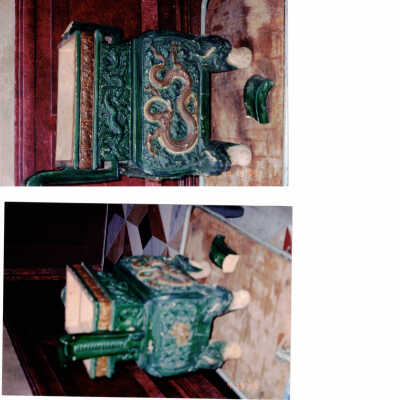
Missing cover. Arm re-attached in 1999 at Peebles Island.Valuations
Valuation Type
AppraisalEstimator
J. BadamiDate
Apr 3, 2004Notes
Min. Value: 2500Provenance
Notes
Collected By: William Robertson Coe
William Robertson Coe
Planting Fields FoundationResearch Notes
Person
Boxi Liu, Bard Graduate CenterNotes
This piece is definitely an incense burner, and its shape is directly inspired by ancient Chinese bronze ding vessels (specifically, the rectangular one called a "fangding"). Based on the image, it's a heavily potted, glazed ceramic piece, a style often called liuli (architectural glazed pottery), or sancai (tricolor-glazed wares). This type of incense burner would have served as an altar centerpiece in Buddhist and Taoist temples in the Ming (1368-1644) or the Qing Dynasty (1644-1911). Your records dating it to the 19th century is quite plausible.General Notes
Note
Notes: One of a pair, original to Coe Hall. Rescued from the Greenhouse by Robert Titus and returned to Planting Fields in 1998. Other urn had been smashed.
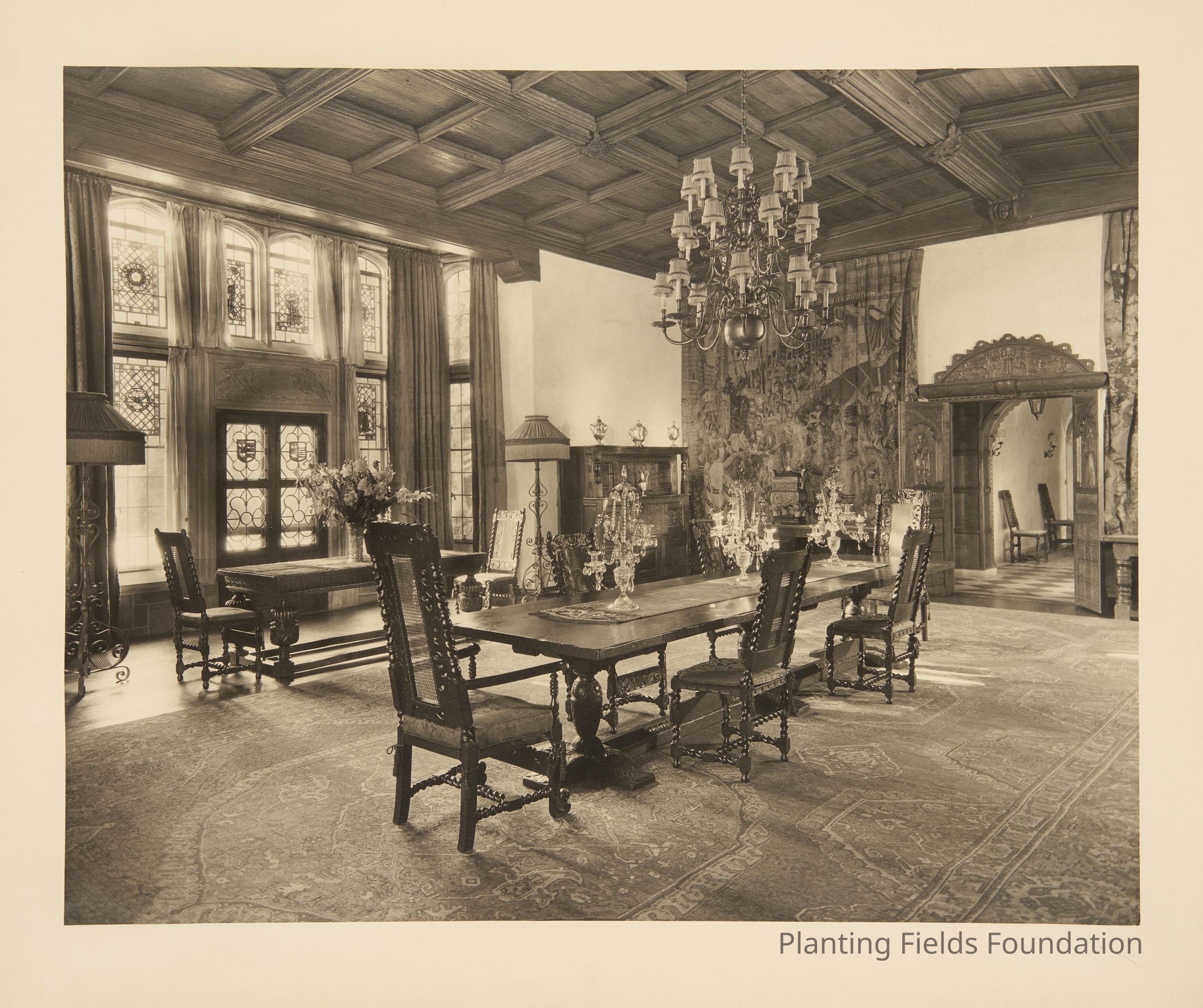
Both urns appear in Mattie Hewitt's photos of Coe Hall from the 1920's.
Status: OKCreate Date
August 14, 2006Update Date
July 30, 2026