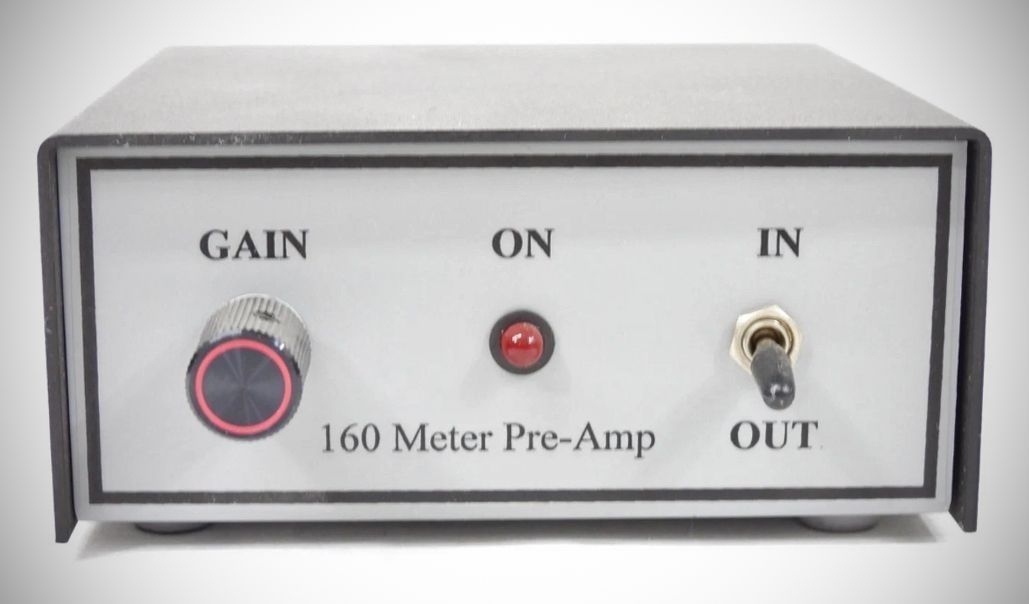
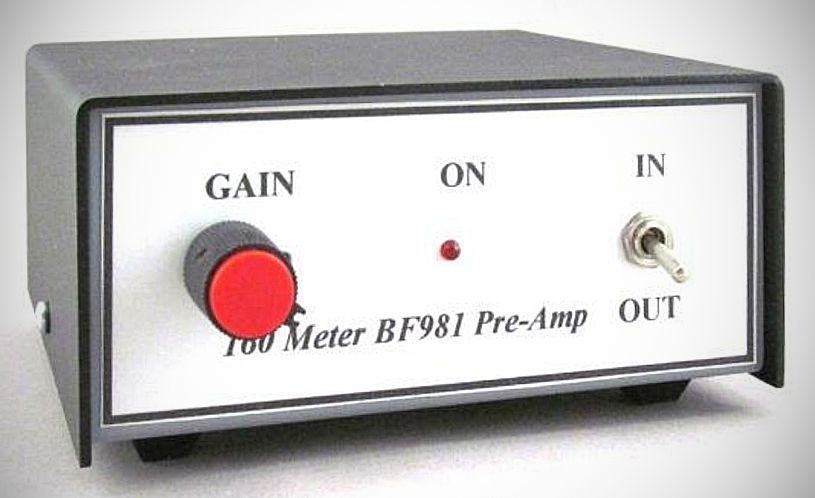
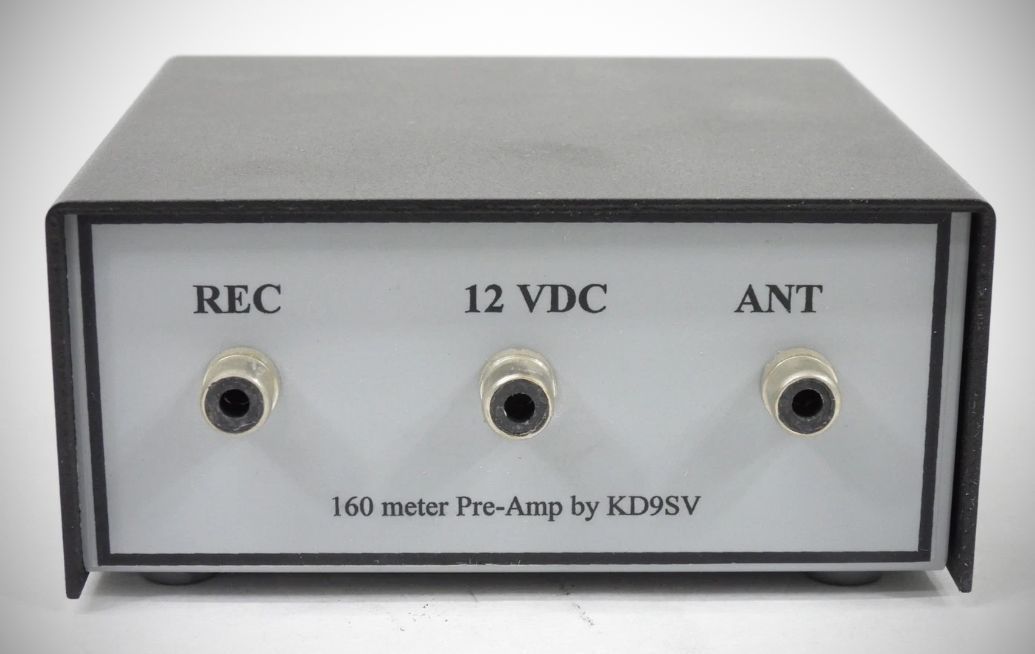
The KD9SV 160-meter pre-amp is a specialized amplifier designed to enhance the performance of low-noise receive antennas.
This pre-amplifier is specifically engineered for use with low-output, low-noise antennas such as Loops, Pennants, Flags, or Beverage antennas. It has been redesigned to incorporate the BF981 FET, which allows for a significantly improved noise figure and increased gain compared to previous versions. To ensure signal purity, the unit features both a tuned input and a tuned output, which provides high rejection of local Broadcast Station interference.
The redesigned KD9SV 160-meter pre-amp features several performance upgrades over the original 1989 design.
Key Differences at a Glance
Feature Original Redesign (SVP-SV-160)
Active Component 3SK88 (dual-gate MOSFET) BF981 FET
Noise Figure estimated ~4.9dB) 0.7dB** (Typical)
Gain Range ~0dB to 25dB+ 10dB to 28dB
– Upgraded FET Technology: The primary change in the redesign is the transition to the BF981 FET. The original 1989 circuit relied on the 3SK88 dual-gate MOSFET. The BF981 offers a much lower noise floor.
– Significantly Lower Noise Figure: The new model boasts a typical noise figure of 0.7dB. Early measurements of older KD9SV designs showed noise figures closer to 4.9dB, meaning the redesign is substantially quieter.
– Enhanced Selectivity: The redesign emphasizes BCB rejection, providing around 45dB of attenuation at 1 MHz.
– Refined Gain Control: The newer unit allows for granular adjustment from 10dB to approximately 28dB via a front-panel knob. While the original design could reach similar gain levels, the new circuitry is optimized to maintain high linearity across this range.
– Modern Manufacturing: While early versions were built from kits or Far Circuits boards, the redesigned units are professionally manufactured and distributed exclusively through DX Engineering.
Power Requirements: 12 VDC (Nominal)
**Note:** It is highly recommended to use front-end protection (such as the SVP-SV-FESSS) when connecting this to a transceiver's auxiliary antenna input to prevent damage from RF during transmission.