Note
The Ten-Tec Pegasus Model 550 is a PC-controlled HF transceiver that utilizes digital signal processing at the IF level. Designed around an Analog Devices AD2181 DSP processor chip, the Pegasus replaces traditional analog circuitry with microprocessor technology, allowing it to be easily updated with software and firmware downloads .
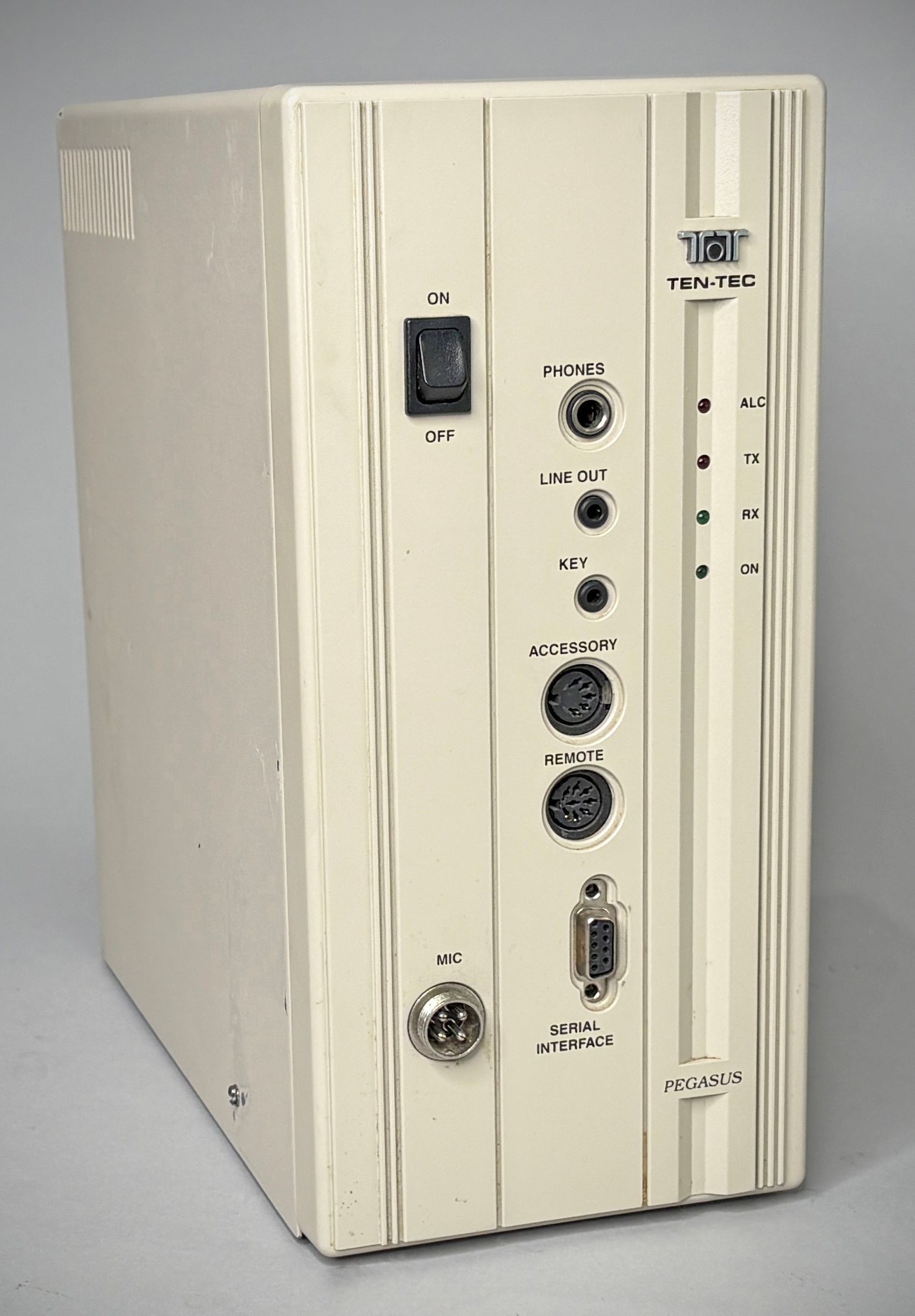
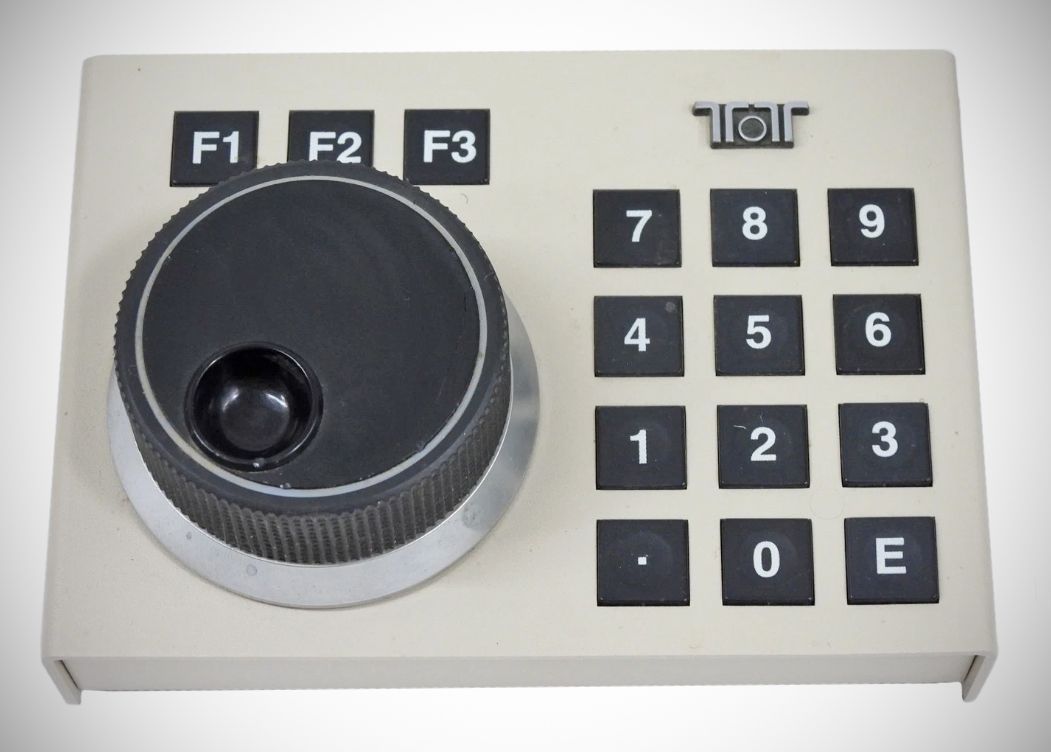
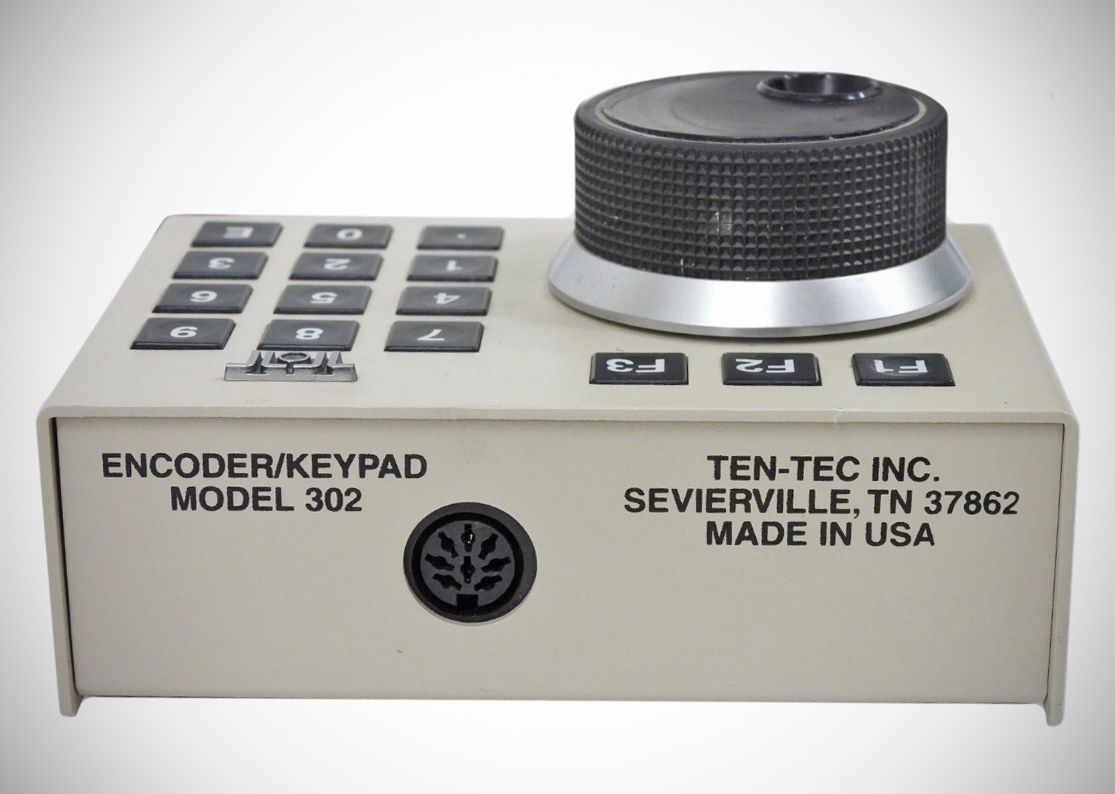
Unlike traditional radios, the Pegasus lacks a physical front-panel interface . Instead, all features and controls are displayed on your computer monitor as a "virtual front panel" and are operated via keyboard, mouse, or an optional remote encoder/keypad . It covers all amateur bands from 160 through 10 meters and features a continuous-coverage general HF receiver operating from 100 kHz to 30 MHz .
---
Basic Features
– Operating Modes: Supports CW (with full break-in QSK), SSB, AFSK (digital modes), and FM for transceive operation, plus AM for receive only .
– Extensive DSP Filtering: Features 34 built-in receive filters ranging from 300 Hz up to 8.0 kHz, ensuring excellent selectivity . SSB transmit bandwidth is also DSP-generated with 18 available settings .
– Dual VFOs: Equipped with VFO "A" and VFO "B" displays, allowing for SPLIT mode operation (receiving on one frequency and transmitting on another) .
– Advanced Interference Reduction: Includes DSP noise reduction that attenuates broadband noise by up to 15 dB, and a digital automatic notch filter that seeks out and nulls constant carriers in the passband .
– SweepPanel: A visual spectrum monitoring window that graphs active frequencies to help operators locate band activity .
– Unlimited Memories: Because the radio relies on the connected PC, the number of stored frequencies and station profiles is limited only by the computer's available RAM .
– Passband Tuning: Allows operators to shift the passband +/- 2 kHz to drop interference out of the signal .
Specifications
General
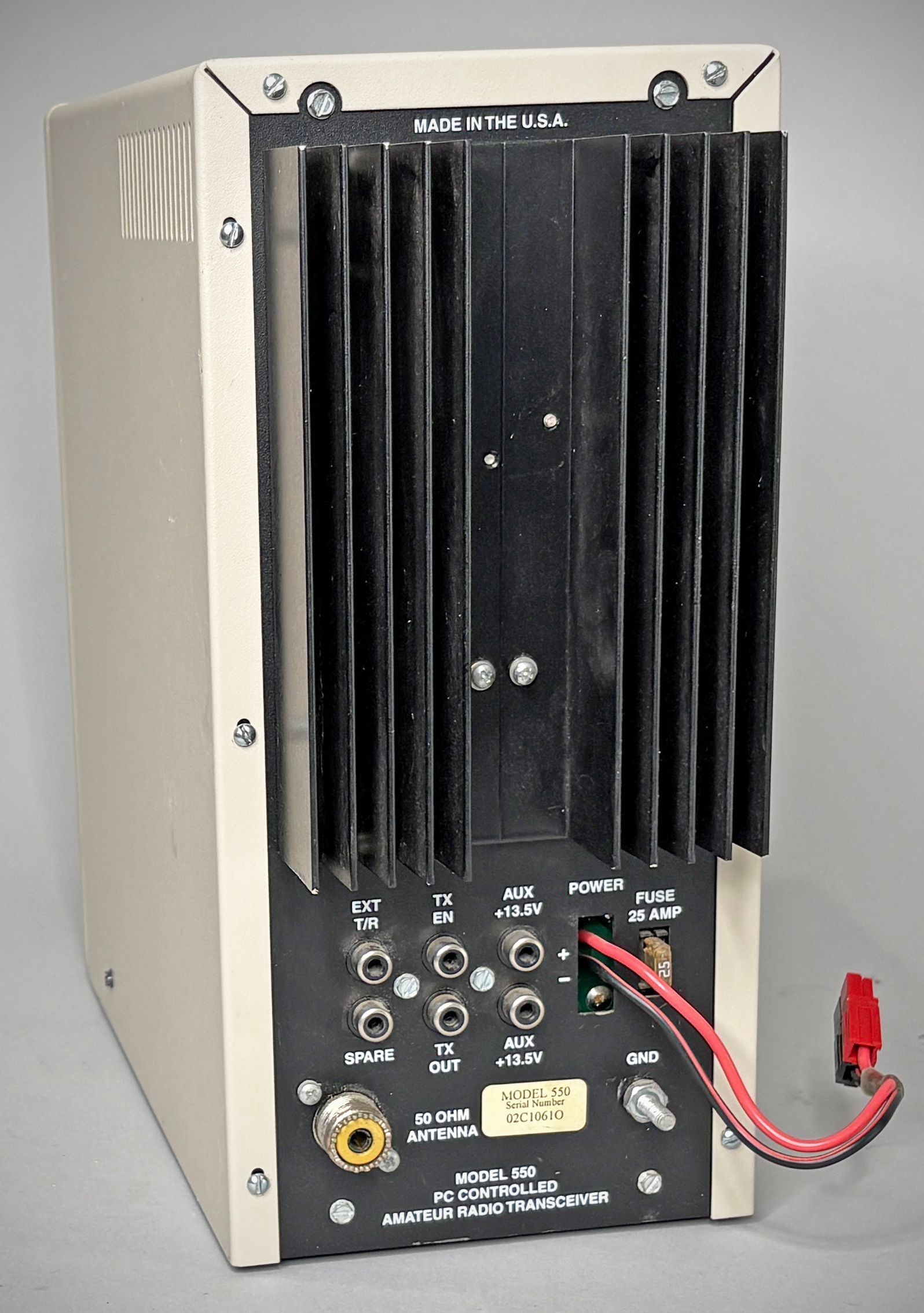
– Frequency Range: Receive: 100 kHz - 30 MHz; Transmit: all ham bands 160-10 meters .
– Frequency Accuracy: +/- 90 Hz at 25 degrees C at 30 MHz for 1 year .
– Offset Tuning: +/- 10 kHz for receive and transmit .
– Antenna Impedance: 50 ohms unbalanced .
– Power Requirements: 1A receive, 20A transmit @ 12-14 VDC .
Transmitter
– RF Output: 5-100 watts, ALC stabilized .
– Carrier Suppression**: > 50 dB .
– Unwanted Sideband Suppression: > 60 dB at 1.5 kHz tone .
– Spurious Output: Better than 40 dB below peak power output .
– Microphone Input: 200 ohms to 50K ohms; accepts microphones with 5 mv output and provides +4 VDC polarizing voltage for electrets .
Receiver
– Sensitivity: .35 uV typical for 10 dB S+N/N @ 3 kHz bandwidth in SSB mode .
– Dynamic Range: 90 dB @ 3 kHz bandwidth at 50 kHz spacing .
– Third Order Intercept: +10 dBm .
– Noise Floor: -126 dBm @ 3 kHz bandwidth .
– Image Rejection: > 60 dB typical .
– Audio Output: Speaker: 2 watts @ 4 ohms; Line out: > 1 V p-p into 600 ohms