Note
Abstract
This paper presents a historical overview of the National Company, Inc., charting its transformation from a small, part-time manufacturer of power plant hardware and phonograph toys into a preeminent leader in short-wave radio communications.
Founded in Massachusetts as the National Toy Company in 1914 by three Stone and Webster mechanical engineers, the firm initially diversified into household products to maintain steady production between sporadic power station construction contracts.
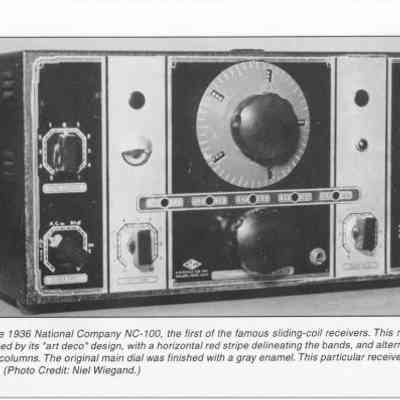
Prompted by the public radio craze of the early 1920s, the company shifted focus to manufacturing variable capacitors and radio tuners. The appointment of James Millen as Chief Engineer and General Manager in 1927 firmly established National in the radio industry, driving the technical evolution of pioneering regenerative receivers—such as the SW-3—and high-performance superheterodynes, including the AGS and the legendary, 30-year-spanning HRO series.
The study examines critical operational pivot points, including Millen's resignation in 1939 over a strategic dispute with principal shareholder Warren Hopkins regarding a proposed move into mass-market consumer electronics.
Paradoxically, the outbreak of World War II realized Hopkins' valuation goals through immense military demand for short-wave equipment, expanding the workforce tenfold and eventually leading the company to go public.
Finally, the paper documents the company's post-war trajectory, its subsequent management shifts, corporate restructuring into the National Radio Company, Inc., and its eventual financial dissolution and bankruptcy in the late 20th century. A comprehensive chronological list of amateur and commercial radio equipment produced by the firm between 1927 and 1960 is included to document its technical legacy.