Note
QST, Nov 1980, p. 199.
QST, Feb 1981, p. 95.
QST, Jan 1982 p. 183.
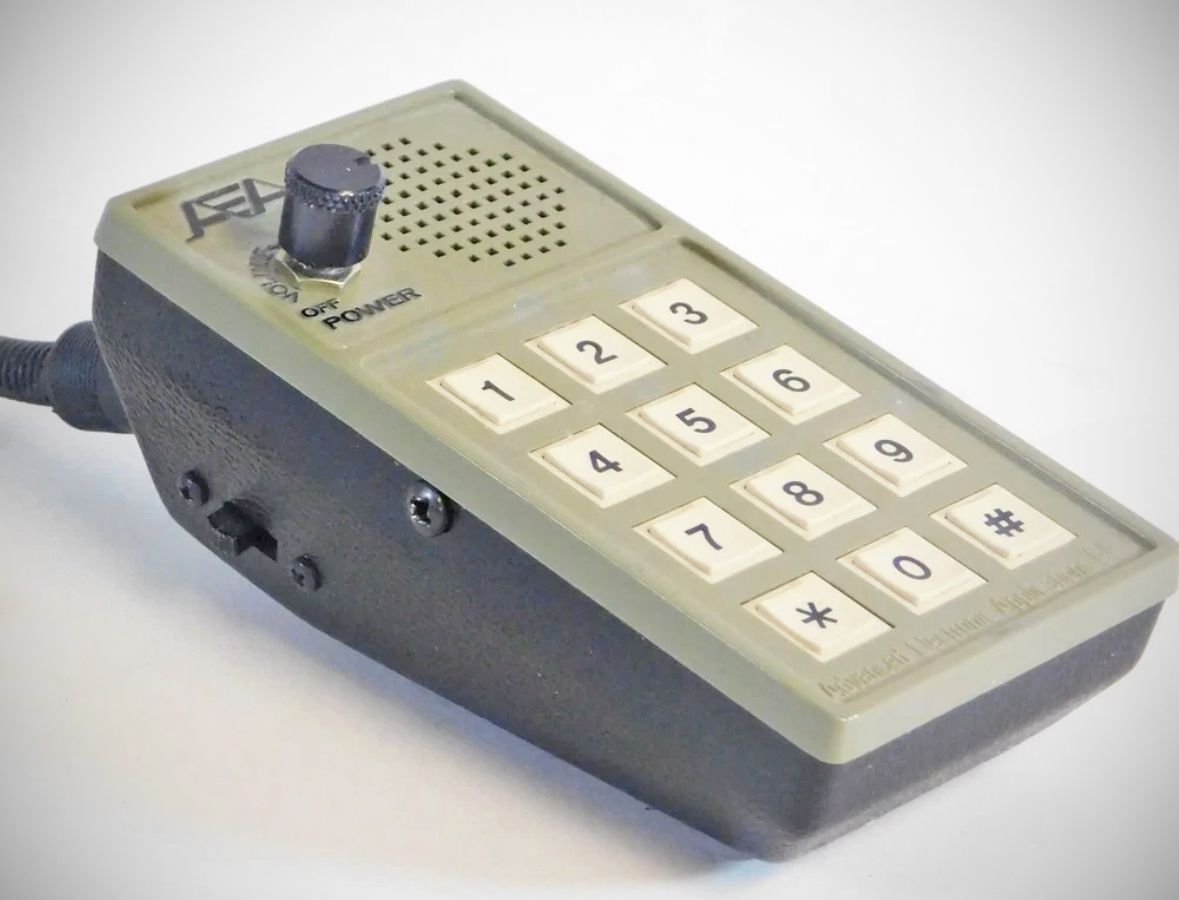
The AEA Model CK-1 is a microcomputer-controlled Morse memory keyer.
Variable and Preset Speed Control: Supports rapid CW speed adjustments. Operators can set two distinct "Preset Speeds" (programmed via key commands like `8NN` and `9NN`) for instant recall, or utilize a "Variable Speed Adjustment" that dynamically raises or lowers the speed while sending alternating dots and dashes.
Message Memory: Features ten separate, variable-length memory locations (designated 0 through 9) with a total capacity of approximately 500 characters. The length of each slot automatically adjusts during loading based on character length and pause durations.
Automatic Serial Numbering: Includes an automatically incrementing contest serial number (from 01 up to 9999) that can be inserted multiple times within any stored message. It resets or changes via the keypad.
Full Weighting Control: Allows customization of the dot-space ratio (adjustable from 0.5 to 1.5) and the dash-space ratio (adjustable from 2.0 to 4.0) to fine-tune the "feel" of the code. The device automatically recalculates the true Words Per Minute (WPM) based on the standard reference word "PARIS" when ratios are modified.
Dot and Dash Memories: Equipped with selectable iambic dot and dash memories enabled upon turn-on, helping users cleanly insert opposite elements during a string of continuous dots or dashes.
Operating & Programming Modes
The device utilizes a LOAD / SEND physical slide switch in tandem with a 12-key telephone-style matrix keypad (`0-9`, `*`, `#`) to control programming:
Memory Loading Modes
– Automatic Memory Load: The default mode upon power-up. Pauses longer than two space-lengths record a character space, and pauses longer than five space-lengths record a word space, halting memory consumption until the next character begins.
– Real-Time Memory Load: Selected by entering `*9` in the load position. It captures all the operator's physical pauses exactly as they are sent, though these pauses do occupy raw memory space.
– Semi-Automatic (Bug) Load: Messages can be entered using a semi-automatic bug paddle setting, though they will automatically playback with the standardized iambic dot/dash ratios during transmission.
Message Editing & Send Functionality
– Interruption & Resumption: A playback message can be stopped instantly by tapping a paddle or pressing the `#` key, allowing the user to insert hand-keyed text. The message can then be resumed precisely where it left off by pressing `*5`.
– Insertion & Deletion: Operators can pause a message, switch to "Load", use `*5` to add text, or hit `#` to permanently truncate and delete everything from that specific pause point to the end of the message.
Specifications
– Microprocessor/Logic: Uses a dedicated AEA 1980 MMK integrated circuit (U2), coupled with a 2114 RAM chip (U3) for text retention, and a CD4044B / MC14044B quad R-S latch (U1).
– Clock Speed: Driven by a 4.000 MHz crystal oscillator (X1).
– Power & Memory Retention: Powered by a 12V DC source regulated internally to 5V via a 7805 voltage regulator (U4). Because power is supplied continuously to the volatile 2114 RAM chip, turning the master power switch off erases the entire memory.
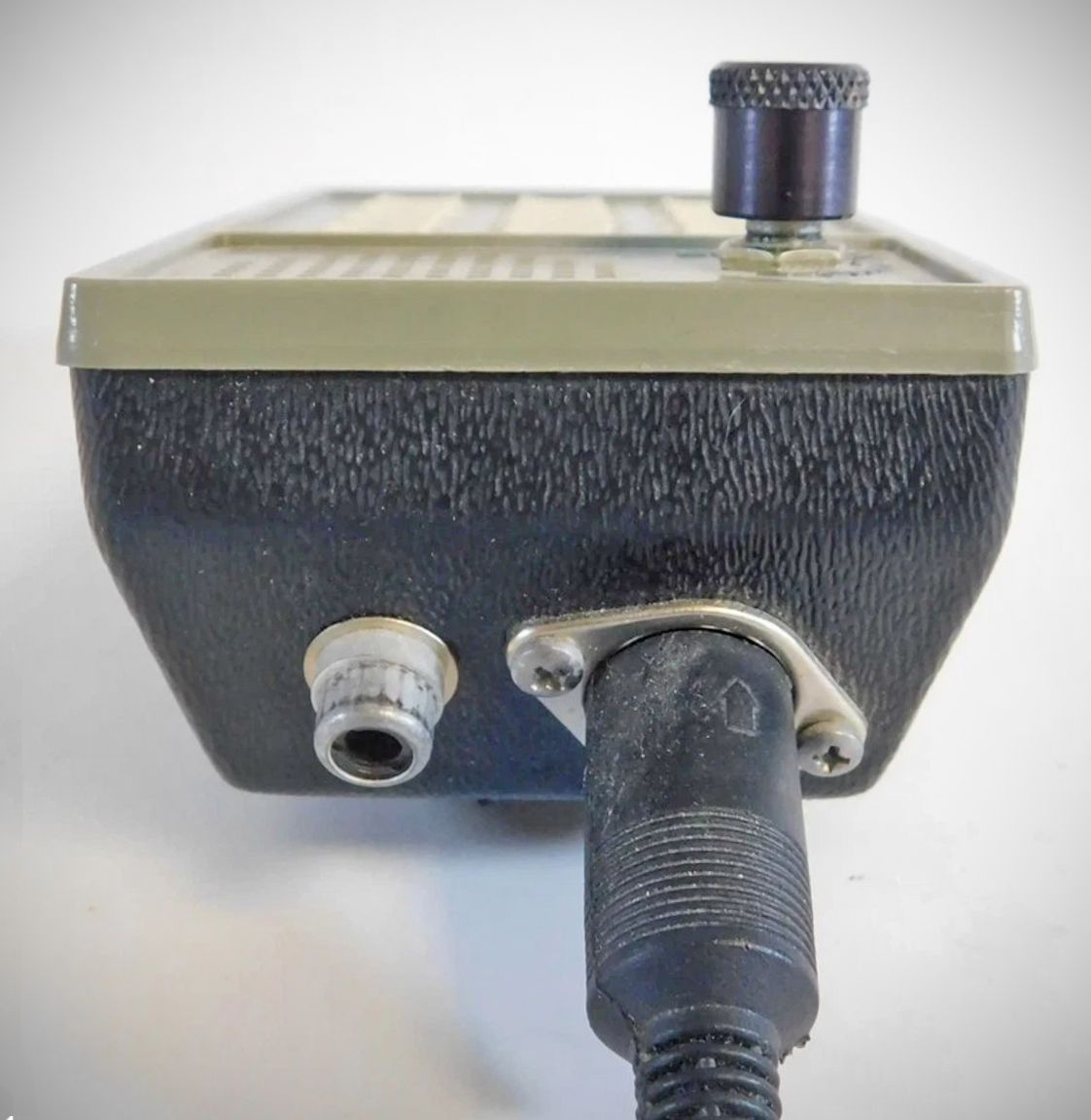
Paddle Input: Standard 3-wire connection mapped as: 1-Common, 2-Dash, 3-Dot.
Transceiver Keying Modification: The output uses a bipolar transistor solid-state design. For certain positive-polarity solid-state transceivers (such as the Icom 701 or Ten-Tec lines), the manual details a modification requiring the operator to solder a jumper directly across diode D4 (a 1N4006 diode near the speaker) to bypass the need for an external reed relay. This jumper must be removed if ever hooked back up to a negative grid-block vacuum tube transmitter.
References
Review. QST, Aug 1981, p. 40.