Note
The American Electronics Company, almost universally known as Ameco, was a staple of the amateur radio and hobbyist electronics market for more than 20 years, though the company’s heydays came before 1967.
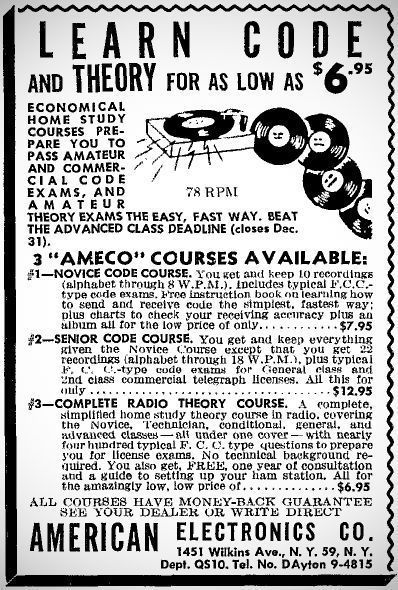
The exact year of the company's founding is not known, but the company is though to have been established in response to the creation of the Novice class amateur radio license, which was created in July 1951. (Morse code training materials were Ameco's first–and most enduring–products.) Ameco's first ads appeared in QST and Radio News in October 1952, adding Radio Electronics in November, so it seems reasonable to conclude that Ameco was formed in late 1951 or 1952.
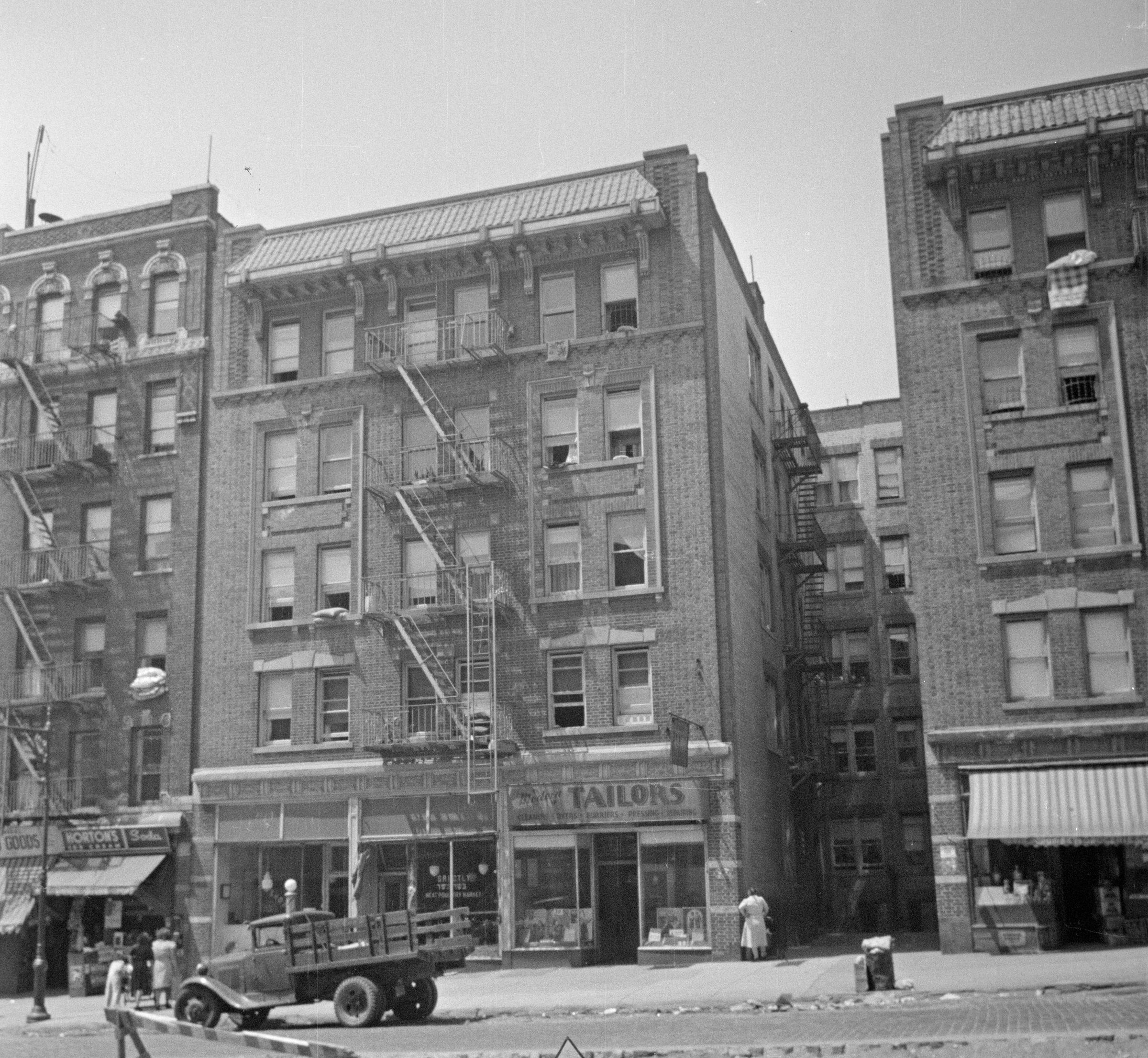
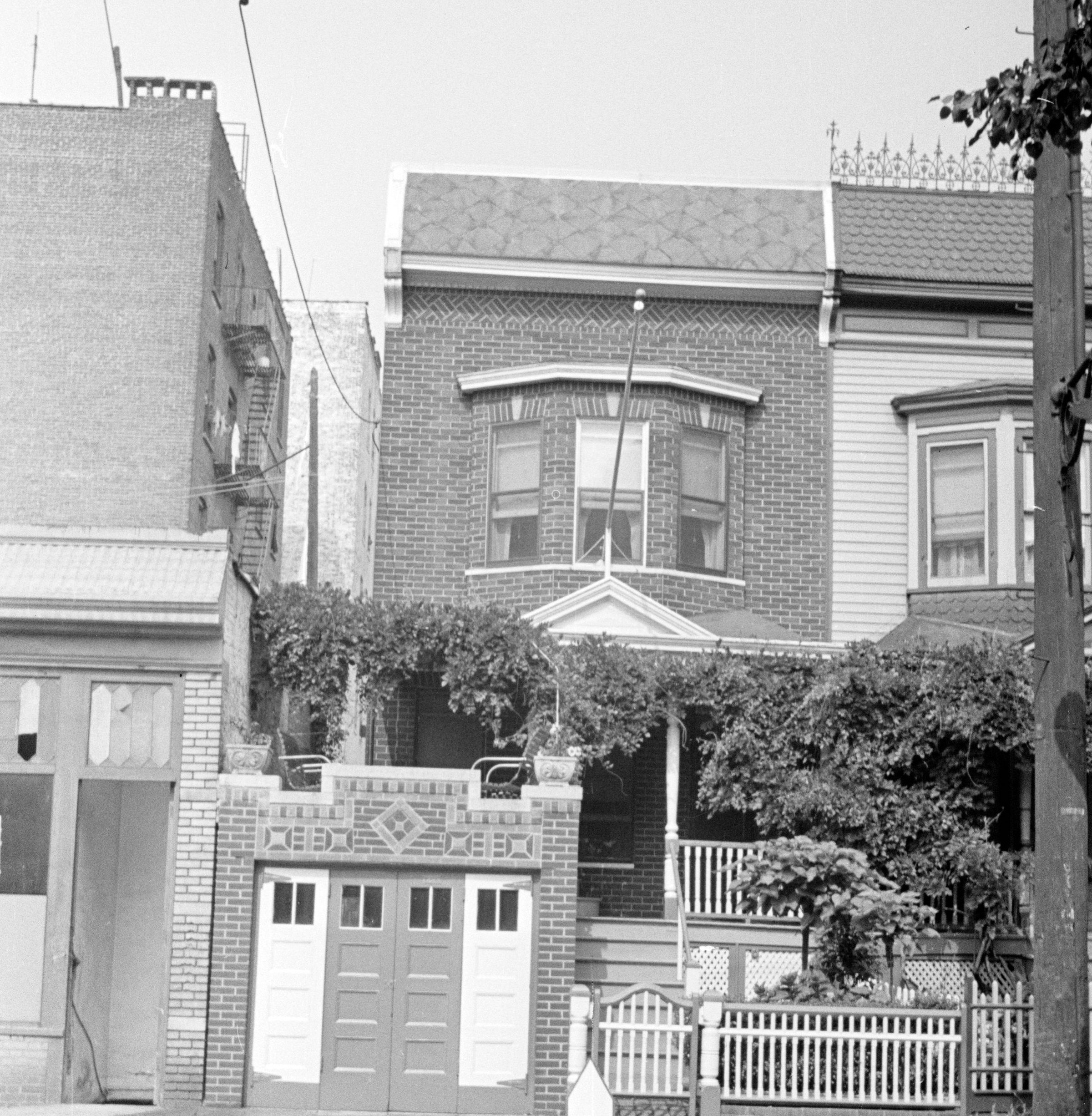
The company's address changed a few times. Originally established in the Bronx, it eventually moved to Mineola, on Long Island.
While giants like Collins and Hallicrafters focused on expensive, "dream rigs," Ameco’s products were aimed at those of more modest means. Its product line was designed to be accessible, educational, and reliable. Most products were sold as kits, and its equipment was known for tried and true, simple circuits that were easy to troubleshoot.
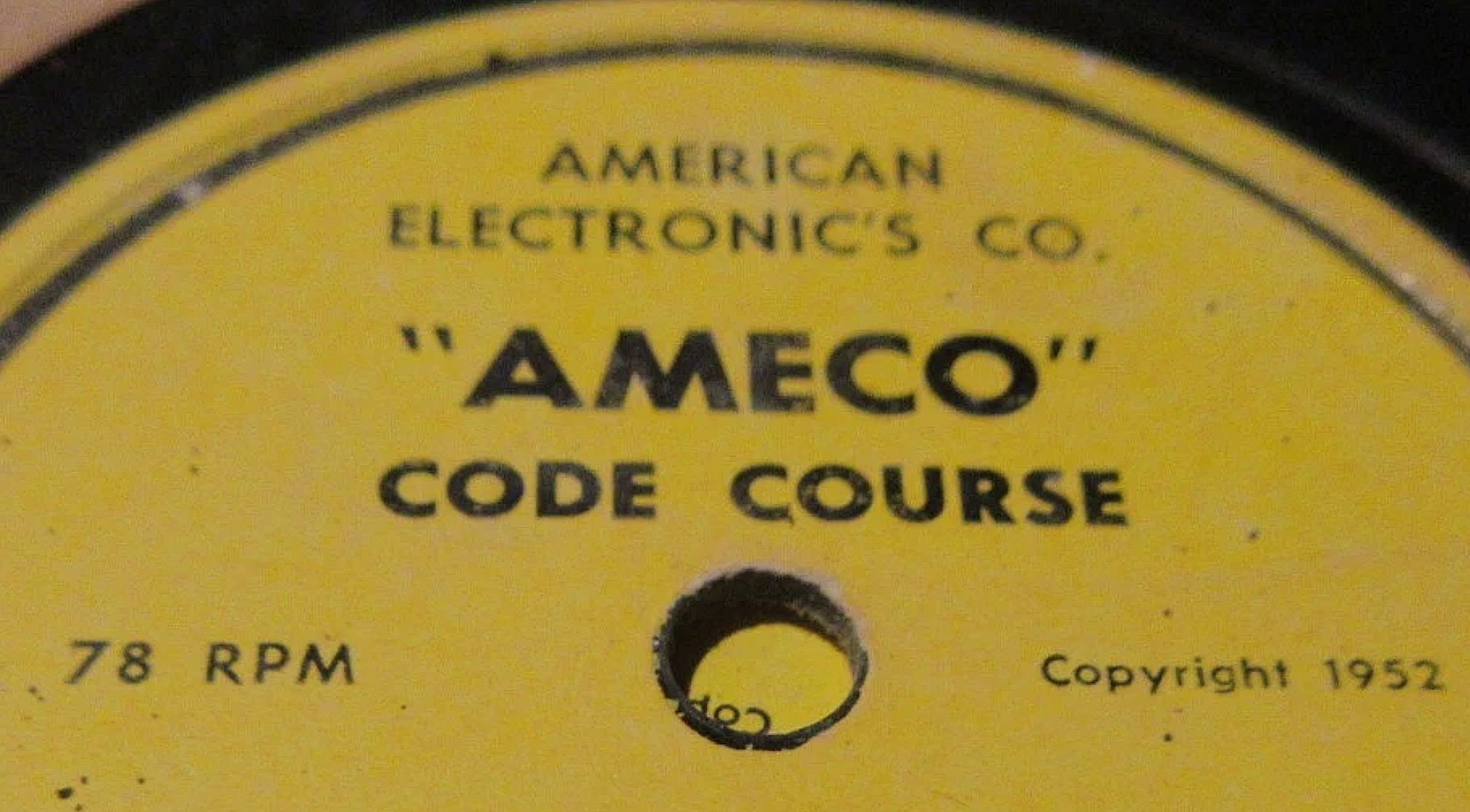
Ameco's original products, first advertised in the October 1952 issue of QST, were code practice materials in the form of 78 RPM records, and printed matter for the study of radio theory. Ads for these products ran on and off for nearly 30 years.
In December 1954, eighteen months after the company's first ad, Ameco announced its first hardware product, a simple low-pass filter for use in eliminating television interference, the bane of virtually all amateur operators at the time. This was quickly followed with a high-pass filter for the same purpose, and which attached to the antenna terminals of a TV set, and in 1955, Ameco added a code practice oscillator (model CPS) to its code training aids.
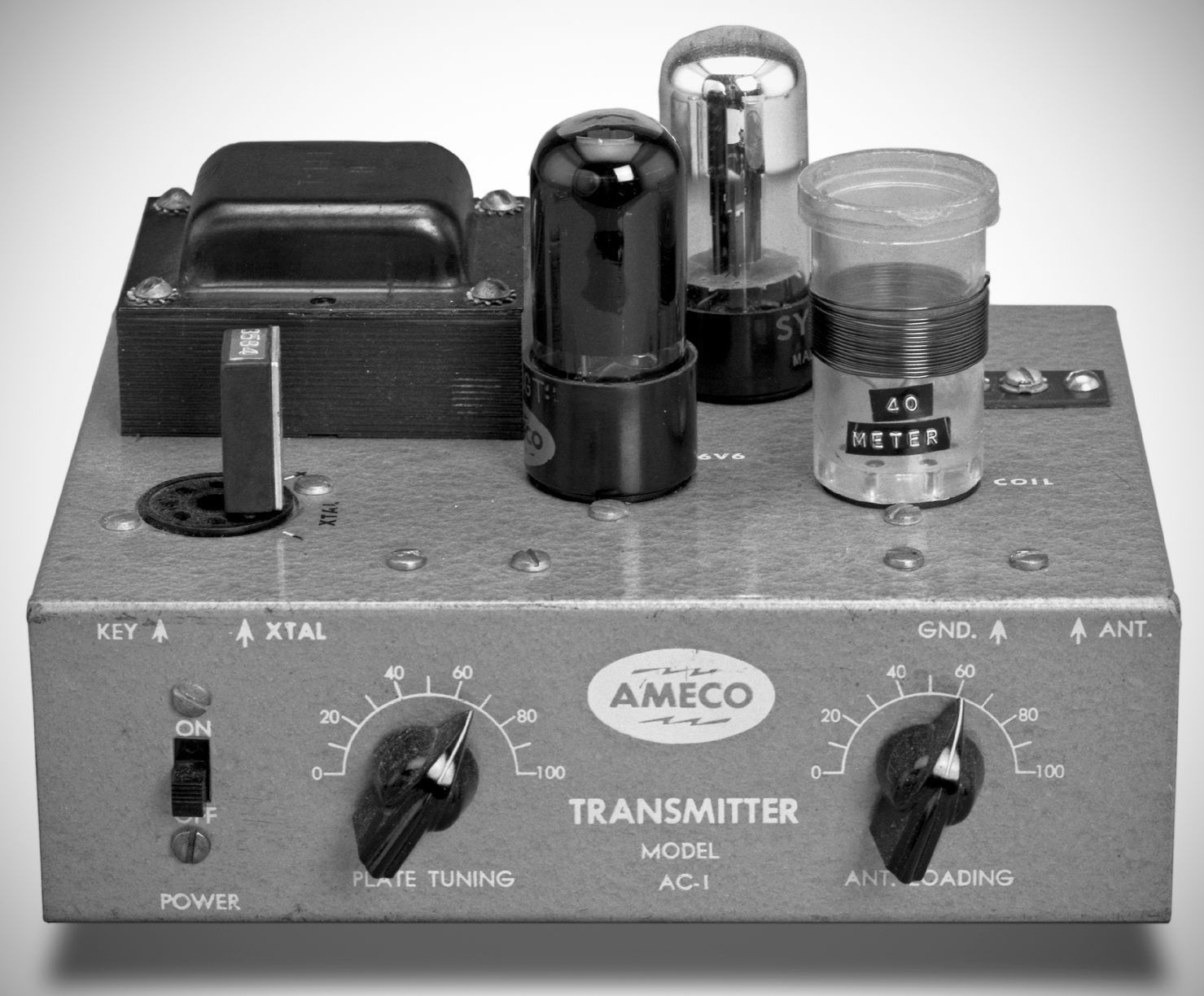
Then, in October 1956, Ameco introduced one of its most fondly remembered products--at AC-1 novice transmitter. The AC-1 was a simple, crystal-controlled, two-tube CW transmitter. It put out about 5 watts and was the very first transmitter for thousands of hams. Offered as a kit, it would be sold until 1970, with a third party revival in the 21st century.
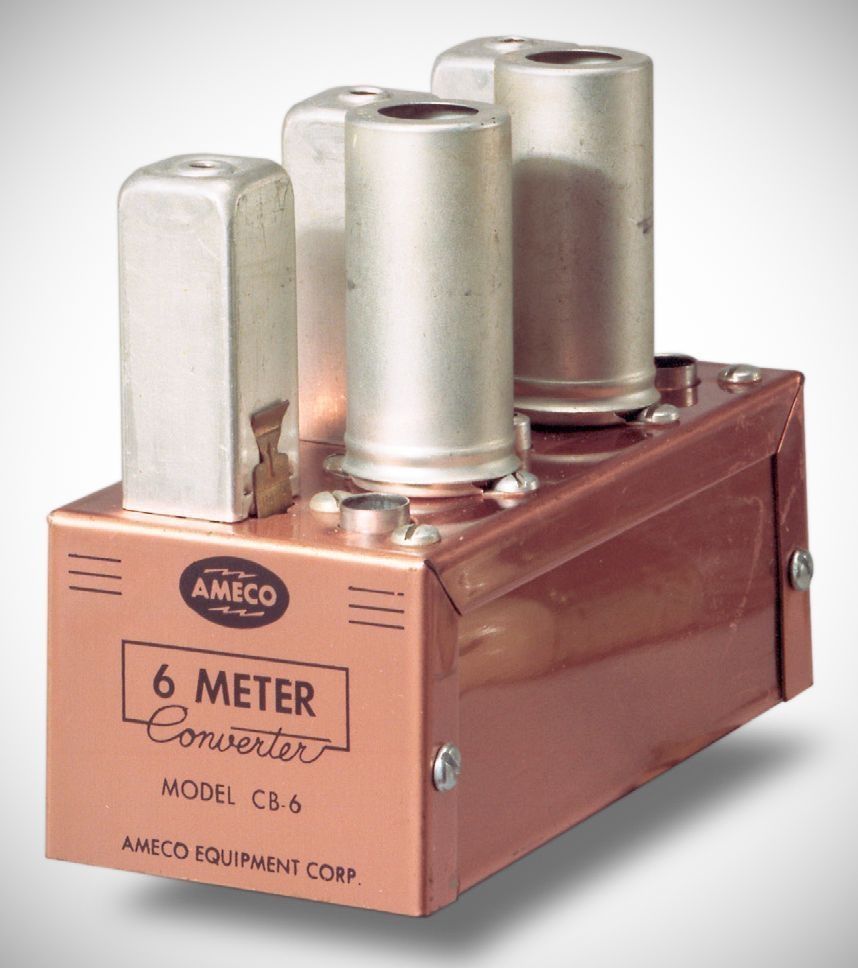
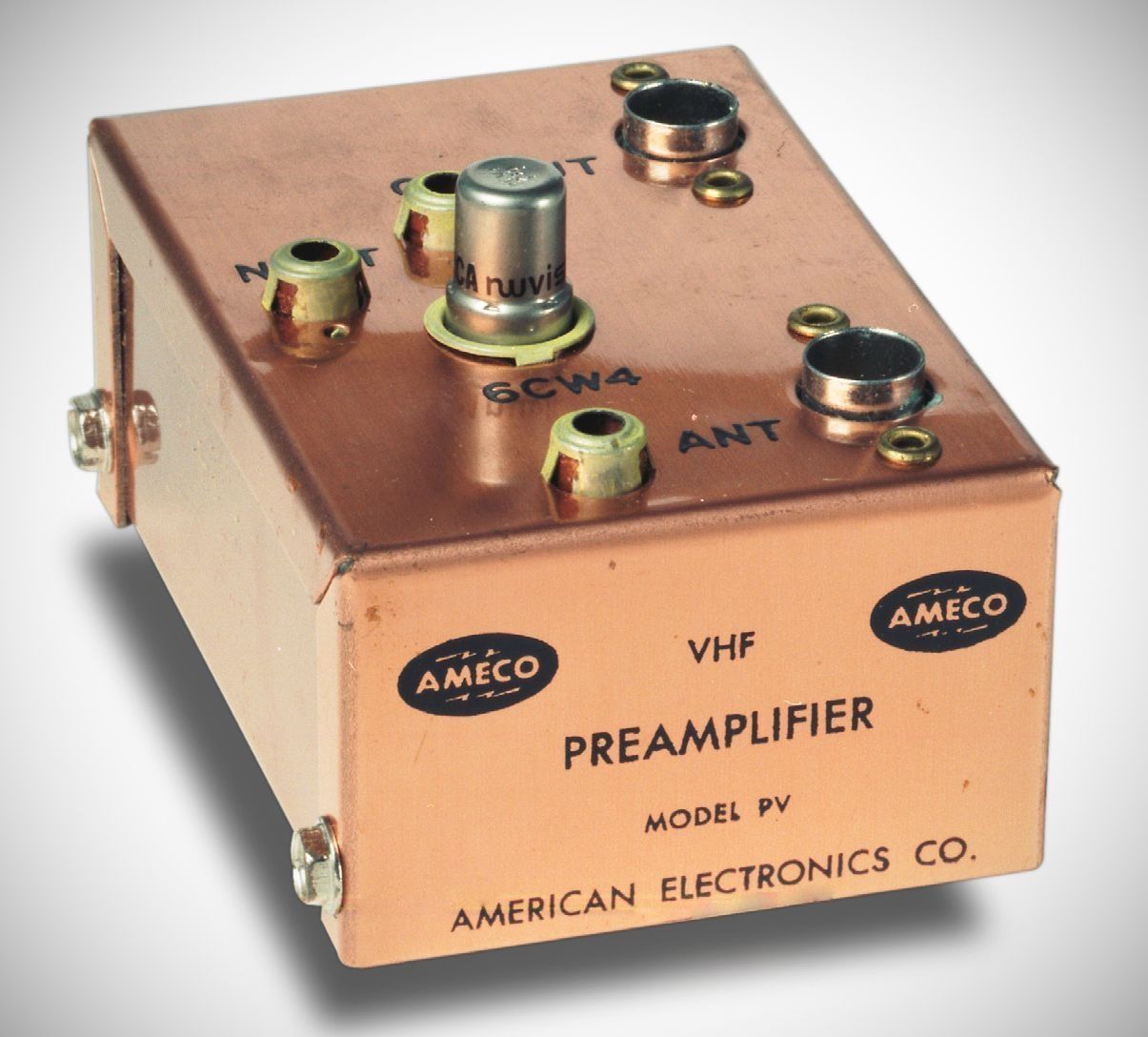
What followed the AC-1 was a wide variety of products including transmitters and receivers, but the most recognizable of Ameco's offerings may have been its many preamplifiers and receiving converters, virtually all of which were made in copper colored metal boxes. These units became ubiquitous in the mid to late 60s, and the color became something of a company signature.
In August 1961, the company did a bit of reorganization. It split its publications business from its equipment business, forming two separate entities. These were the American Electronics Company and Ameco Publishing Corporation, both residing under the umbrella of Ameco Equipment Sales Corporation. Shortly thereafter, the word "sales" was dropped so that the company name could still be reduced to Ameco. While the reorg took place in 1961, it was not reflected in advertising in until March 1962.
In 1966, Ameco was acquired by Aerotron, an electronics manufacturer based in Raleigh, North Carolina, established in 1947, and not related to the present day company called Aerotron. Aerotron specialized in two-way VHF/UHF radio equipment, producing mobile units and base stations for business, marine, and emergency services, and was seeking to diversify its product line.
The ownership change happened around June, 1966. Ameco’s advertising was changed in July to include the words "...a division of..." with the official announcement taking place in September.
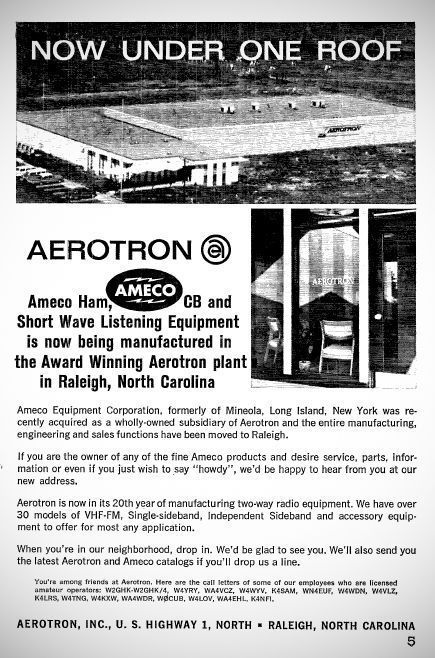
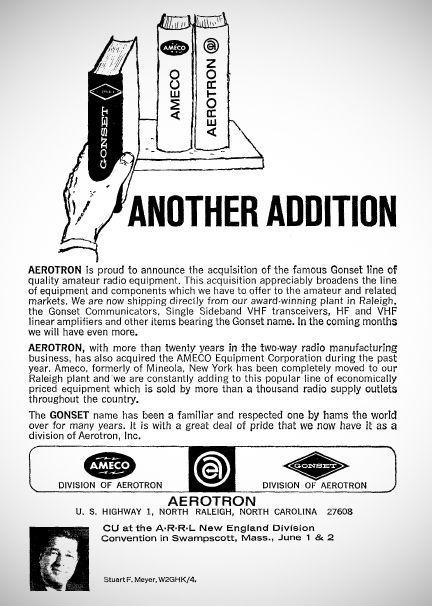
Early in 1967, Aerotron moved Ameco from Long Island to its Raleigh headquarters, putting the combined company's operations under one roof. Business was good, and in June 1968, Aerotron also acquired Gonset.
The acquisition seemed to work out well for Ameco. Aerotron infused a lot of money into the company--at least in the form of advertising.
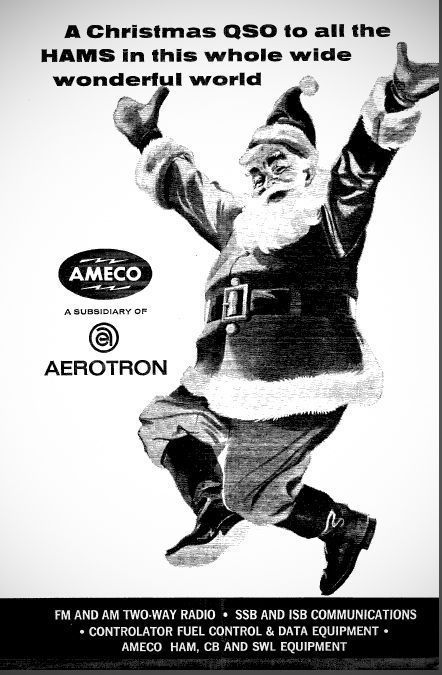
Ameco had been buying full page ads in QST for a while, but Aerotron moved them to page 5 (an expensive position), every month starting with the December 1966 issue and continuing July 1970. The ads variously promoted Ameco, Gonset, and/or Aerotron itself. After this 44 month blitz of full page ads, the company throttled back to smaller ads deeper within the magazine for a while before all advertising stopped.
Surprisingly, Ameco's product line didn't expand after Aerotron. The vast majority of Ameco's products had been developed prior to the acquisition. In fact, no new products would be announced for a full decade.
The early 70s is about the time when many (perhaps most) of the major players in amateur radio began to have trouble with off-shore competition. Hammarlund and Hallicrafters vanished. Collins was acquired by Rockwell. E.F. Johnson changed coarse. Allied was Acquired by Radio Shack and dropped the Knight Kit products. National ceased making civilian/amateur equipment almost entirely. Galaxy was acquired by Hy-Gain--both of which were eventually crushed by the CB implosion of 1977. Drake discontinued the 4-Line. Even Heathkit was smarting.
The 1970s were not kind to the legacy manufacturers.
As the market became hyper-competitive, Aerotron made the decision that amateur radio products were not worth pursuing, choosing instead to focus on its core business of commercial communications equipment. As as result, in the very early 70s (probably 1972, but it's hard to say exactly when) the company chose to abandon both Ameco and Gonset. It was the end of the line for Gonest, but Ameco moved back to New York and soldiered on.
Ameco's publishing side, which had not been part of Aerotron's acquisition and had never left New York, was still plodding along, advertising sporadically through 1973.
The last ad seen for Ameco's electronic products was in the September 1971 issue of QST, with the address still listed in Raleigh. But beyond the single cryptic mention of a "2-meter filter" in 1973, nothing more was heard from Ameco for three full years.
Finally, in 1976, an ad for a new Ameco product (the PT-2) appeared in the October issue of QST. The company's address was now listed as Williston Park, New York, a location immediately adjacent to its old digs in Mineola. This ad is significant not only because it marked the return of Ameco, but also because it announced Ameco's first new product in ten years.
Still, the company was not on fire with new-found enthusiasm. Subsequent advertising by the company was virtually non-existent, and by 1977 the only mention of Ameco in QST could be found in Amateur Electronics Supply (AES) ads for a few Ameco products, including the AC-1, for sale as "closeouts" and "new old stock."
Starting in 1979 and continuing through early 1982, advertising picked up--if only slightly--with several appearances by both the publishing and electronics sides of the business. The same ads ran over and over: code practice and the PT-2.
Ameco advertising disappeared (again) from QST late in 1982, and didn't reappear until the middle of 1986, when an ad from the publishing side showed up in June. The company probably surprised everyone when, a couple years later, it announced its first new product in a decade--the PT-3 preamplifier.
In 1991, the company was sold to Richard Mintz, according to corporationwiki.com. According to allpeople.com, Mr Mintz is (or was) associated with a number of other businesses, most of them located very near Ameco's address in Mineola. These include Allen Avionics, Precision Disc Grinding, All Test Devices Corp, and Datasonic. None of these companies have currently active websites.
The Internet Archive Wayback Machine shows that a website for Amceo (amecocorp.com), popped up in April 1999. The site's masthead included this notice: "Ameco Corporation was started almost 50 years ago. The Corporation was sold six years ago to Richard Mintz, President and James Lyons, Vice President. The company occupies 8,000 sq. feet of manufacturing, warehouse, and office space. Approximately 15 people are employed here."
This suggests Mintz bought the company in 1993, which doen't quite jive with a note at corporationwiki.com stating that the company (under Mintz): "...was incorporated in New York 35 years ago..." which would put his acquisition in 1991 (2026–35=1991).
In addition to a section for Ameco's training materials, the website listed several electronic products, among them, the OCM-2 code practice oscillator, the PT-2 preamp, and the TPA active antenna, together with a couple of telegraph keys, high and low pass filters, and a dummy load.
The site remained static until 2004 when a notice was added, indicating that all orders and inquiries be directed to Marshall Emm (N1FN), Milestone Technologies, Inc (think Morse Express and Oak Hills Research). From this point, the site remained essentially unchanged for 20 years, until it went down in 2024, and that was the end of the line for Ameco.
Whether Mintz sold the company in 2004, or simply turned the reins over to Milestone is unclear, since in 2024 the masthead still contained a blurb stating that "The Corporation is now owned and operated by Richard Mintz, President." It is entirety possible that the company was sold, and no one bothered (or knew how) to change the website.
Whether or not it was possible to actually buy something during this time is also unclear. We all know that a website alone does not a company make. Recall the example of heathkit.com.
The internet service WHOIS reports that amecocorp.com was registered in February 1998, and will expire in 2027, but does not say who registered the site.
Discussions of Ameco tend to revolved around its electronic products, but the company's publishing business was, on average, far more active. Over the decades Ameco published dozens of titles. The majority of these were study guides for various amateur license classes covering code and theory, but there were a plethora of other books well. Titles for commercial radiotelephone licenses, CB radio, general electronics, television antennas, and even digital computers. And of course there were 78, 45, and 33 1/3 RPM records, and later cassette tapes, for code practice. Publication copyright dates extend from the early 50s all the way to the early 90s.
Martin Schwartz was the primary author and driving force behind Ameco’s extensive publications library, penning virtually all of its study guides and technical manuals. As noted on many of these title pages, Schwartz is credited as a "former instructor for the American Radio Institute," which had operations in Buffalo and Syracuse.
Digging down to the foundations of the American Electronics Company has proven remarkably difficult. In attempting to discover the name of the owner of the company, extensive online searches using both Google and artificial intelligence found nothing definitive. Inquires with the New York Public Library's Business Library, as well as the Library of Congress returned no reference of any kind to the company in the decade of the 1950s, though records from the 1950 census indicated that Ameco's original address on Wilkins Avenue in the Bronx was a multi-unit apartment complex. The records listed several occupants along with their occupations, none of whom or which had any correlation with Ameco, as far as could be determined.
Finally, a research request was submitted to the New York City Department of Records and Information Services to see if any reference could be found in New York City telephone directories from the 1950s.
QST, Jun 1953
Address is now 1203 Bryant Ave (Bronx), New York City.
QST, Dec 1954
First product beyond instructional materials: A low-pass filter for reducing TVI. This was followed in January by a high-pass filter (HP-45) for installation on a TV receiver.
QST, Oct 1956.
Introduction of the iconic AC-1 transmitter.
QST, Sep 1959
First converter products.
QST, Oct 1959
Address now 178 Herricks Rd, Mineola, Long Island, NY
QST, Mar 1962,
"Ameco Equipment Sales Corporation," with a tag line reading "Affiliated with American Electronics Company and Ameco Publishing Corp."
QST, Dec 1962, p. 135.
"Ameco Equipment Corporation" with a tag line reading "Affiliated with American Electronics Company and Ameco Publishing Corp."
QST, Jul 1966, p. 119.
"Ameco Div of Aerotron"
Aerotron acquires Ameco. Advertising address changes and Aerotron name first appear in advertising in the Jul 1966 edition of QST.
Last ad in QST Oct 1970.
QST, Jun 1971, p. 143 - For Gonset / still in NC
QST, Aug 1971, p. 143, still in NC
QST, Sep 1971, still in NC
QST, Oct 1971, Ameco Publishing in NY
QST, Dec 1971, Ameco Publishing in NY
QST, Jun/Dec 1972
Then ads for Ameco Publishing in Jun and Dec 72.
Address in NY
QST, OCt 1973 - Ameco Publishing in NY
NO ADS in 1974
NO ADS in 1975
QST, Oct 1976, p. 140. Ameco now back in NY
QST, May 1978, p. 179. (Solid state version of the PT)
1983 / 1984 no ads
Mar 1985 publishing
May 85
Jun 86 publishing (with OCM-2, Mineola)
Jun 87 publishing
Dec 87 punlishing
Feb 88 QST, Feb 1988, p. 156. (PT-3)
QST, May 1988, p. 152. (high pass filters)
QST Jun 1988 (PT-2)
QST Oct 1988 (publishing)
QST Nov 1988 (filters)
QST Dec 1988 (publishing)
QST apr 1989 (PT-3)
QST Oct 1989 (publishing)
QST Nov 1989 (publishing)
QST Dec 1989 (filters)
QST Mar 1990 (publishing)
QST Sep 1990 (publishing)
QST Mar 1990 (publishing)