Note
Overview of the AN/ARC-5 Command Set Receivers
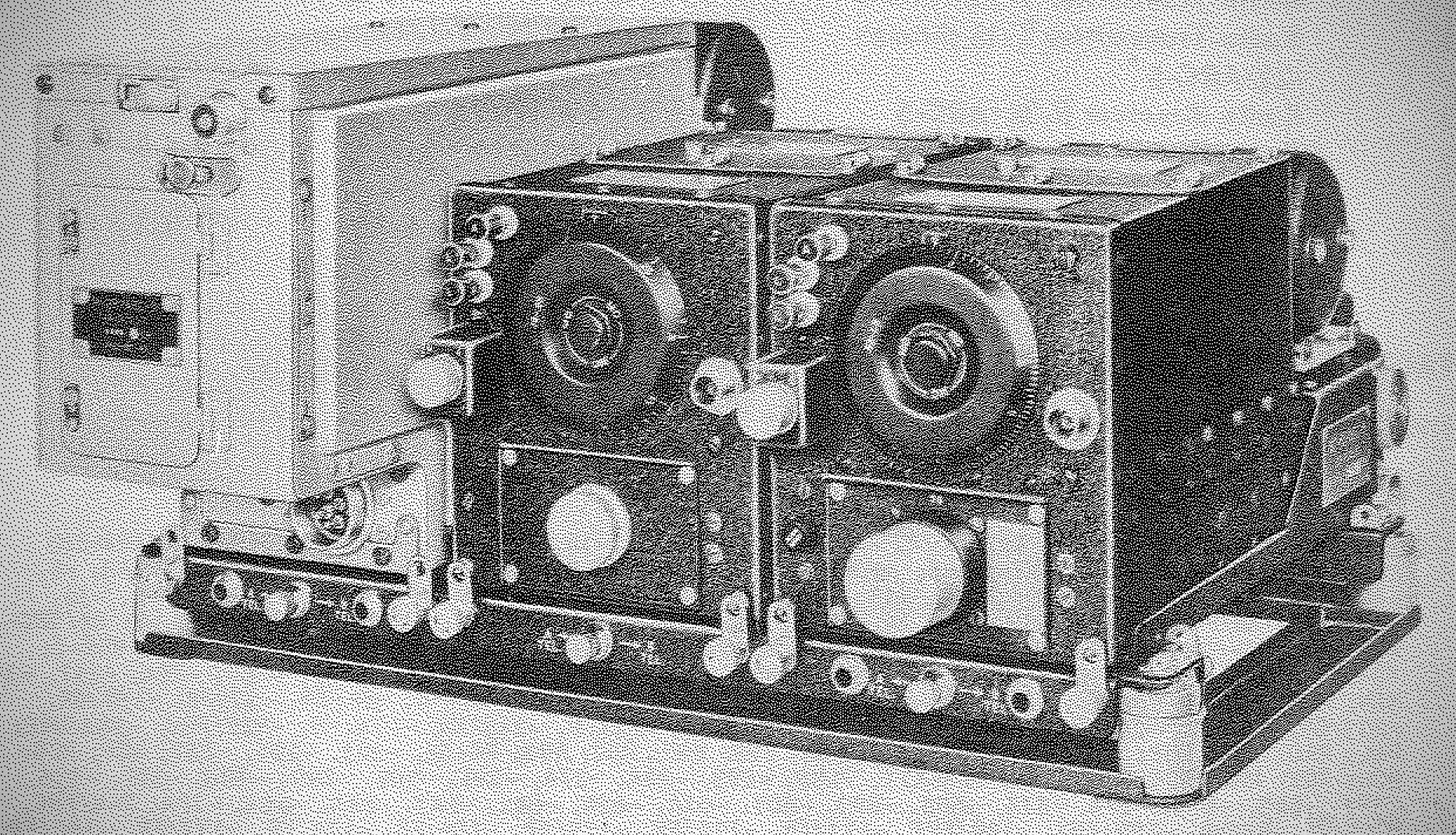
The AN/ARC-5 is a series of airborne military radio communication equipment—including transmitters, receivers, and control units—developed during World War II for the U.S. Navy. Part of the famous family of "Command Sets," it was designed for short-range communication between aircraft and ground stations or between planes in formation.
While often grouped together with the SCR-274-N, the AN/ARC-5 models feature key improvements, including Automatic Volume Control (AVC) on all models, increased audio output on navigational variants, plastic-insulated wiring, and a black crackle finish rather than bare aluminum.
Power & Remote Control: Operating on 24-volt DC aircraft power systems via an internal dynamotor to generate plate voltage, these receivers were built for remote operation. Standard units lacked front-panel tuning knobs, power switches, or RF gain controls, relying instead on rear chassis wiring or custom front-panel adapter units like the C-24/ARC-5.
The receiver lineup covered various frequency ranges, each utilizing specific Intermediate Frequencies (IF) and sensitivity characteristics:
R-23/ARC-5: 190–550 kHz (85 kHz IF).
R-24/ARC-5: 0.52–1.5 MHz (239 kHz IF).
R-25/ARC-5: 1.5–3.0 MHz (705 kHz IF).
R-26/ARC-5: 3.0–6.0 MHz (1.415 MHz IF).
R-27/ARC-5: 6.0–9.1 MHz (2.830 MHz IF).
R-28/ARC-5: 100 - 156 MHz, four fixed channels
R-112/ARC-5: 100 - 125 MHz, continuously tunable
R-113/ARC-5: 125 - 156 MHz, continuously tunable
Post-War Amateur Radio Uses
When surplus AN/ARC-5 units flooded the market, amateur radio operators adapted them extensively due to their ruggedness, high performance, and low cost.
Amateur radio operators use these receivers for various conversions, including Novice receivers, high-frequency band receivers, and as IF elements for "Q5-er" setups to boost signal selectivity. Basic conversions require installing a tuning knob, a control unit (like the C-24/ARC-5), a phone jack, and power connections.