Note
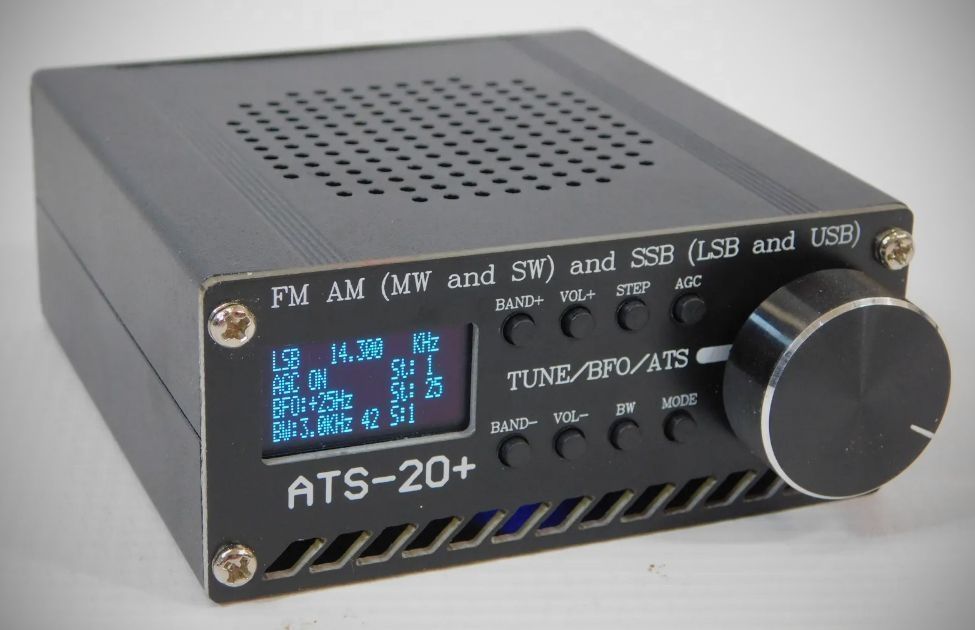
The ATS–20+ is essentially an Arduino-controlled Software Defined Radio. Often called the ATS-20 Plus or V2) is a compact, DSP-based receiver. Its core performance comes from the Silicon Labs Si4732 chip, which handles the heavy lifting for signal processing across all bands.
The Chip: It uses the Si4732-A10 chip, which allows it to cover FM, AM, LW, MW, and SW with SSB (Single Side Band) capabilities.
The Firmware: Most units run community-developed firmware (like the popular ATS_EX or versions by Ricardo Caratti), which is why you’ll often see people referring to the "software version" rather than a manufacturer.
The ATS-20+ isn't manufactured by a single, traditional "brand-name" company like Sony or Panasonic. Instead, it is an open-source hardware project designed by independent developers in China and produced by various small-scale manufacturers and hobbyist electronics shops.
Because the design is public and based on the Silicon Labs Si4732 chip, you will see it sold under many different names depending on the distributor.
Common "Brands" and Sellers:
While the hardware is largely the same, here are the names you'll most often see on retail sites:
HamGeek: One of the most common labels for this radio.
YIHANG: Often credited as a primary designer or kit producer for the upgraded "Plus" version.
VIPIH / Yucurem / Treasa: These are typically distributor names found on Amazon, eBay, and Walmart.
DIY Kits: Many units are sold as unbranded DIY kits or pre-assembled "no-name" versions from manufacturers in Guangdong, China.
The ATS-20+ is a true "all-band" receiver, covering everything from standard local broadcasts to global shortwave and amateur radio (Ham) frequencies.
Because it uses community-driven firmware, it is usually pre-configured with 22 distinct bands for easier navigation.
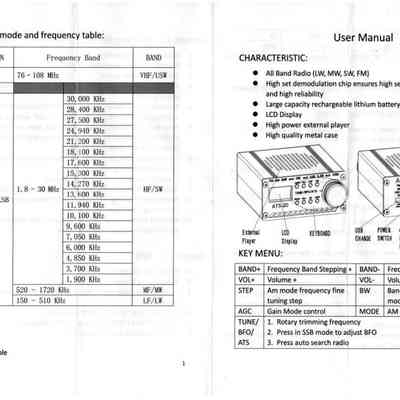
LW: 100 – 510 kHz
MW: 520 – 1720 kHz
SW: 1.7 – 30.0 MHz
FM: 64 – 108 MHz
Specifications
Core Chipset: Silicon Labs Si4732-A10 (DSP)
Microcontroller: Arduino-compatible (Atmega328P)
Modes: FM, AM, MW, LW, SSB (LSB and USB)
Display: 0.96-inch OLED (High contrast)
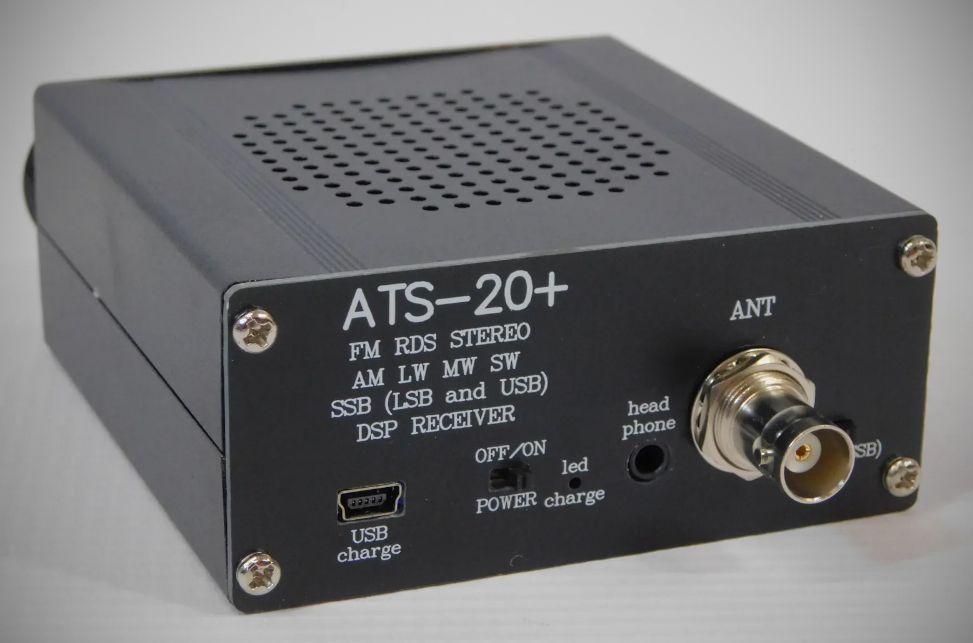
Antenna Interface: BNC (Standard)
Audio Output: 3.5mm Headphone Jack + Internal 8Ω 1W Speaker
Power/Charging: 3.7V 800–1000mAh Lithium Battery (USB-C or Mini-USB)