Note
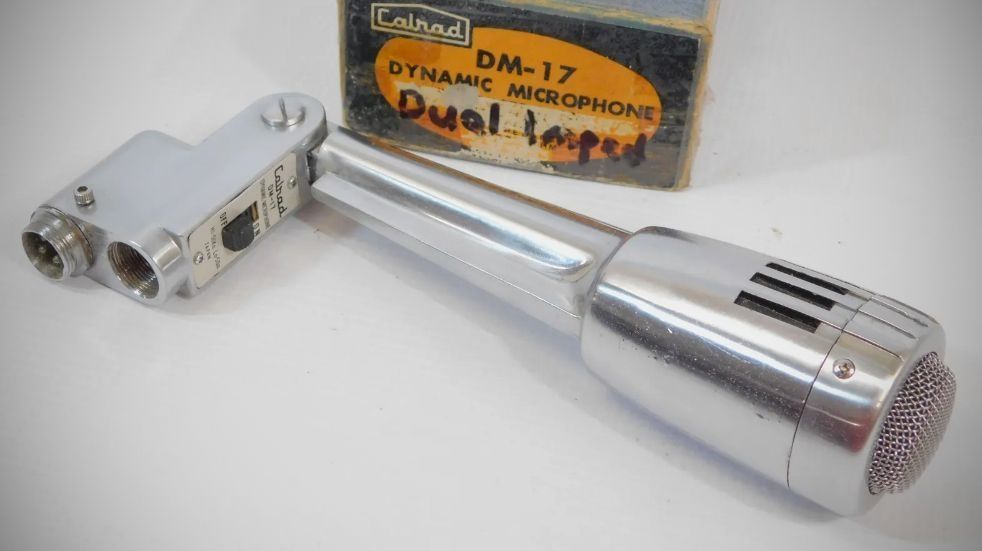
The Calrad DM-17 is a Japanese-made dynamic microphone from the 1960s that was heavily inspired by the iconic Electro-Voice 664 (often called the "Buchanan Hammer").
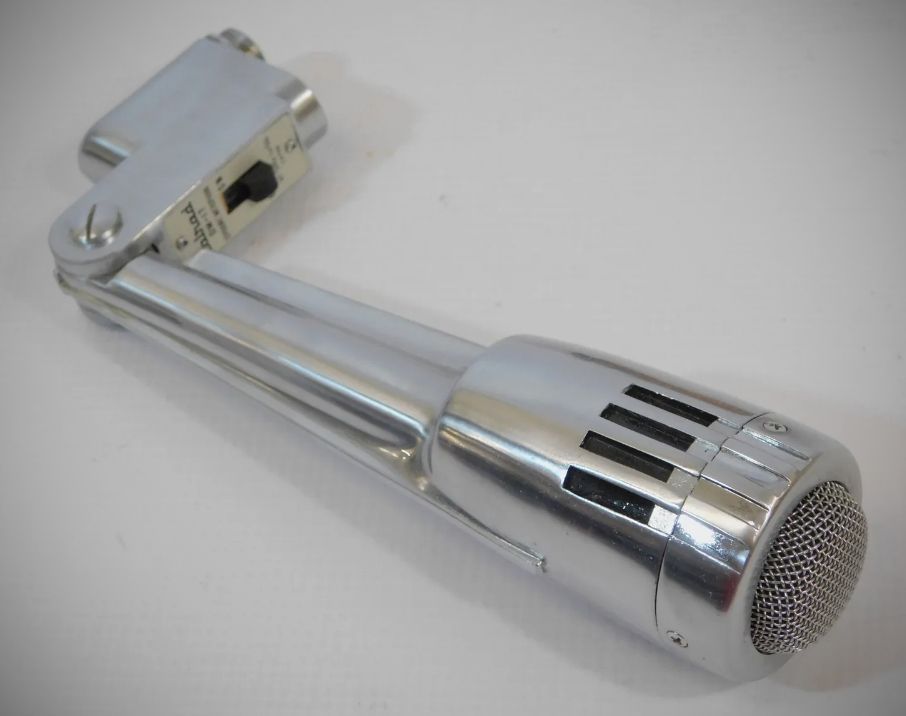
Aesthetic "Trickery": While it features three side "gill" ports designed to mimic the appearance of the EV 664, these ports are purely cosmetic on the DM-17.
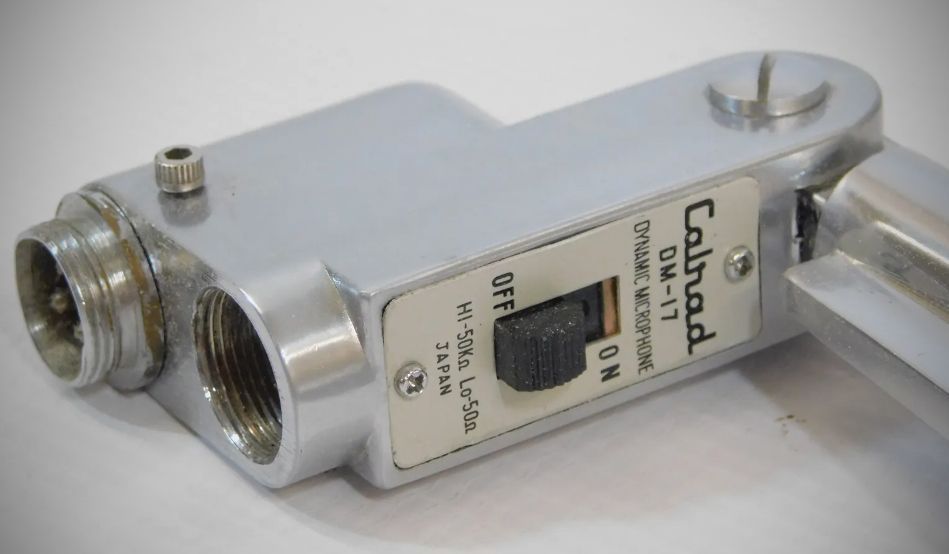
Build: It features a heavy, all-metal body with a polished satin chrome finish, a built-in on/off slide switch, and a pivoting "pistol grip" mount.
Origin: Like many Calrad products of that era, it was manufactured in Japan and rebranded for the American market as an affordable alternative to professional American-made microphones.
It is a dual impedance mic, but was shipped as high-impedance (Hi-Z), which was standard for the consumer and hobbyist equipment of the time (such as tape recorders and public address systems).
Uses a 4-pin screw-on connector, common for vintage Japanese mics, rather than the modern 3-pin XLR. Screws on to a standard 5/8”-27 thread mic stand.
Performance and Sound
Sound Quality: It is characterized as a "general purpose" microphone. It has a "lo-fi" or "vintage" character by modern standards, often described as having "hot" output with a mid-forward presence.
Modern Use: Today, it is highly sought after by collectors for its "space-age" aesthetic. In studios, it is often used as a "character" mic for "crushed" drum sounds, lo-fi vocals, or as a prop in film and photography due to its classic look.
Type: Dynamic.
Pattern: Cardioid.
Frequency Response: 40 Hz–15 kHz
Impedance: 50,000 or 50 ohm
Sensitivity –52 dB (at 1 kHz)
Calrad was a prominent importer during the 1960s that brought a wide variety of Japanese electronics to the US. The DM-17 was part of a trend where Japanese manufacturers (like Aiwa or Teisco) produced "tributes" to high-end American designs (like Shure or EV), allowing hobbyists to own a microphone that looked professional at a fraction of the cost