Note
Abstract
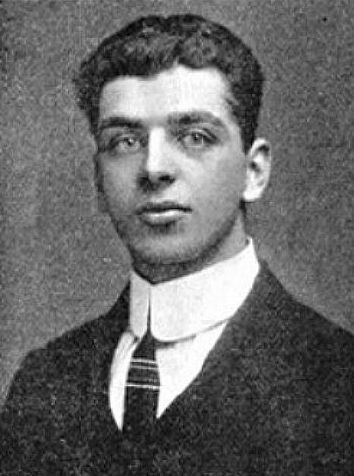
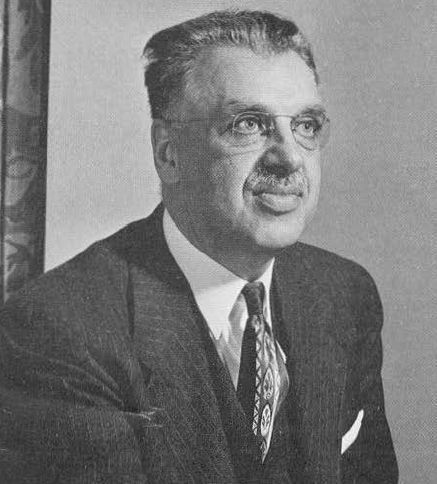
Clarence D. Tuska (1896–1985), by Bart Lee
Born in the final years of the 19th century, Clarence D. Tuska (1896–1985) began his journey as a young boy experimenting with a metal filings coherer at the dawn of wireless telegraphy and eventually rose to become the Director of Patent Operations for RCA. As a teenager, Tuska played a vital role in nurturing the nascent American Radio Relay League (ARRL), serving as its chief operating officer and co-founding QST magazine alongside Hiram Percy Maxim. During World War I, he served as a lieutenant in the U.S. Army Signal Corps, organizing critical radio training schools for the Air Service.
In the booming "Radio Fad" era of the 1920s, Tuska transitioned into commercial manufacturing, designing elegant and highly collectible home broadcast receivers. Notably, he invented the Superdyne circuit, which utilized negative inductive feedback to eliminate unwanted capacitive oscillations—a significant flaw in the triode vacuum tube circuits of the day. Later in his career, he joined a premier cohort of radio pioneers assembled by David Sarnoff at RCA, where he managed industrial patent operations, patented wartime radar and direction-finding enhancements, and wrote prolifically to guide and protect independent inventors. This centenary appreciation honors Tuska as a paradigm pioneer whose multifaceted contributions spanning amateur radio, military service, corporate leadership, and patent law profoundly shaped the 20th-century electronics landscape.
-------------------
Abstract
Title: History of the C. D. Tuska Company, by Dexter Deeley
This article chronicles the life of radio pioneer Clarence D. Tuska and the trajectory of the C. D. Tuska Company. Tuska's lifelong interest in radio began in his youth, leading to a pivotal meeting with Hiram P. Maxim, with whom he eventually co-founded the American Radio Relay League (ARRL). After working as a consultant for the A. C. Gilbert Company and serving as a Lieutenant in the U.S. Air Service Signal Corps during World War I, Tuska partnered with Maxim to establish the C. D. Tuska Company in Hartford, Connecticut, in 1919.
The company transitioned from producing simple laboratory apparatus, like galvanometers, to manufacturing highly successful amateur and consumer radio components. Notable products included the "Tuska Tickler" differential capacitor—which led Tuska to acquire a crucial Armstrong regenerative circuit license—and the popular factory-assembled "Tuska Superdyne" receivers. By 1926, the company faced mounting financial difficulties due to fierce market competition and a lack of licensing for emerging neutrodyne and superheterodyne circuits. To protect the business's assets, Tuska sold the company and its valuable Armstrong license to the Atwater Kent Manufacturing Company, subsequently joining them as a patent consultant. Tuska later went on to enjoy a distinguished career as the Patents Director for the Radio Corporation of America (RCA).
References
Profile. Review. QST, Nov 1981, p. 81.