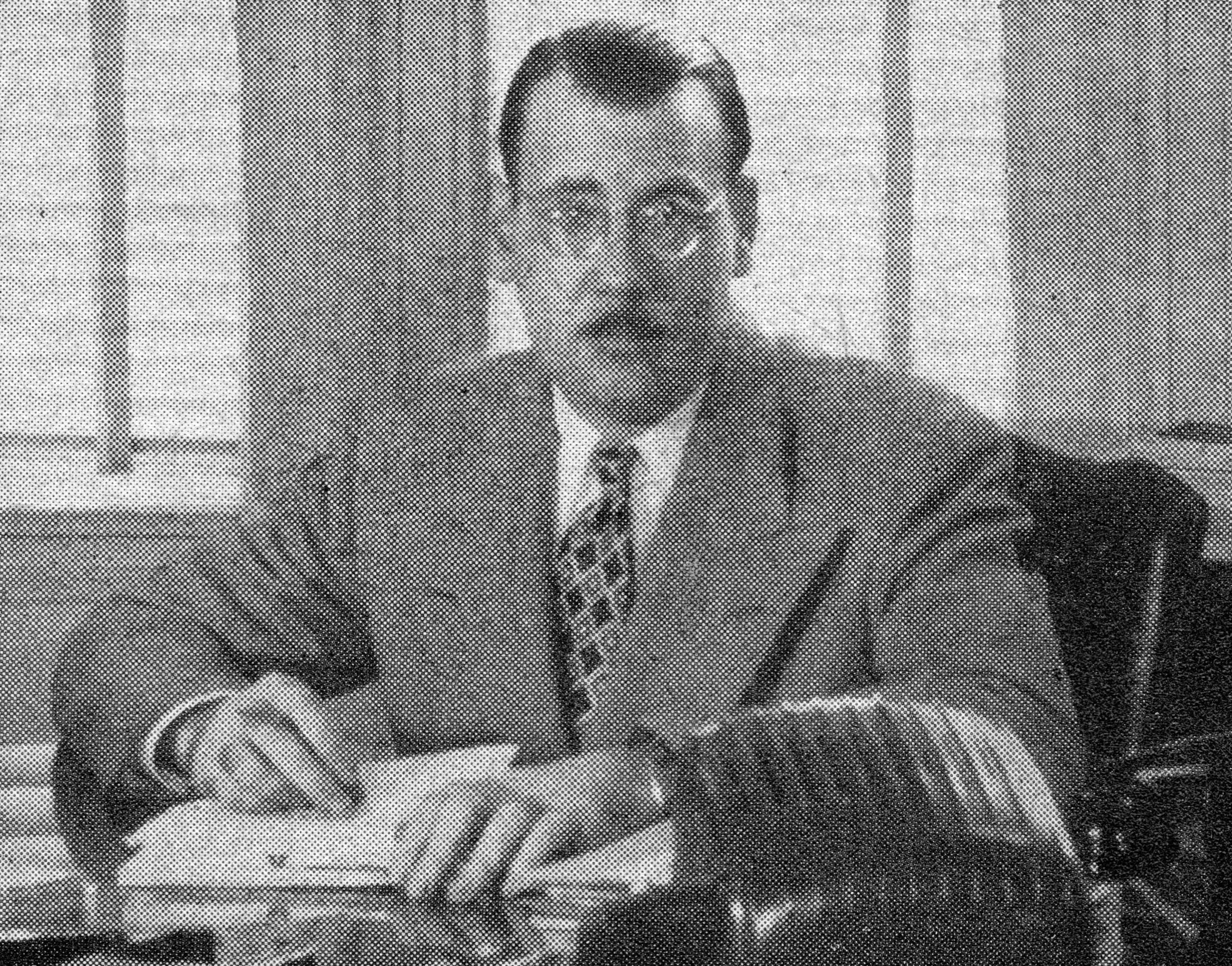
Note
Clinton B. DeSoto (W2IU, ex-W1CBD, ex-W9KL) was a foundational figure in early amateur radio journalism, a vital administrator for the American Radio Relay League (ARRL), and one of the most influential editors of QST magazine. Inducted into the CQ Amateur Radio Hall of Fame, DeSoto is widely remembered for defining the mechanics of international radio sport and documenting the definitive early history of the hobby.
Early Life and Career
Born in Ogilvie, Minnesota, in 1912, DeSoto pursued an education at the University of Wisconsin's School of Journalism. He became a licensed radio amateur in 1926 at just 14 years old. In 1930, he joined the ARRL headquarters staff as an assistant to the League's secretary.
His combination of journalistic training and technical passion quickly made him indispensable to the League's publication efforts. In 1942, he transitioned directly to the editorial staff as an assistant editor of *QST*, stepping up as executive editor in 1943 and officially becoming editor-in-chief in 1944.
The Architect of DXCC
One of DeSoto's most enduring contributions to amateur radio came in October 1935, when he published a landmark article in *QST* titled, *"How to Count Countries Worked, A New DX Scoring System."*
Frustrated by the lack of standardization in how operators tracked distant ("DX") contacts, DeSoto laid out a simple, groundbreaking rule: "Each discrete geographical or political entity is considered to be a country."
This framework decoupled the concept of a radio "country" from strict sovereign statehood, directly birthing the DX Century Club (DXCC). To this day, his geographical entity model remains the global standard for amateur radio DXing.
Preserving Amateur Radio Through WWII
DeSoto took the helm of QST during World War II—a critical period when civilian amateur radio operations were entirely shut down by the government for wartime security. Alongside his editorial duties, DeSoto managed the revision and production of the 1943, 1944, and 1945 editions of The Radio Amateur's Handbook and was involved in developing radio remote-control systems for military and civilian applications. He is widely credited with keeping the ARRL relevant and alive during these years by pivoting content to support military training, electronics education, and radar technology.
Historical Legacy
DeSoto was a meticulous archivist and historian. In 1936, the ARRL published his seminal book, "200 Meters and Down: The Story of Amateur Radio." The 184-page chronicle remains the definitive historical record of early wireless experimentation, tracing the roots of the hobby from the late 19th century through the mid-1930s when amateurs successfully proved the value of shortwave frequencies.
Following his impactful tenure at QST, DeSoto left the ARRL in April 1946 to become the technical editor of the Proceedings of the I.R.E. for the Institute of Radio Engineers (which later became the IEEE). He served in this role, alongside managing major convention publicity, until his untimely passing in 1949 at the age of 37.
Sources
QST, Oct, 1935
QST Jun 1949
CQ, Jul 1949
https://hamgallery.com/HOF/AmateurRadio/#:~:text=6.,9.
His article on DX scoring may be found here: http://www.arrl.org/desoto
------------
The following tribute is from the June 1949 issue of QST.
It becomes our sad duty to record the passing, on April 27th, of Clinton B. DeSoto, W2IU, technical editor of the Proceedings of the I.R.E. and former editor of QST.
Mr. DeSoto, who was 37 years of age, died of a heart attack.
Clint DeSoto combined with rare skill his two main interests radio and journalism. Licensed in 1926 as W9KL in his home state of Wisconsin, while studying journalism, he came to the attention of ARRL Hq. because of the research work he was doing on a history of amateur radio. He became an assistant secretary of ARRL (and W1CBD) in 1930, a position he held for 12 years.
Clint handled the League's publicity work, the "IARU News" and "Correspondence" departments of QST as well as numerous feature stories and, in addition to routine office duties, visited many amateur clubs and conventions as a representative of HQ.
In 1936 the League published his completed history of amateur radio, Two Hundred Meters and Down. Just before the war, as an independent project, he authored Calling CQ, a popular book on the exploits of amateur operators.
In 1942 Clint became, in quick succession, assistant editor, executive editor and, finally, editor of QST. His innumerable QST articles during almost 16 years of association with League Hq. witness that he was both a good technician and an unusually competent journalist.
His comprehensive interest in amateur radio is well illustrated in the subject matter of his QST writings, such as improved ham receivers and transmitters, recording principles, radio control of models, military wartime developments, and his wartime training series for beginners, "Who Killed the Signal?" That Clint had a keen sense of the dramatic and human-interest aspects of amateur radio is attested by his capable handling of "Hamdom" pages as well as feature stories concerning amateur work in communications emergencies.
In late 1945 DeSoto resigned from the employ of the League and accepted an editorship of the journal of the IRE [later IEEE–ed] professional society, a post to which he brought a wealth of amateur-acquired skill and which he ably filled to the time of his sudden passing.
-------------
The following tribute to DeSoto appeared in the July 1949 issue of CQ magazine.
When the future historians of amateur radio prepare to define and trace its meteoric rise from the raucous spark of yesterday to today's operation under "impossible conditions," they will find their work up to 1936 already completed. Amateur radio's history was compiled by a lifelong amateur, licensed for 23 of his 37 years, who had, also, the vision to forecast with extraordinary accuracy the course his beloved hobby would surely take. And at a time in our history when such vision is needed more than ever before, death has claimed this great amateur, Clinton B. DeSoto, W2IU, ex-W1CBD, ex-W9KL.
Everyone knew Clint, although not a great many amateurs had worked him on the air. He was the scholar, the counselor, the experimenter—above all his pen spoke eloquently about hams and for hams. When still a schoolboy he started his monumental work "200 Meters and Down". And while in his teens, in 1930, he joined the staff at ARRL Headquarters, having won recognition already for his then uncompleted work. As an assistant secretary first, and then as assistant editor of QST, by 1942 he was already well known to hams everywhere through his League activities, his field trips to hamfests and clubs in every state in the country, and especially through his limitless writing on every facet of ham radio, including a second book, "Calling CQ". He became executive editor of QST in 1943 and editor in 1944.
In 1946 Clinton assumed the duties of technical editor of The Institute of Radio Engineers, following an enforced rest due to overwork, and continued in the professional field the high standards he had upheld in amateur radio.
Born in Ogilvie, Minn., in 1912, Clint attended the University of Wisconsin School of Journalism. Licensed first in 1926, he was thereafter continuously active on behalf of amateur radio.
As titular and working head of the only publication devoted solely to amateur radio during the war, Clinton DeSoto for several years accomplished the work of practically an entire editorial staff, most of QST's staff having gone off to war and to industry. With only a handful of assistants, most of them totally unfamiliar with editorial problems, the supreme effort of this one amateur did much to keep the hobby alive during the war years, and to increase the contribution of ham radio to the war effort.
We fellow amateurs, especially those in the editorial field, cannot help feel that most amateurs do not have full appreciation for his work. At the sacrifice of his own health, Clinton DeSoto made possible, to a very great extent, the continuous publication of QST, the "Handbook" and other publications which not only kept amateur radio alive, but which gave ARRL revenue to stay in existence, to plan for the future. ARRL might easily have foundered during the war years with inadequate staff or income; it might have survived only to have faced the postwar period completely unprepared for the tasks that lay before it. That ARRL emerged from the war period a vigorous organization will always be a tribute to Clinton B. DeSoto, W2IU.