Note
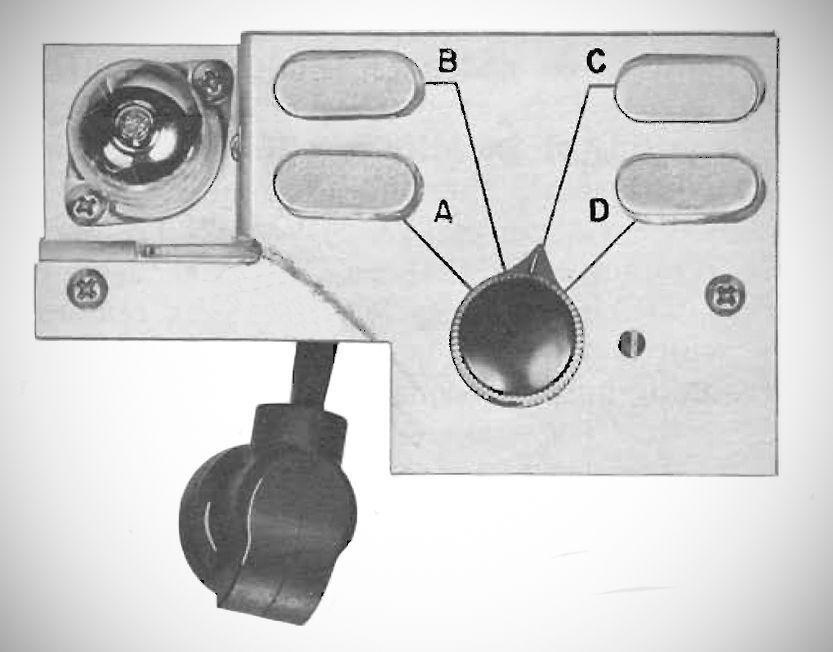
The Collins 399B-4 Novice Adapter is a crystal-controlled oscillator accessory designed for the Collins S/Line series of transmitters (specifically the 32S-1, 32S-2, and 32S-3).
Its purpose was purely historical and regulatory: it allowed advanced Collins S/Line gear to comply with FCC regulations for Novice Class amateur radio licensees of the mid-20th century.
When the S/Line was introduced, the FCC mandated that Novice Class operators must use crystal-controlled (XTAL) transmitters to prevent them from accidentally drifting out of their narrow, designated band segments. Because the high-end Collins 32S-series transmitters relied entirely on a highly stable, continuous Permeability Tuned Oscillator (PTO/VFO), they were technically illegal for a Novice to operate.
The 399B-4 solved this problem. By bypassing the internal VFO and replacing it with fixed crystal control, it restricted the transmitter to precise, crystal-locked frequencies, making the premium S/Line setup legally compliant for a beginner.
Specifications
– Frequency Range: It operates in the 2.5 MHz to 2.7 MHz range, which directly mirrors the injection frequency range of the Collins VFO it replaces.
– Crystal Capacity: The unit features sockets for four user-supplied crystals (CR-18/U holder style, specified for 32 pF operating capacity in antiresonant mode).
– Switching: A front-facing rotary selector knob allows the operator to switch between the four installed crystal channels.
– Tube Complement: Rather than utilizing its own onboard oscillator tube from scratch, the 399B-4 is designed to piggyback off the transmitter's existing circuitry. During installation, the operator removes the 6AU6 tube from the transmitter's VFO, inserts it directly into the 399B-4 chassis, and mounts the adapter assembly right onto the VFO bracket.
Calculating Crystal Frequencies
To calculate the crystal frequency required for the 32S-1 and 32S-2 transmitter output frequencies, subtract from 2700 kHz the normal transmitter dial reading for that output frequency.
For example, if the desired output frequency is 3730 kHz, the band switch is set to 3.6 MHz and the dial to 130 kHz. The dial reading, 130 kHz, subtracted from 2700 kHz equals 2570 kHz which is the required crystal frequency. In operation, the dial is used only as an aid to determine re- quired crystal frequencies. The dial setting does not affect output frequency.
To calculate the crystal frequency for the 32S-3 only, subtract the dial reading from 2698.5 kHz.
Each transmitter band-switch setting will provide a different transmitter output frequency with a specific crystal. To calculate the transmitter output frequency on each band, subtract the crystal frequency from 2700 kHz. The resulting kilohertz reading added to the band- switch setting is the transmitter output frequency.
For example, with a 2585-kHz crystal the figure to be added to band-switch setting is 115 kHz. The output frequency for a band- switch setting of 3.6 MHz is 3.715 MHz. Using the same crystal, the output frequency for a band-switch setting of 21.0 MHz is 21.115 MHz.
Caution
The 399B-4 is not recommended for use with any of the 32S-series transmitters in phone operation. There might be some variation from marked frequency on the hf crystals due to manufacturing tolerances (0.001 per- cent) which will introduce sufficient error into the operating frequency so that netting with other stations may be difficult. However, if used with the 32S series transmitters in phone operation, subtract the dial reading from 2698.65 kHz for USB, or 2710.35 kHz for LSB, to calculate the crystal frequency.
Note
To minimize any possibility of illegal out-of-band operation, it is recommen- ded that crystals be chosen so that transmitter output frequencies are not less than 3 kHz from the edge of a band.
To operate, proceed as follows:
a. Set receiver and transmitter band switches to the desired band, select a crystal in the 399B-4 for the desired transmit frequency, and set the receiver tuning to the transmit frequency.
b. Tune and load the transmitter according to its instruction book except keep MIC GAIN low so that pa plate current does not exceed 90 mA. This keeps power input within the legal limit of 75 watts for novice licensees.
Note
Do not connect receiver and transmit- ter for transceive operation, since this would result in the transmitter fre- quency being controlled by the receiver vfo.
---
2