Note
QST, May 1957, p. 2.
Allied Radio catalog 1958 (copyright 1957), p. 263.
QST. May 1958, p. 2. (accessories)
Allied Radio catalog 1959 (copyright 1958), p. 369.
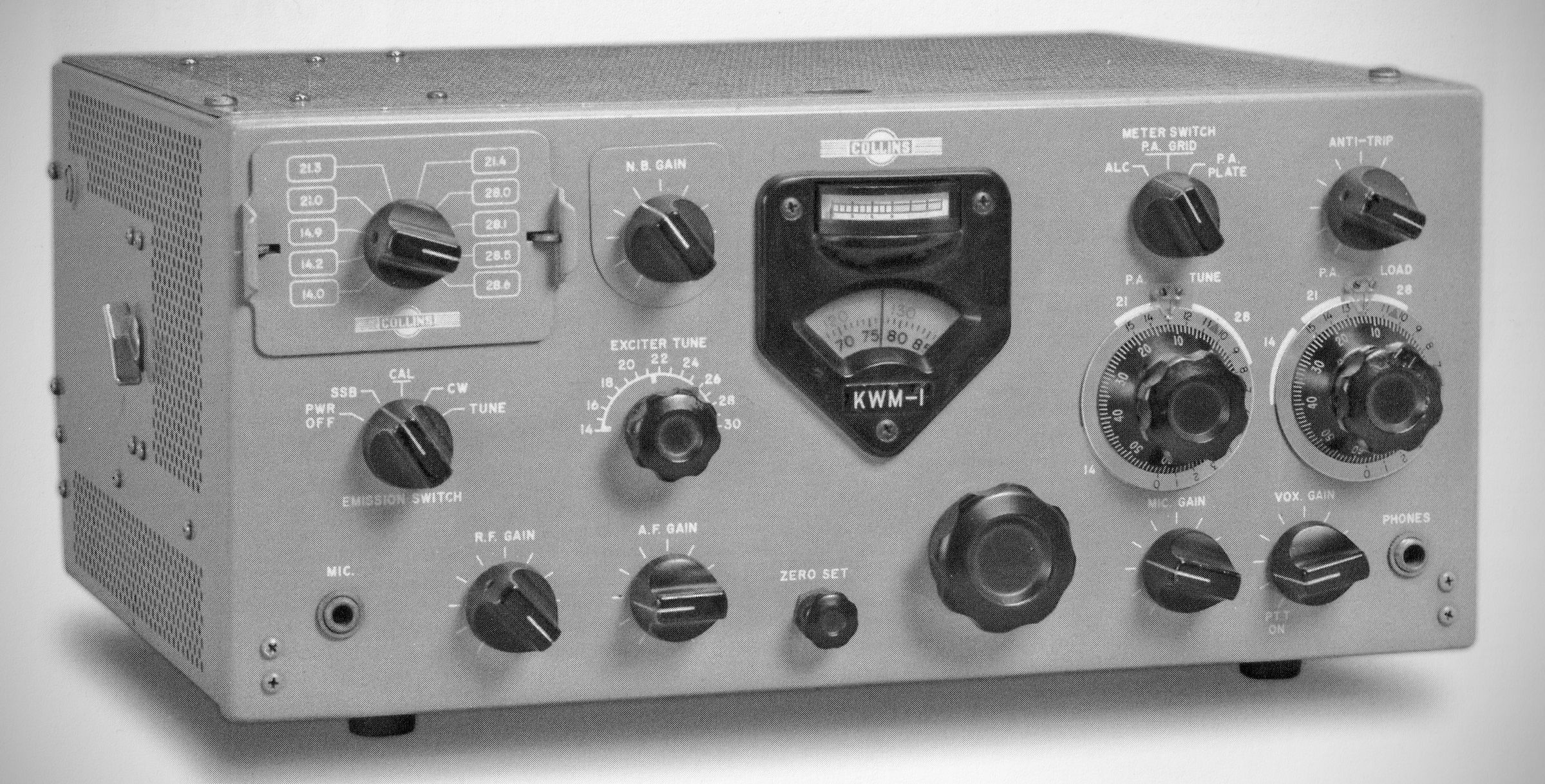
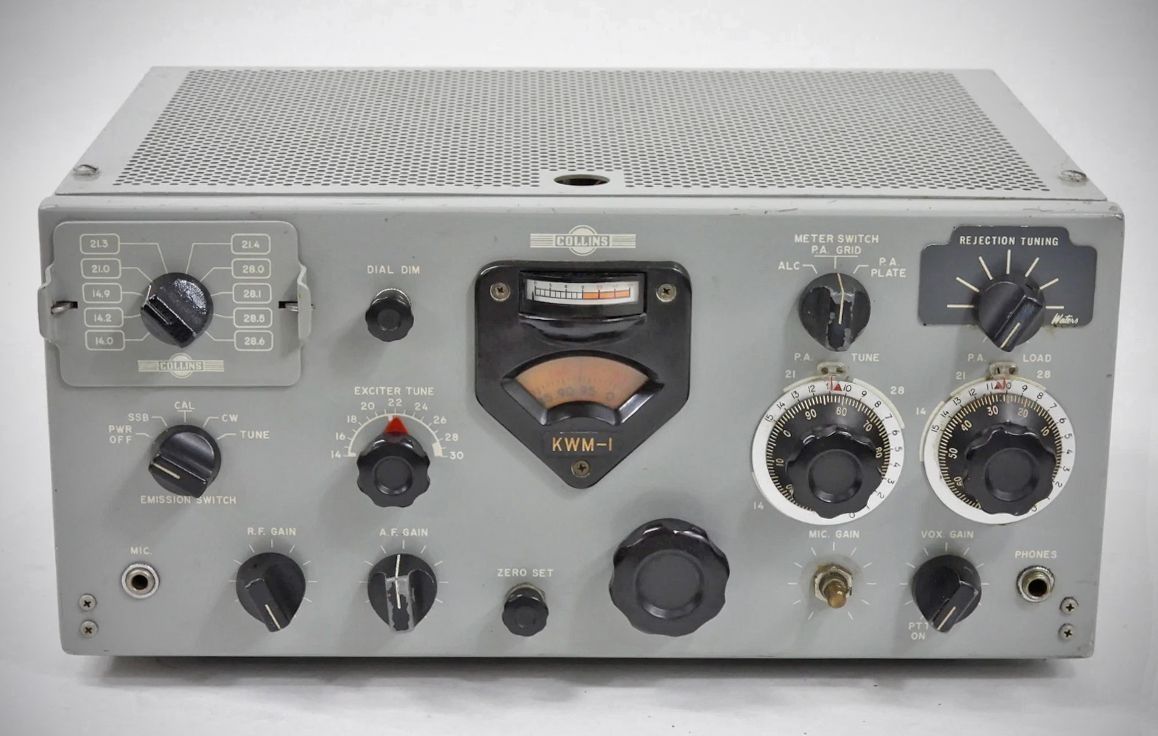
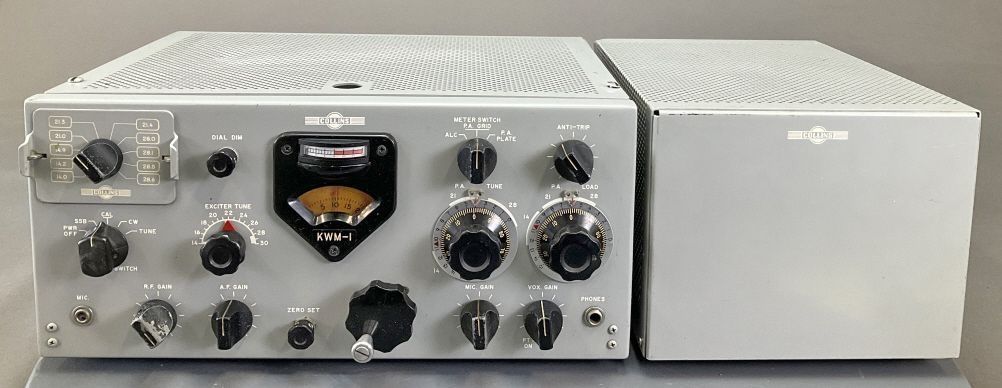
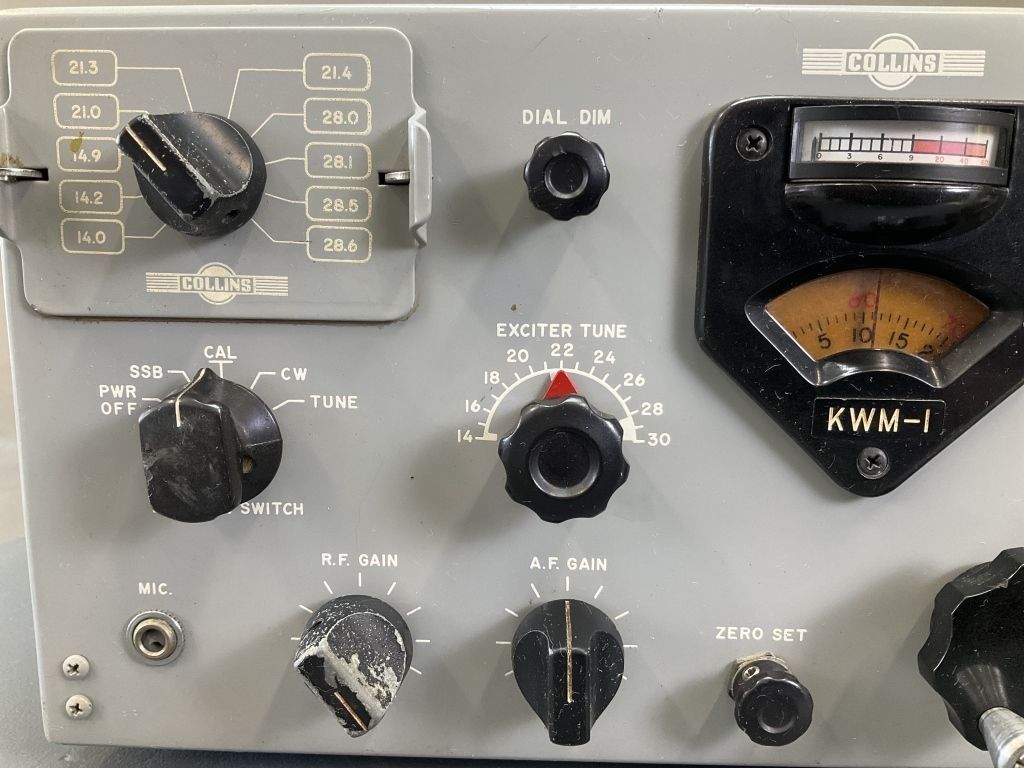
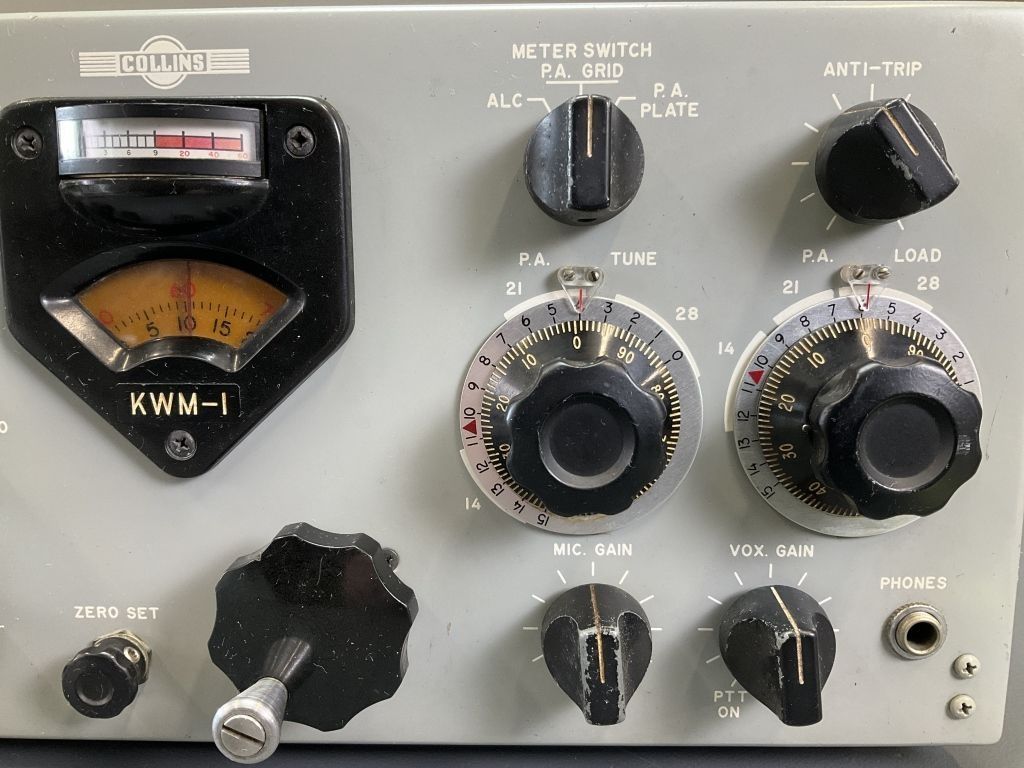
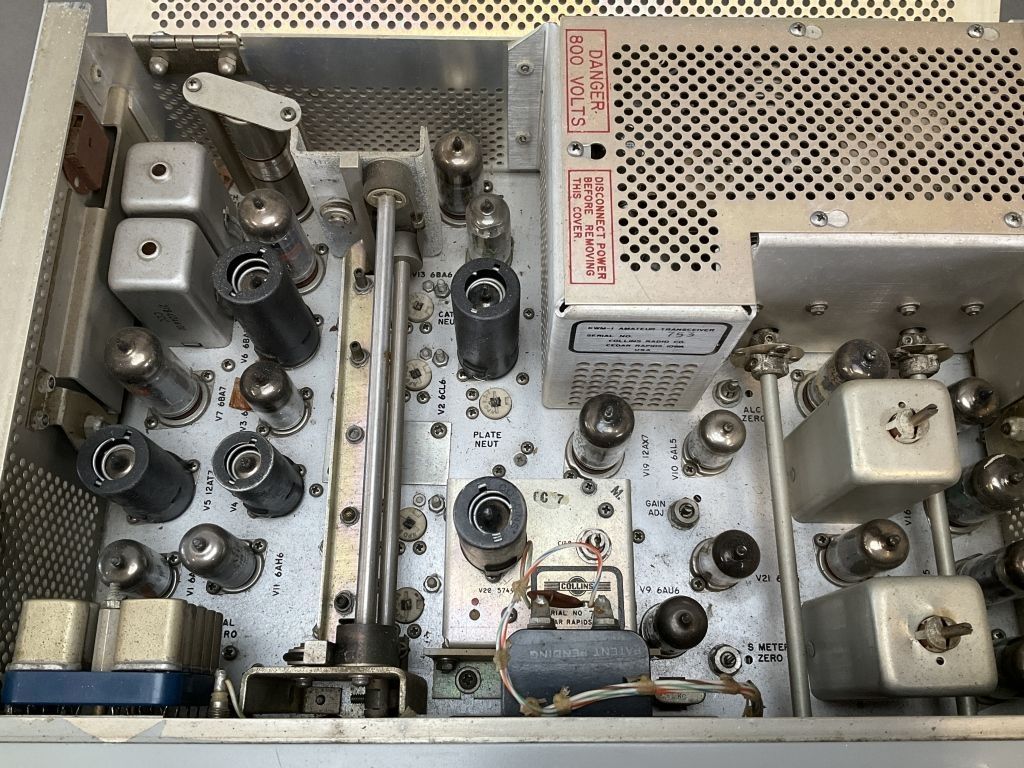
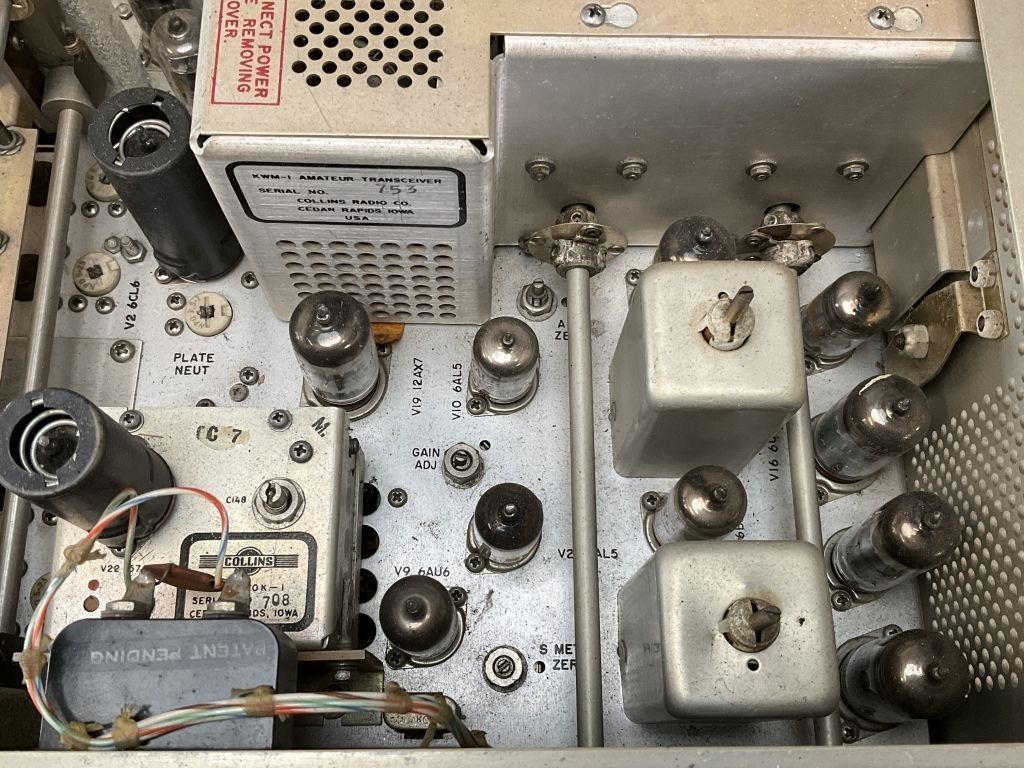
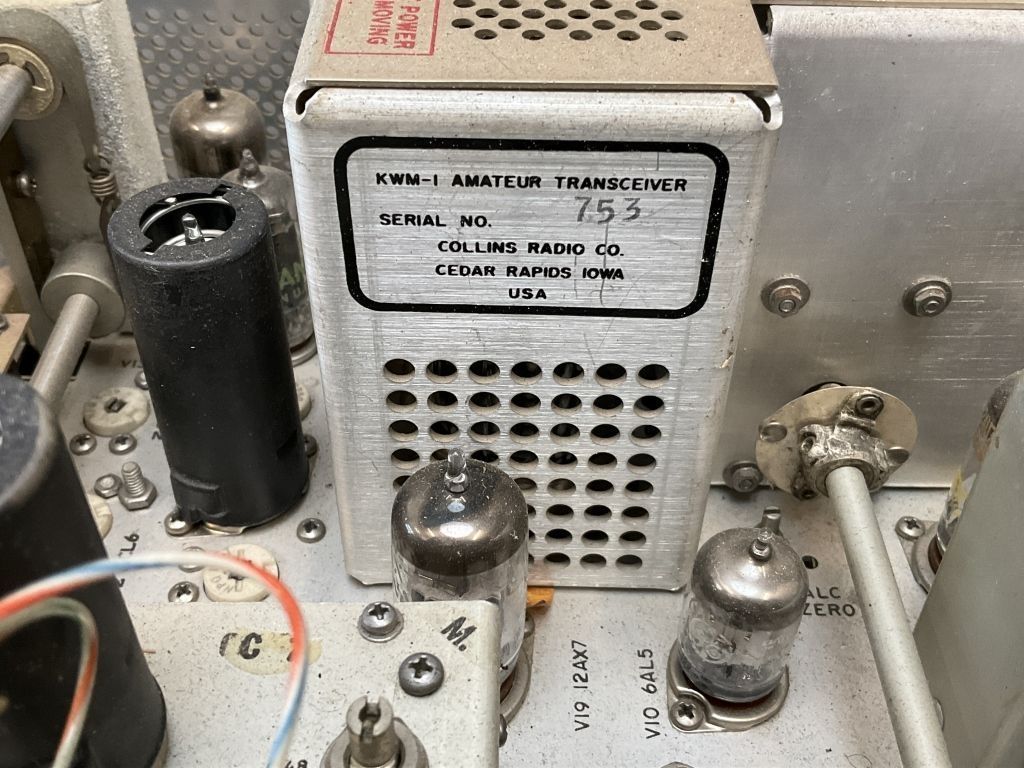
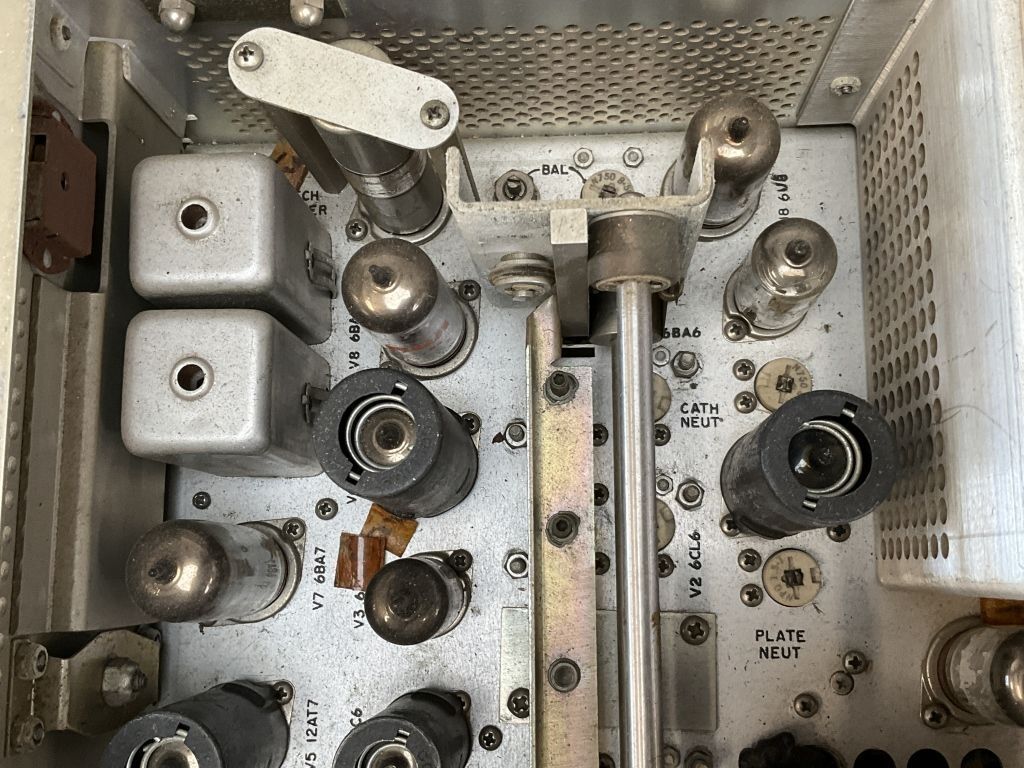
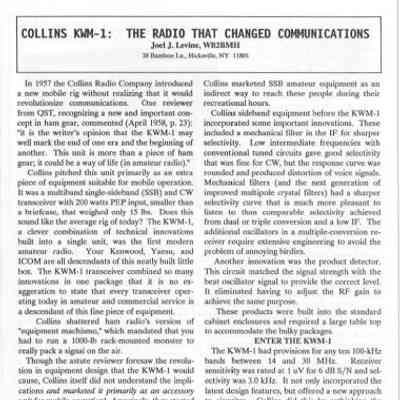
Introduced by the Collins Radio Company in 1957, the Collins KWM-1 is widely considered the first modern amateur radio. It was a true paradigm shift, and revolutionized amateur and commercial communications by proving that a compact, lightweight unit could replace the 100-pound equipment common of the era.
Though Collins initially marketed it primarily as an accessory or mobile rig, it ultimately sparked a revolution in compact base-station design.
The KWM-1 achieved its groundbreaking, compact footprint by completely rethinking standard transmitter and receiver architecture:
– Shared Circuitry & One-Dial Tuning: For the first time in modern gear, many of the same circuits were shared for transmitting and receiving. This included a combined VFO for single-dial tuning, the IF/sideband generator, the mechanical filter, and the low-power RF stages. This significantly cut the total tube count and minimized complexity.
– Low Duty Cycle Design: Collins recognized that transmitting SSB requires a much lower duty cycle than AM. By capitalizing on this, the KWM-1 utilized two 6146 final amplifier tubes with a steady-state plate dissipation of 25 watts each to safely hit 200 watts PEP. This broke the old "pound-a-watt" rule, weighing just a quarter-pound per watt.
– Advanced Technology Integration: The unit came equipped with a highly selective mechanical filter in the IF for a sharp, distortion-free voice response. It also featured a product detector (eliminating the need to manually ride the RF gain), 1-kHz dial calibration, VOX, speaker anti-trip circuits, automatic load control, and a crystal-controlled BFO and receiver HF oscillator.
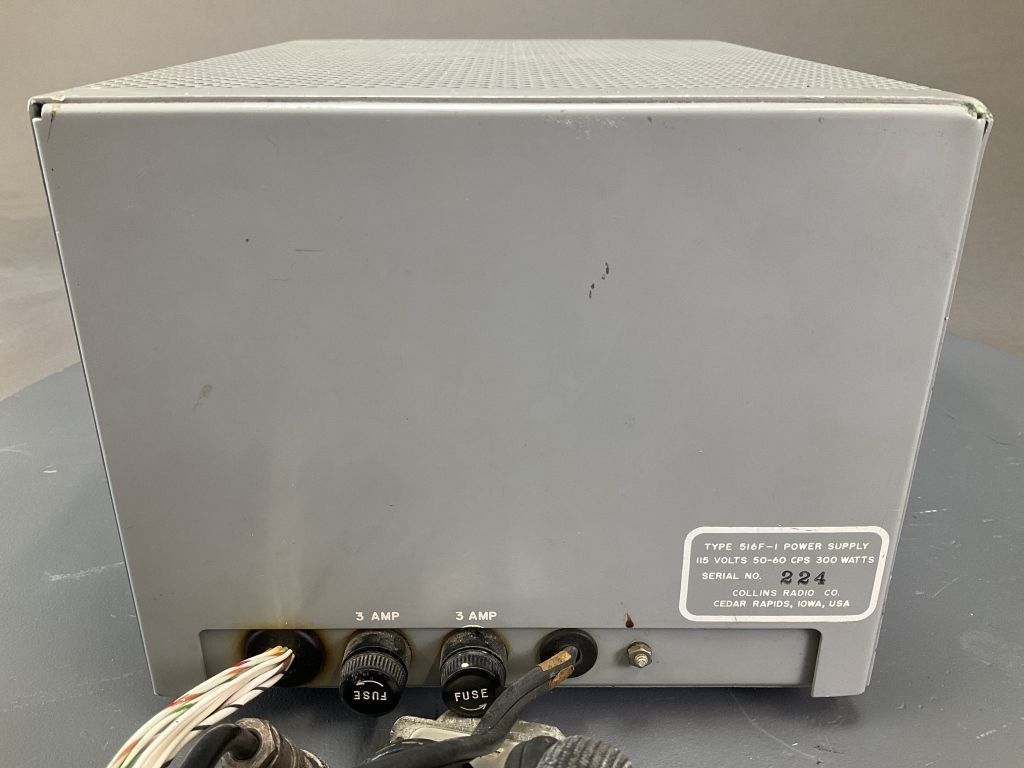
– Transistorized Power Supply: The outboard DC power supply was the industry's first high-power transistorized power unit.
Specifications
– Frequency Coverage: Provisions for any ten 100-kHz bands between 14 and 30 MHz.
– Power: 200 watts PEP input.
– Receiver Sensitivity: Rated at 1 uV for 6 dB S/N.
– Selectivity: 3.0 kHz.
Retailing for $850 with a power supply, it matched the exact performance specifications of Collins' top-of-the-line, separate 75A-4 receiver and massive KWS-1 transmitter, but at a fraction of the size and cost.
The KWM-1 had a brief production life of only two years before being succeeded by the famous KWM-2. However, it set the structural blueprint for modern ham radio; it took more than five years for competing manufacturers to successfully market their own lines of compact, multi-band SSB transceivers.
References
Modification to add 40 meters. 73, Dec 1963, p. 60.