Note
Communications Receivers: The Vacuum Tube Era 1932-1981
by Raymond S. Moore
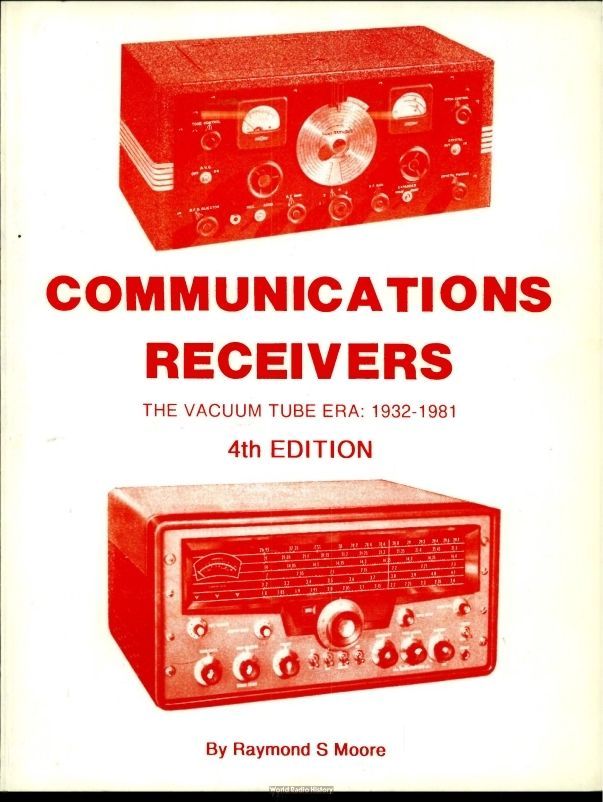
For anyone seeking a quick, accessible guide to the golden age of shortwave radio, Communications Receivers: The Vacuum Tube Era 1932-1981 by Raymond S. Moore serves as a handy, wide-ranging directory. While it covers a vast landscape of twentieth-century gear, readers should look to it as a high-level catalog rather than an exhaustive engineering manual.
The true value of this book lies in its sheer breadth. Moore captures a wide cross-section of the American communications receiver market, packing hundreds of models from major domestic manufacturers into a single volume. It is an excellent starting point if you want to quickly identify an obscure piece of vintage hardware or get a general sense of what companies like Hallicrafters, National, Hammarlund, and Collins were producing during a specific year.
However, because the book covers so much ground, it intentionally trades depth for scope. Each individual receiver is given a relatively brief overview. Rather than diving into detailed circuit analyses, step-by-step restoration troubleshooting, or the fine nuances of intermediate frequency stages and production line variations, the text provides a concise snapshot of each model. You will typically find standard, high-level details: basic tube counts, general frequency coverage, original pricing, and a brief description of the physical cabinet style.
The fourth edition refines these snapshots, fixing minor typos from earlier prints and expanding the list of covered models to make the overall directory even more complete. The straightforward narrative format makes it easy to skim through decades of radio history without getting bogged down in dense, academic prose.
Ultimately, Communications Receivers is a useful, lightweight reference guide. It functions beautifully as a visual and historical index for collectors who enjoy hunting for vintage gear at swap meets, or for hobbyists who want a quick way to look up the basic identity of a classic rig. It won't replace an original service manual or a deep-dive biography of a specific brand, but as a broad, single-volume overview of the vacuum tube era, it is a highly practical addition to the bookshelf.