Note
QST, Sep 1980, p. 39.
QST, Mar 1981, p. 112.
QST, Apr 1982, p. 122.
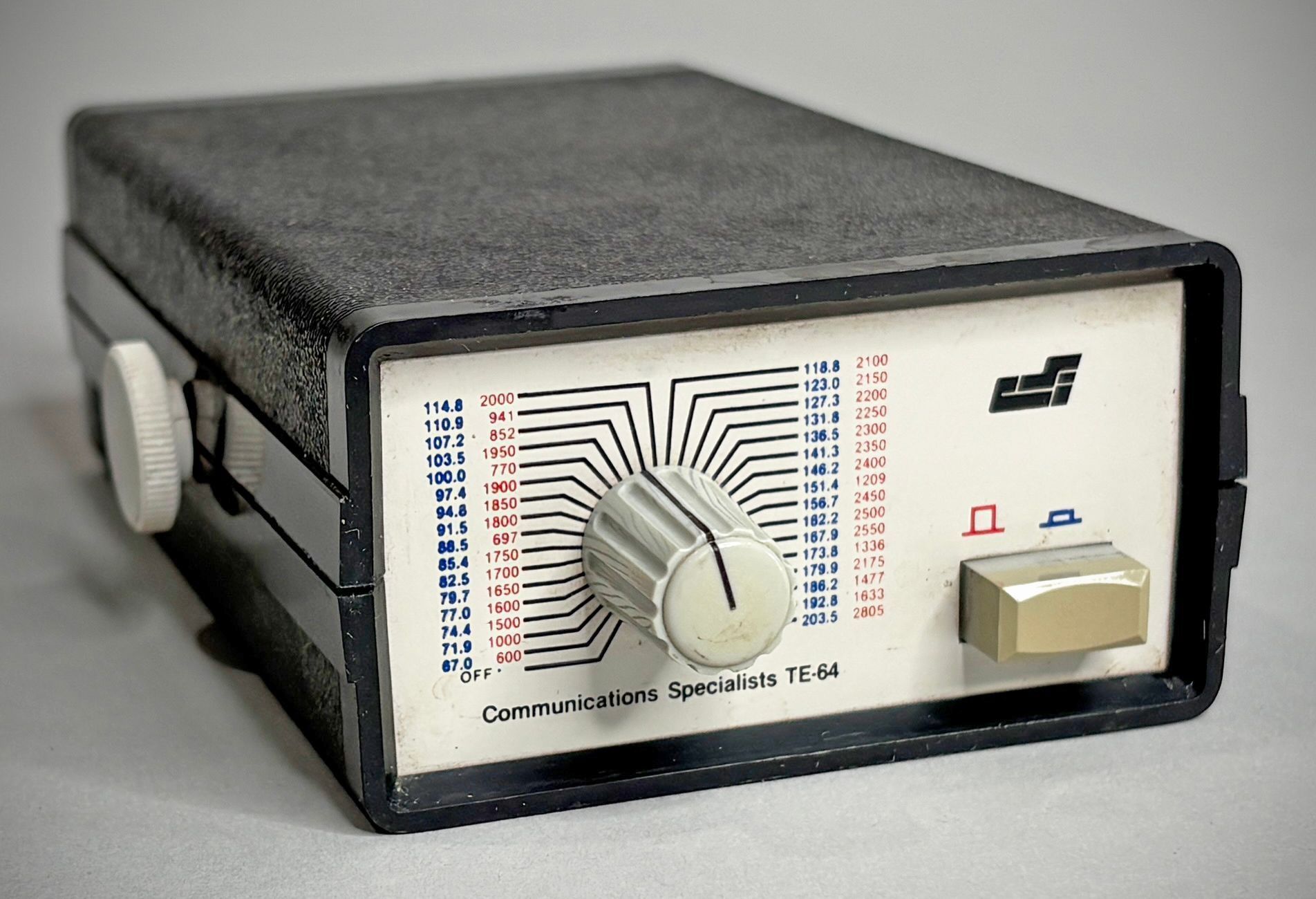
The TE-64 is built for both fixed and portable use, featuring a front-panel switch for frequency selection and internal provisions for battery operation. It is commonly used to interface with FM transceivers to provide the necessary signaling for repeater access and selective calling.
Key Features
Tone Capacity: Encodes 64 tones (32 sub-audible and 32 audible).
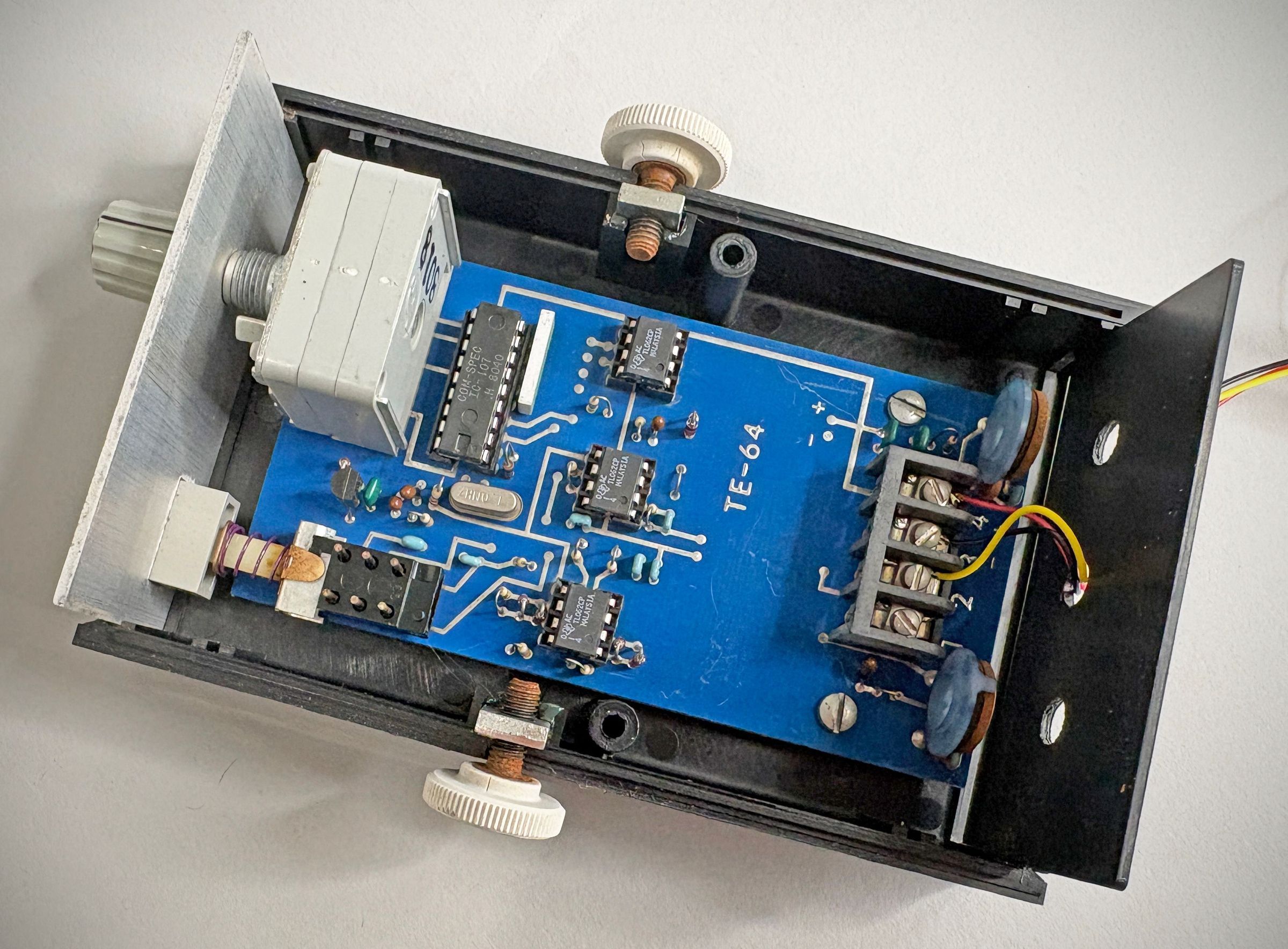
Dual Outputs: Features two independent groups (Group A for sub-audible and Group B for audible) with separate level adjustment potentiometers.
Power: Operates on unregulated DC voltage (+6.0V to +30.0V) or an internal 9V battery.
Mode Selection: Supports both continuous tone and tone burst operation (adjustable via resistor R3).
Specifications
Input Voltage: +6.0 to +30.0 VDC (Unregulated)
Low Voltage Support: Requires wire jumper across VR-1 for < 9.0V operation
Current Consumption: ~9mA
Tone Accuracy: Crystal controlled (1.000 MHz crystal)
Output Type: Low impedance, sine wave
Output Level: 0 to 3V (adjustable via R9/R15 pots)
Operating Temp: –30°C to +65°C
Dimensions Approx. 5.25" x 3.3" x 1.7"
The "D" Model: Later, Communications Specialists released the TE-64D, which added a digital frequency display to make it easier to see exactly which tone was selected, rather than relying on the position of a rotary switch.
References
Review. QST, Sep 1980, p. 41.