Note
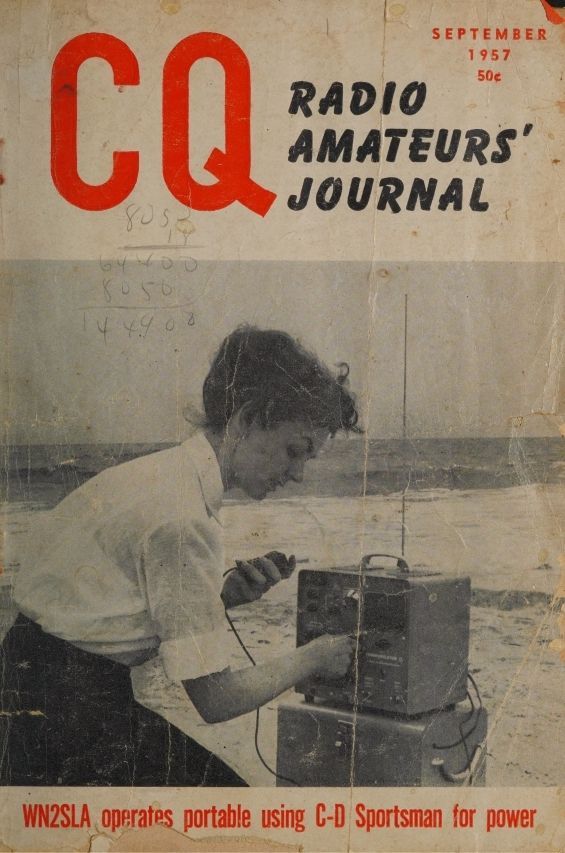
CQ Amateur Radio (originally CQ: Radio Amateurs' Journal) (most commonly known simply as CQ Magazine) is one of the most historic and influential independent monthly publications dedicated entirely to the hobby of amateur radio.
First published in January 1945 by Radio Magazines Inc.(and later managed for decades by CQ Communications), its title comes straight from the universal Morse code and voice call "CQ"—the traditional shorthand code used by operators to mean "calling any station" or "is anyone out there?"
While other major publications like the ARRL's QST serve as official journals for membership organizations, CQ established itself as an independent voice focused heavily on the practical, operational, and competitive sides of the hobby.
For generations of hams, CQ has been the ultimate authority on a few specific pillars of amateur radio:
– Major Operating Contests: CQ sponsors and manages some of the largest, most prestigious operating events in the world, including the CQ World Wide DX Contest (CQ WW) and the CQ World Wide WPX Contest. Winning or even placing high in these events is considered a pinnacle achievement in the radiosport community.
– Prestigious Award Programs: They administer highly sought-after operating awards that require immense skill and dedication, such as:
DXCC Alternative / WAZ (Worked All Zones): Verifying contacts with all 40 of the world's geographic CQ zones.
– USA-CA (United States County Award): For confirming contacts with U.S. counties (all 3,077 of them).
– The DX Hall of Fame: CQ officially honors the legends of long-distance communication (DXing), contesting, and technical innovation through its highly respected Hall of Fame inductions.
Historically, CQ struck a distinct balance between deep-dive technical hardware projects and on-the-air operating activities. Over the decades, its pages have been home to iconic columns on classic vacuum tube gear, antenna design, propagation forecasts, VHF/UHF operating, and keys/telegraphy hardware.
CQ was also a prolific publisher of small format books. Over the years the company released more than two dozen titles on a variety of subjects related to ham radio and electronics.
Like many print publications, CQ transitioned heavily into the digital era to keep active hams connected to contesting results, product reviews, and technical features online. Whether in glossy print or on a tablet screen, it remains an essential piece of amateur radio history and culture.
Wayne Green
No discussion of CQ magazine would be complete without also talking about Wayne Green, CQ's most well known editor.
Before becoming one of the most famous, outspoken iconoclasts in the amateur radio and personal computing worlds, Wayne Green (W2NSD) was the editor of CQ Magazine for five years in the 1950s (specifically from 1955 to 1960).
His time at CQ helped shape the magazine's lively, practical tone, but it also set the stage for one of the most legendary rivalries in ham radio history.
The Big Split and 73 Magazine
Wayne Green was a visionary, a relentless self-promoter, and a man who loved a good argument. He used his platform at CQ to aggressively push the hobby forward, championing then-emerging technologies like Single Sideband (SSB) voice communication. However, his strong, unfiltered opinions eventually led to a spectacular falling out with CQ's publishers, and he was ousted in 1960.
Never one to back down—his famous callsign suffix NSD became his lifelong motto, "Never Say Die"—Green immediately retaliated by launching his own competing independent publication that same year: 73 Magazine (also known as 73 Amateur Radio Today).