Note
QST, Nov 1980, p. 177.
QST, Mar 1981, p. 141.
QST, Feb 1982, p.178.
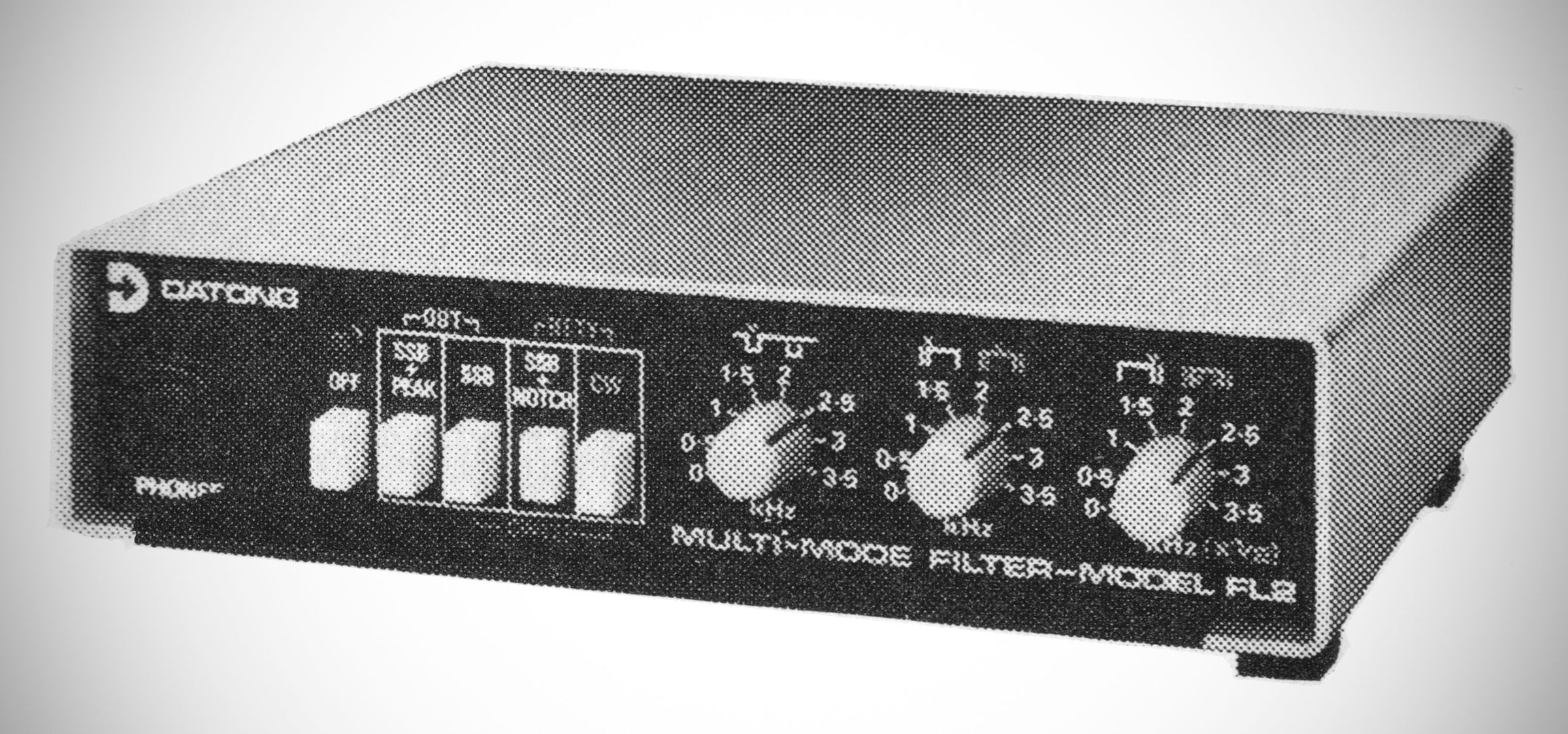
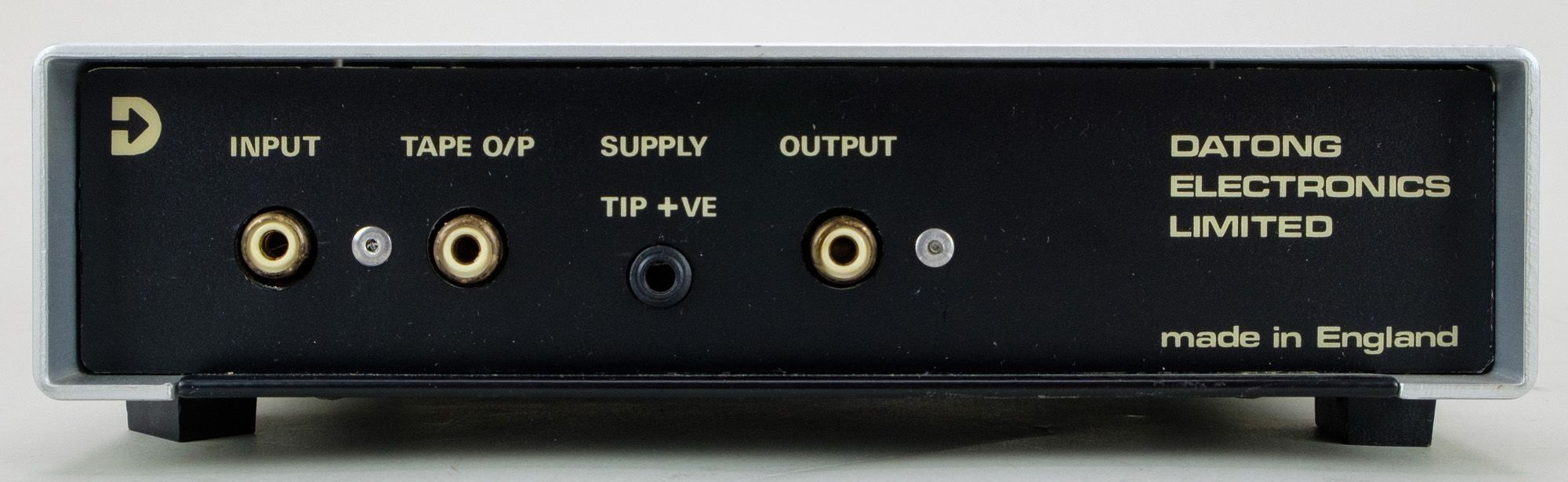
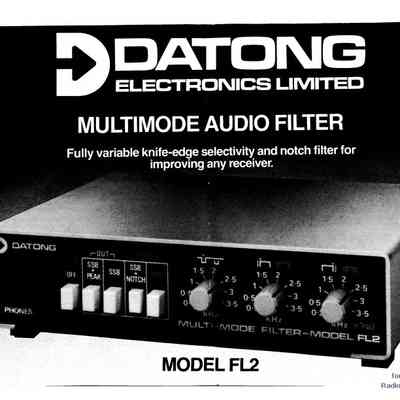
The Datong FL-2 and FL-3 are legendary, classic multi-mode audio filters designed and manufactured in England. They were wildly popular additions to shortwave and amateur radio shacks because they allowed operators to dramatically improve a receiver's selectivity right in the audio line—inserted right between the radio's headphone/speaker output and an external speaker.
Because they rely on active filter circuitry rather than fixed IF crystals, they provide razor-sharp, continuously variable control over the audio passband.
General Capabilities (FL-2 and FL-3 Baseline)
Both units share the exact same foundation of heavy-duty analog audio processing, powered by an array of multi-function ICs. The heart of both units is a 12-pole tunable active filter system:
The Main Skirt Selectivity: It utilizes a pair of computer-optimized 5-pole elliptic function filters—one low-pass and one high-pass. Their cut-off frequencies are continuously variable from 200 Hz to 3500 Hz. Because the slopes are incredibly steep (virtually knife-edge skirts), they wipe out high-pitched "monkey chatter," adjacent-channel splatter on SSB, or tight teleprinter/RTTY signals.
The Manual Notch/Peak Filter: Alongside the main passband adjustments, a separate 2-pole manual filter provides an extra layer of control. In SSB modes, it acts as a manual notch to slice out a pesky carrier tone or heterodyne whistle. In CW mode, it turns into a sharp peak filter to pull weak Morse code out of the mud.
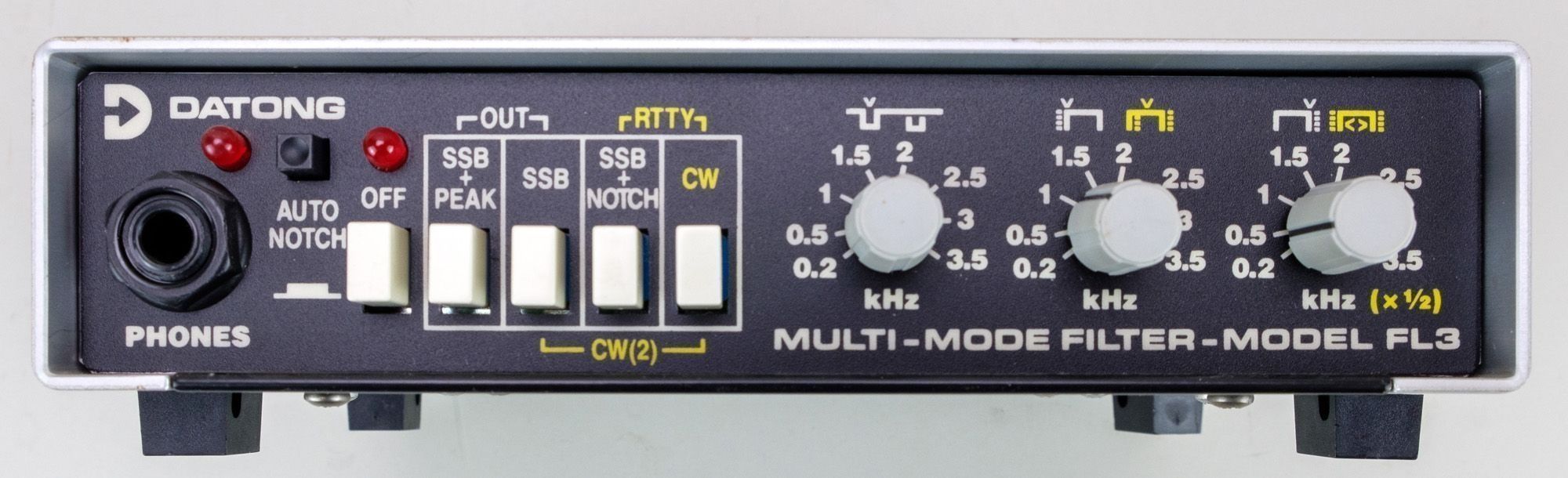
Operating Modes: Simple front-panel white pushbuttons allow you to change the underlying filter behavior instantly:
SSB: Just the high and low-pass filters engaged for voice.
SSB + NOTCH: Engages the manual notch so you can dial out a specific whistle with the left-hand knob.
SSB + PEAK: A clever tuning mode. It temporarily turns the notch into a peak so you can easily hunt for and maximize the offending whistle, then pop back to "SSB + NOTCH" to drop it into a deep, 40 dB grave.
CW & CW(2): Interlocks the controls so you can gang the filters together, creating a tight, flat-topped bandpass window with minimum ringing.
Built-in Amplification: Both versions include a built-in, protected 2-watt audio power amplifier stage to easily drive a standard 4- to 16-ohm external speaker.
The Key Differences in the FL-3
While the core filter layout, the chassis size ($7.2" \times 6" \times 1.7"$), and the three main control knobs are identical, the FL-3 introduces a fully automatic "hands-off" heterodyne killer.
Here is exactly how the FL-3 differs:
1. The Phase-Locked Loop (PLL) Auto-Notch
The defining upgrade of the FL-3 is an independent, 2-pole automatic notch filter module utilizing switched-capacitor technology.
How it behaves: When switched on, the auto-notch continuously sweeps the audio spectrum from 200 Hz to 4000 Hz. The moment it encounters a steady, continuous tone—like an unmodulated carrier or a station tuning up—it locks on in under a second and notches it down by typically 40 dB. It does this entirely automatically without you ever needing to touch a dial.
2. Front Panel Layout Adjustments
To manage this extra auto-notch circuit, Datong added two distinct components to the far left side of the FL-3 front panel:
The Small Black Pushbutton: Labeled "AUTO NOTCH." When the button is out, the automatic filter is bypassed. When pressed in, the auto-notch is actively scrubbing the audio line.
The Lock LED: Positioned right next to the auto-notch button. This LED illuminates brightly the second the internal PLL tracks and locks onto an offending heterodyne. If a whistle disappears so quickly you barely heard it, the LED acts as your visual confirmation that the auto-notch caught it.
3. Dual-Whistle "Double Notch" Capability
Because the auto-notch operates on its own dedicated module before the main power amp, it runs completely independent of the standard controls. This means on the FL-3, you can kill two heterodynes at the same time. You can let the auto-notch seek and destroy the loudest whistle on the band, while using the manual notch knob to dial out a secondary, weaker tone nearby.
4. Supply Voltage Restrictions
The extra auto-notch circuitry makes the unit slightly more sensitive to input voltage:
Datong FL-2: Accepts a broad DC input range of 10 to 20 Volts.
Datong FL-3: Strictly limited to 10 to 15 Volts DC (typically pulled from a standard 12V or 13.8V shack supply). Exceeding 15V risks damaging the specialized auto-notch sub-module.
(Note: Because the core boards were so closely related, Datong actually sold an internal upgrade module, the Model FL2/A, along with a replacement front panel, which allowed owners to retroactively convert an FL-2 into a full-fledged FL-3.)