Note
QST, Apr 1979, p. 197.
QST, Sep 1979, pp. 210-211. (full specs)
QST, Jan 1980, p. 49.
QST, Feb 1981, p. 121.
QST, Jan 1982, p. 155.
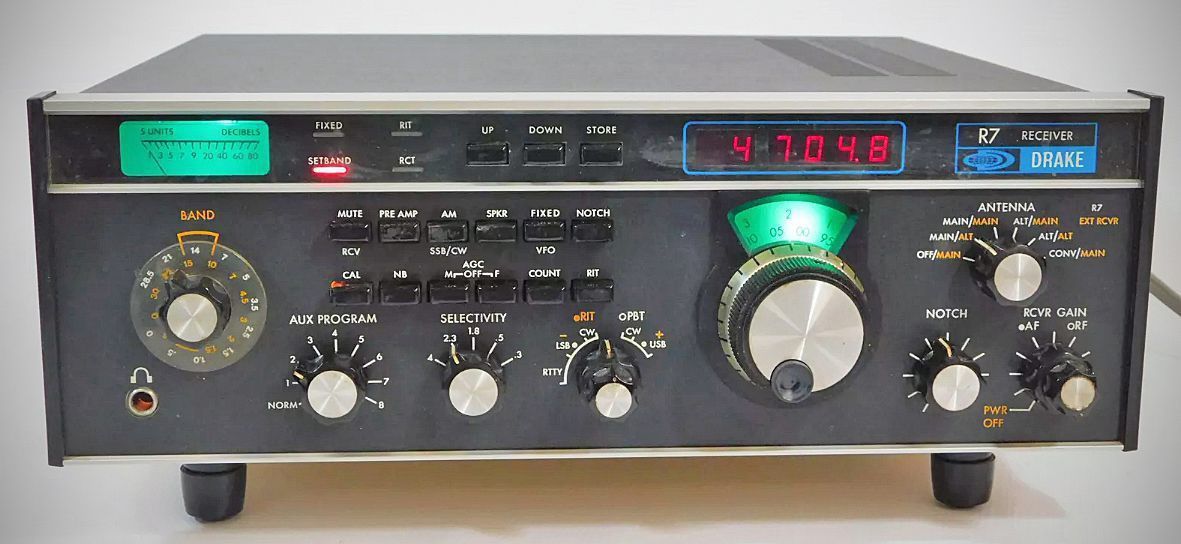
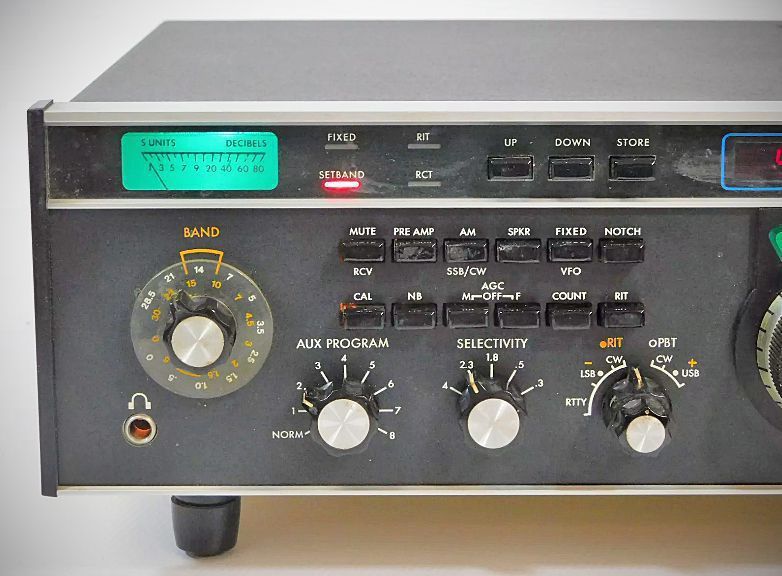
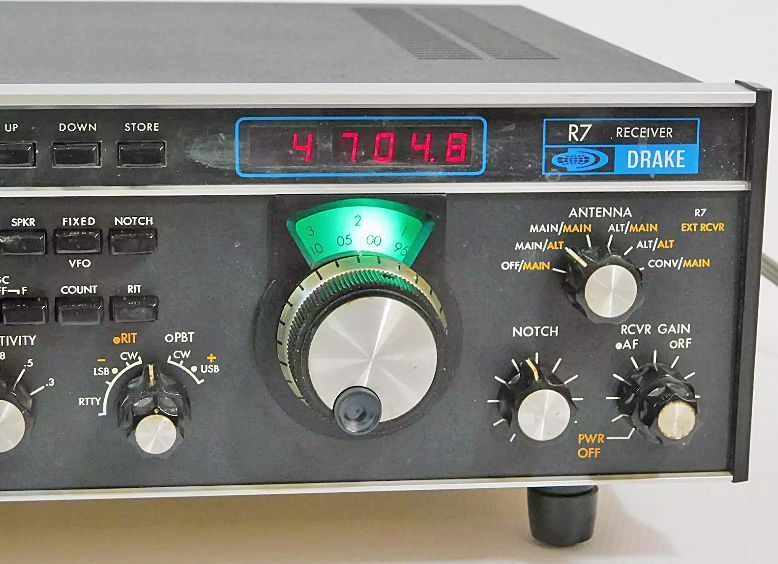
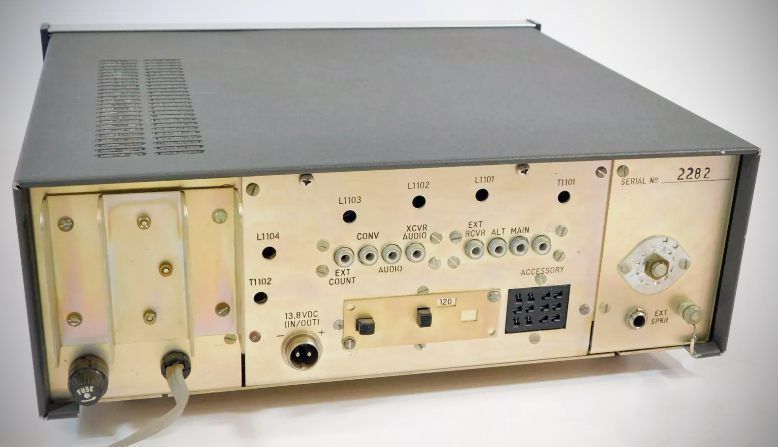
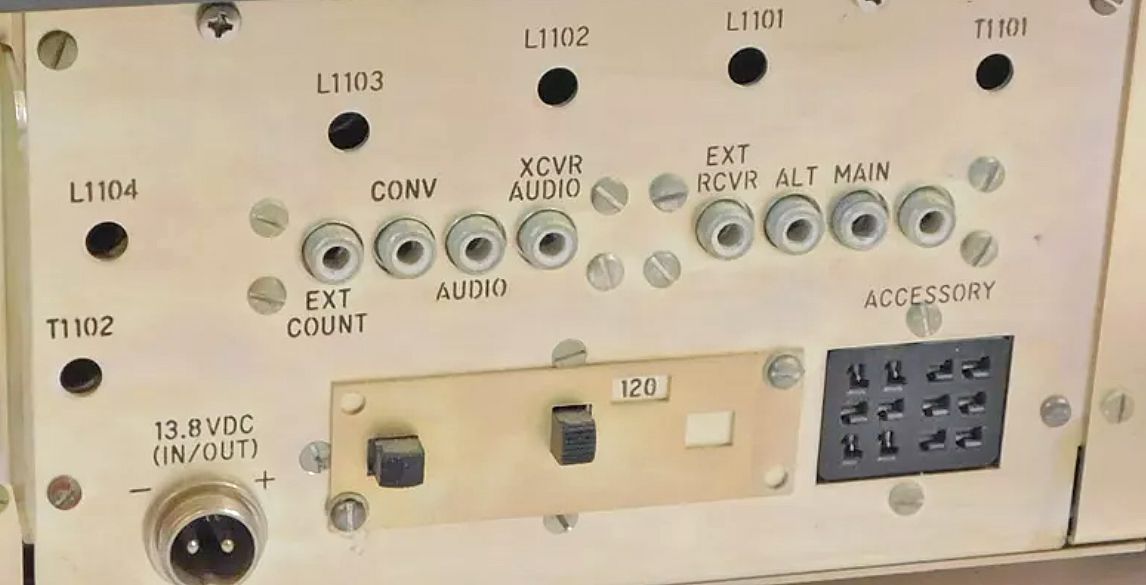
The R-7 receiver provided continuous tuning from 0-30 MHz. It used the same PTO synthesizer setup as the TR-7 and could be paired with it as an outboard receiver. It had a tunable IF notch as well as a wide selection of optional filters. The R-7's power supply could operate from 100, 120, 200, and 240 VAC or from 13.8 VDC. General-coverage use required the optional DR-7 board.
The receiver is 100 per cent solid state, fully synthesized with a permeability tuned oscillator (PTO) for smooth tuning. It has continuous tuning from 0-30 MHz, and offers both a digital readout and an analog dial.
The R-7 receiver features up-conversion to a first IF at 48 MHz; a special high-level, double-balanced mixer provides a high intercept point and strong signal handling characteristics. The receiver uses a full set of bandpass "window filters" that operate from 30 MHz, through VLF, to zero MHz. This permits performance in the MF/LF/VLF range that is very similar to that in the high-frequency range. As a result, external VLF preselectors or converters are not required.
Frequency coverage 0-30 MHz with DR-7 digital readout general coverage board;
0.5 MHz
0.52.0, 2.53.0, 3.54.0, 4.5-5.0, 7.0-7.5. 14.0-14.5, 21.0-
21.5. 28.529.0 MHz without; Aux-7 (Aux-7 adds any eight
500-kHz segments from 0 to 30 MHz)
Frequency stability: Less than 100 Hz drift after warmup
Readout accuracy: Analog dial: better than ±1 kHz when calibrated to nearest
marker; Digital: 15 ppm ±100 Hz
Sensitivity:
(1500 kHz -30 MHz) 0.5 or less for 10 dB (S+ N)/N on SSB and CW; 0.2 uV or better with preamp turned on.
2.0 uV or less for 10 dB (S + N)/N on AM (30% modulation); 1.0 uV or less with preamp turned on
(Preamp not operational below 1.5 MHz)
(0-500 kHz) 2.0 uV or less for 10 dB (S+ N)/N on SSB and CW; 1.0 uV or less for 10 dB (S+ N)/N on AM
Selectivity Same as TR-7 (ultimate selectivity greater than 90 dB)
AGC: Same as TR-7
lnterrnodulation Intercept point at +20 dBm, minimum; two-tone dynamic
range, 95 dB
Image and IF rejection Greater than 80 dB
Audio output 2.5 watts with less than 10% THD into 4-ohm load
Power supply 110/220 VAC, 50/60Hz, or 11–16 VDC
Dimensions Same as TR-7
References
Review. QST, Jan 1980, p. 49.