Note
QST, Feb 1953, p. 103.
Allied Radio catalog 1954 (copyright 1953), p. 48.
Allied Radio catalog 1955 (copyright 1954), p. 191.
Allied Radio catalog 1956 (copyright 1955), p. 199.
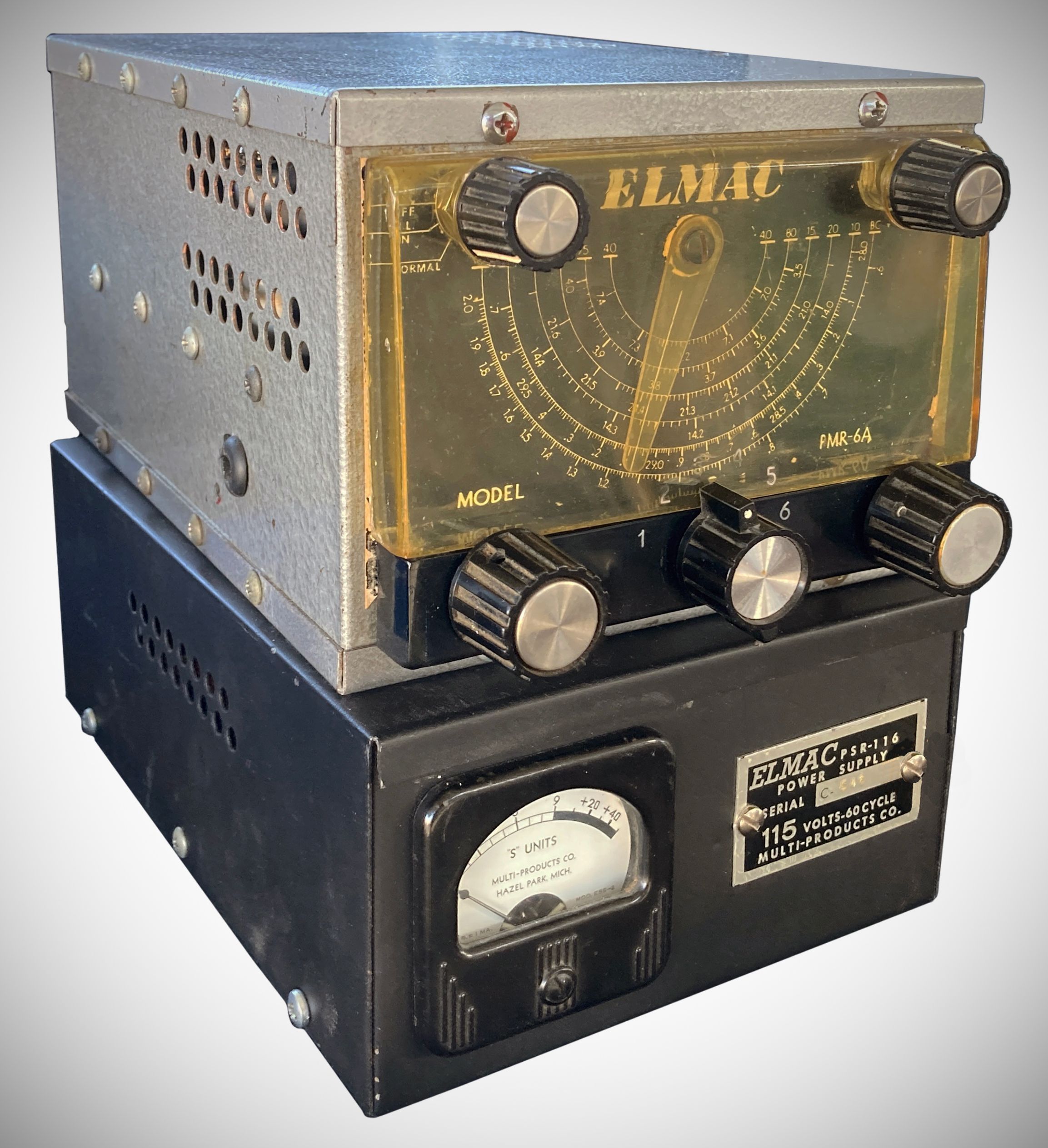
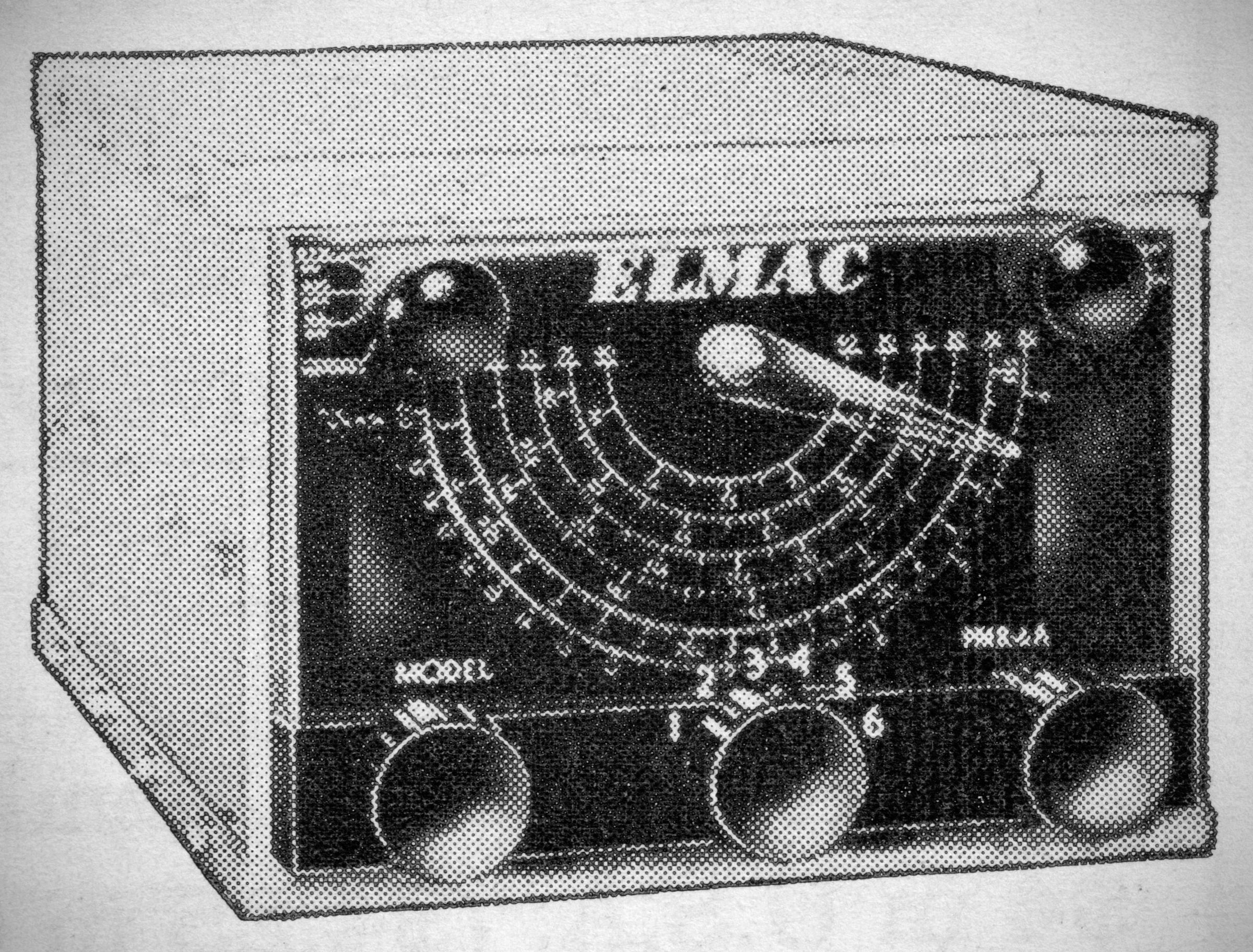
The PMR-6A receiver is a 10 tube double-conversion superheterodyne covering the 160, 80, 40, 20, 15 and 10 meter amateur bands, plus the standard broadcast band.
Designed primarily as an communications receiver for mobile use, it is also suitable because of its compact size for marine and aircraft installations, portable operation, and as a fixed station or monitoring receiver.
The circuit employed on all bands except the lowest frequency range consists of one stage of radio frequency amplification; a stabilized high frequency oscillator; a first mixer converting to the first intermediate frequency of 1600 kHz; a combination oscillator-second mixer, followed by two stages of intermediate frequency amplification at 455 kHz; a combination detector, automatic volume control, and noise limiter; an audio driver; a beam pentode audio output stage; a beat frequency oscillator; and a voltage regulator. On the lowest frequency range, the output of the first mixer feeds directly into the 455 kHz IF amplifier.
Tubes:
6BJ6: R.F. amplifier
6BA7 or 6BE6: First mixer
6C4: H.F. oscillator
6BE6: 2nd mixer-oscillator
6BA6: 1st I.F. amplifier
6BA6: 2nd I.F. amplifier
6AL5: Detector, noise limiter
1/2-12AT7: 1st audio amplifier
1/2-12AT7: Beat freq. oscillator
6BK5: Audio output
OB2: Voltage regulator
The PMR-6A receiver was intentionally designed to use an external power supply in order to permit (a) use of the power supply to supply the low level stages of a companion transmitter, and (b) use of the receiver with an AC operated power supply at a fixed station or portable location. A single relay utilized will eliminate the necessity for a separate power supply for the low level stages of a companion transmitter.
The following accessories were available for use with the PMR-6A receiver:
– PSR-116: Power supply for 115 volt 50-60 cycles. Supplies necessary plate and filament voltages for the receiver and can be used to power the low level stages of a companion transmitter.
– PSR-116S: Same as above except that an "S" meter and adjusting potentiometer is included. (Above supplies also available for 25 cycle operation)
– PSR-6: For 6 volt D.C. operation; otherwise similar to PSR-116 above.
– PSR-12: For 12 volt D.C. operation; otherwise similar to PSR-116 above.
– ESS-2: 2 inch relative signal strength meter, mounted in a metal box with 36" wire leads suitable for mobile installations.