Note
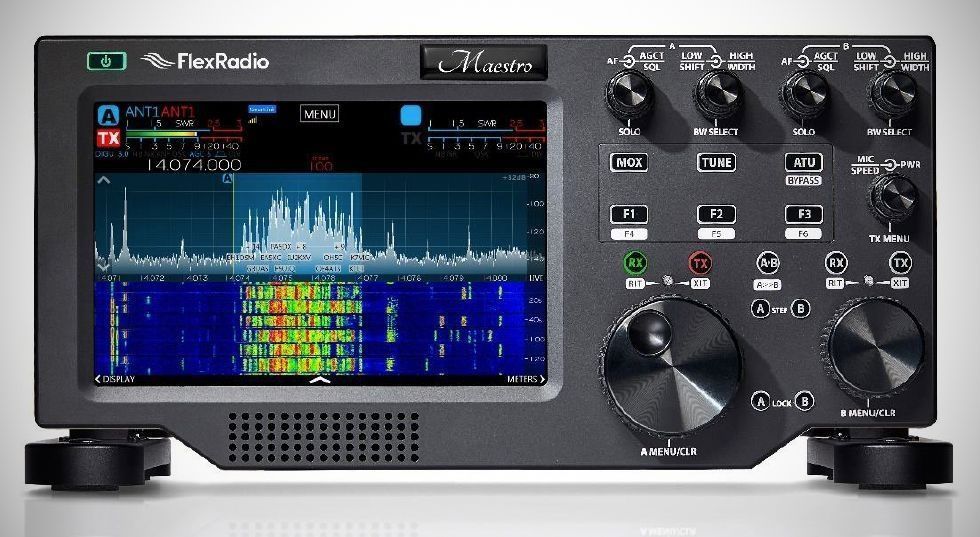
The FlexRadio Maestro is a specialized control interface for the FLEX-6000 Signature Series radios, designed to provide a high-performance, tactile operating experience whether at home or in the field. It effectively decouples the operator from the radio hardware by streaming high-quality audio and spectral data over a network connection. While all versions of the Maestro share the same 8-inch multi-touch display and front-panel control layout, they are divided into three distinct model variations—"A", "B", and "C"—each with unique physical characteristics and power requirements.
Model Identification and Physical Layout
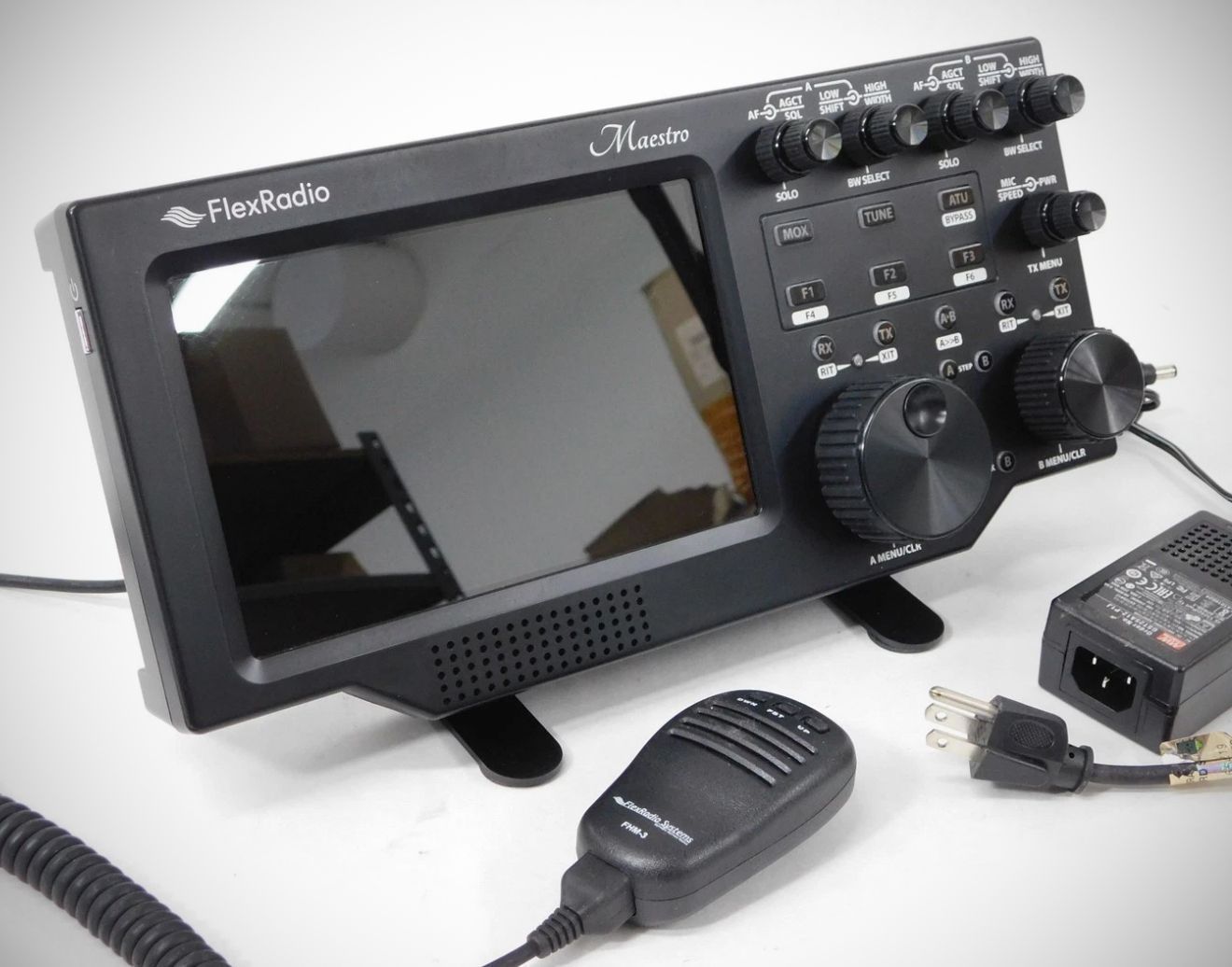
The most straightforward way to distinguish between the three models is the placement of the power button on the left-hand side of the chassis. On the Maestro "A", the power button is located on the top; on the Maestro "B", it is situated on the side; and on the Maestro "C", it has been moved to the front. Additionally, the serial numbers provide a permanent identifier: Model A units contain "0100," Model B contains "0101," and Model C contains "0102".
Connectivity and Rear Panel Differences
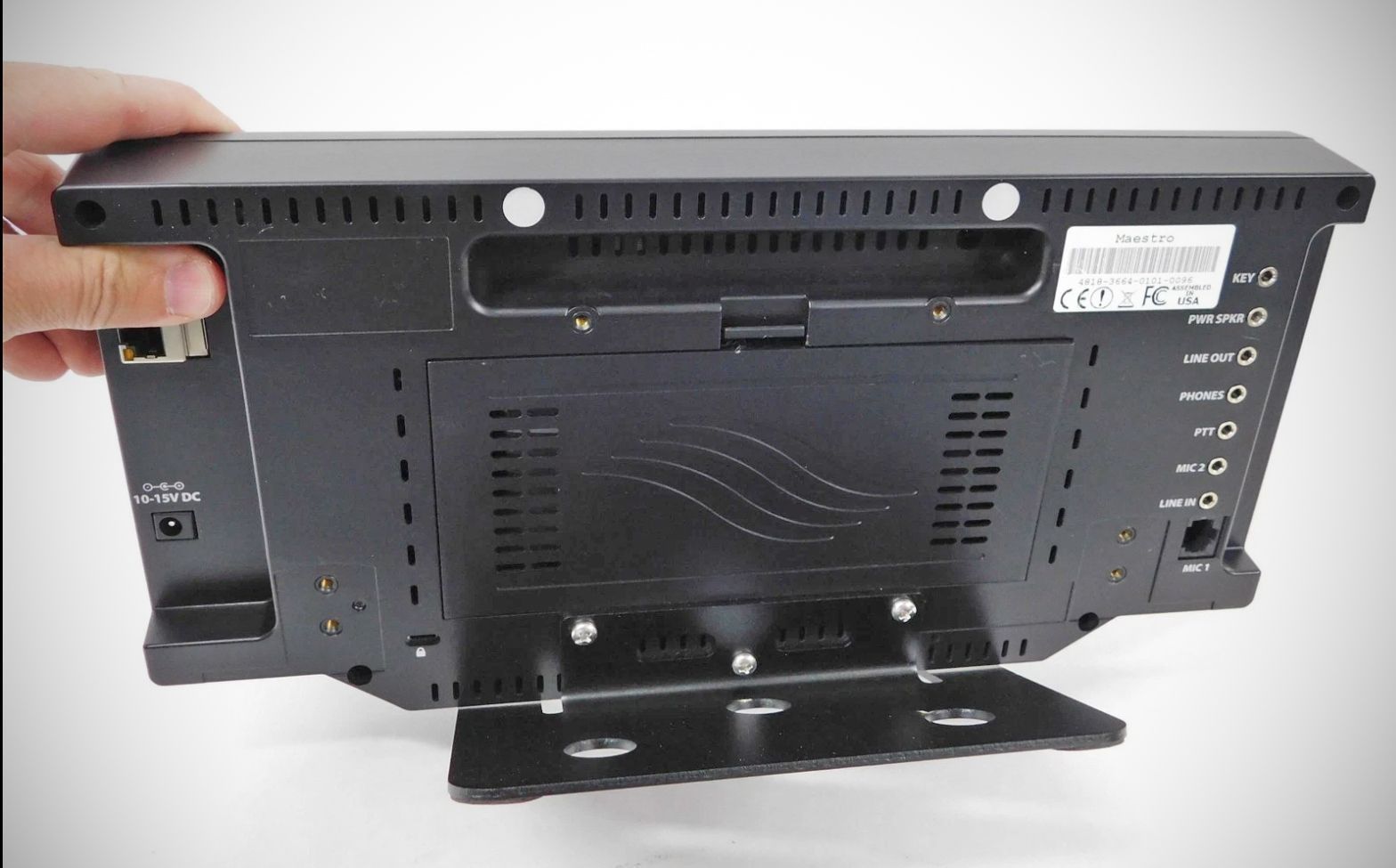
The connectivity options also vary significantly between versions. Models A and B share a similar rear panel layout that includes separate jacks for two different microphones (Mic 1 and Mic 2), a dedicated line-in socket, and a standard headphone jack. In contrast, the Maestro "C" features a more integrated approach, utilizing an "HDST" combo jack for both microphone and headphone connections. Model C also adds an external monitor port, allowing users to view the display on a larger screen, a feature not found on the earlier A and B versions.
Power and Battery Systems
Power management is perhaps the most significant difference across the models:
– Maestro "C": This model operates on 24 VDC and uses a high-performance 4-pin DIN power connector. For portable use, it is compatible specifically with the RRC2054-2 Smart Battery Pack. This battery can be charged directly inside the Maestro while the unit is connected to external power.
– Maestro "A" and "B":** These versions operate on 10–15 VDC via a standard 2.1mm coaxial plug. Instead of a specialized smart battery, they are designed to be powered portably by common 5V USB Power Banks that fit within the rear battery compartment. These power banks must be capable of providing at least 2.1A to ensure the unit stays powered and can charge its internal display battery.
Features
– Integrated Display: Features an 8-inch multi-touch sensitive, full-color, high-resolution display for controlling the radio and viewing spectral data.
– Dual Slice Control* Includes dedicated physical controls for two independent Slice Receivers (A and B), including multi-function knobs for audio level, AGC Threshold, squelch, and filter width/position.
– Flexible Connectivity: Supports both wired Ethernet (via RJ-45 port) and wireless WiFi connections to the FLEX-6000 transceiver.
– SmartLink Remote Access: Enables remote operation of the radio over the internet, showing available radios with a dedicated SmartLink logo in the interface.
– Multi-Client Operation (multiFlex): Allows the Maestro to operate alongside other clients (like SmartSDR for Windows or iOS), with each client controlling its own set of slices.
– Built-in front panel speaker and support for external powered speakers or headphones.
– Binaural audio support for a virtual 3D spatial listening experience when using headphones.
– Built-in Winkeyer 3 module for CW operation with local sidetone generation.
– Dynamic Filtering:** Employs a variable number of filter taps based on the operating mode and filter width to balance latency and filtering performance.
– Programmable Controls: Six programmable function buttons (F1–F6) for user-defined operations.
Specifications
– Display: 8-inch multi-touch high-resolution color display.
– Power Input (Models A & B): 10–15 VDC via 2.1mm coaxial power plug; – – – Power Input (Model C): 24 VDC external power connection.
– Battery Support: Supports internal battery packs or external USB power banks (model dependent).
– Network: 10/100/1000 Mbps Ethernet (RJ-45) and built-in WiFi.
– Audio Codec: Opus compressed audio for network streaming.
– Physical Controls: 2 large tuning knobs, 4 multi-function small knobs, and various dedicated buttons (MOX, TUNE, ATU, etc.).
Model Variations: Three versions (A, B, and C), primarily distinguished by power button location and rear panel layout.