Note
QST, Jul 1952, p. 127.
Radio News, Oct 1952, p. 141.
QST, Nov 1952, p. 93. ("preview")
QST, Dec 1952, p. 108.
QST, Sep 1953, p. 123. (this ad refers to 16 pounds)
Allied Radio catalog 1954 (copyright 1953), p. 49.
QST, Aug 1955, p. 135.
Sold concurrently with the Communicator II. After the introduction of the "II" (September 1953) the "I" was called the "standard" model.
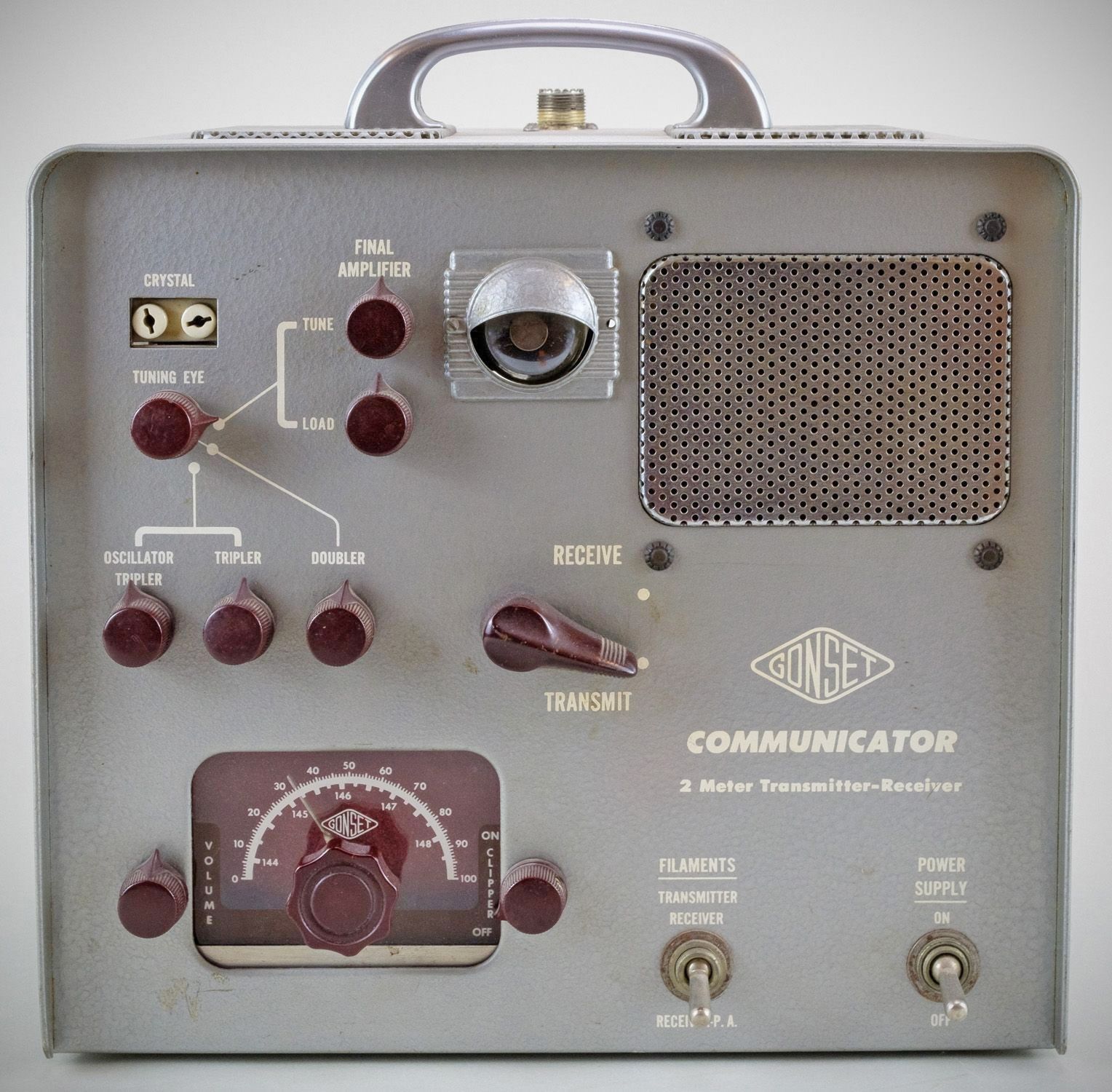
The original Gonset Communicator (often retroactively called the Communicator I) hit the amateur radio scene in late 1952. It was a revolutionary "all-in-one" station that helped move VHF operation from experimental basements into the mainstream.
Affectionately (or mockingly) nicknamed the "Gooney Bird" or "Gooney Box" due to its distinctive shape and top-mounted handle, it became a staple for 2-meter enthusiasts and Civil Defense units throughout the 1950s.
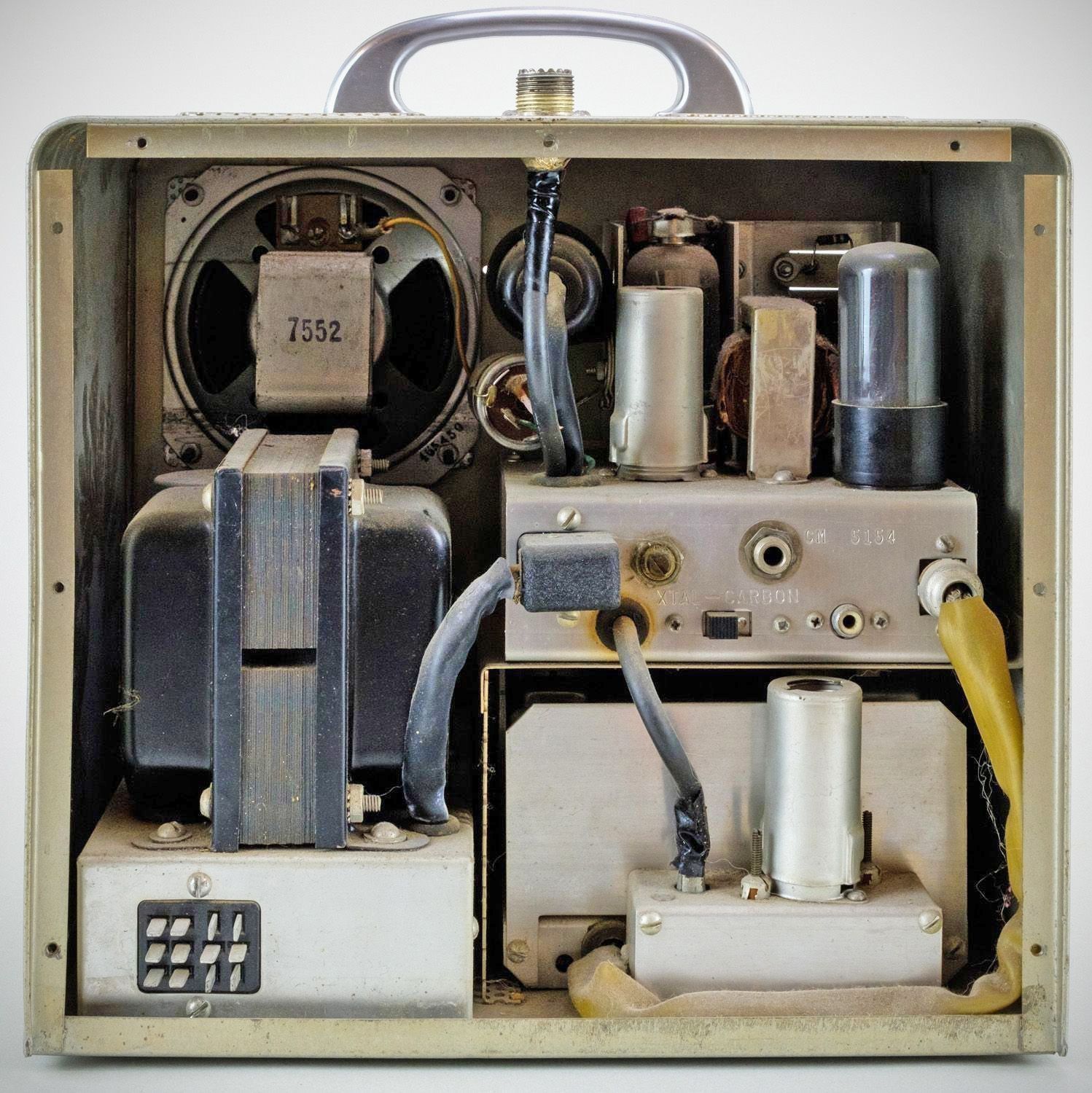
The Communicator I is a self-contained vacuum tube AM transceiver housed in a rugged, square metal cabinet. Designed by Faust Gonsett, it was one of the first commercially available rigs that didn’t require a separate bulky power supply or a rack of gear to get on the 144 MHz band. It features a prominent "Magic Eye" tube on the front panel for tuning—a glowing green visual indicator that made it look like the radio was watching you back.
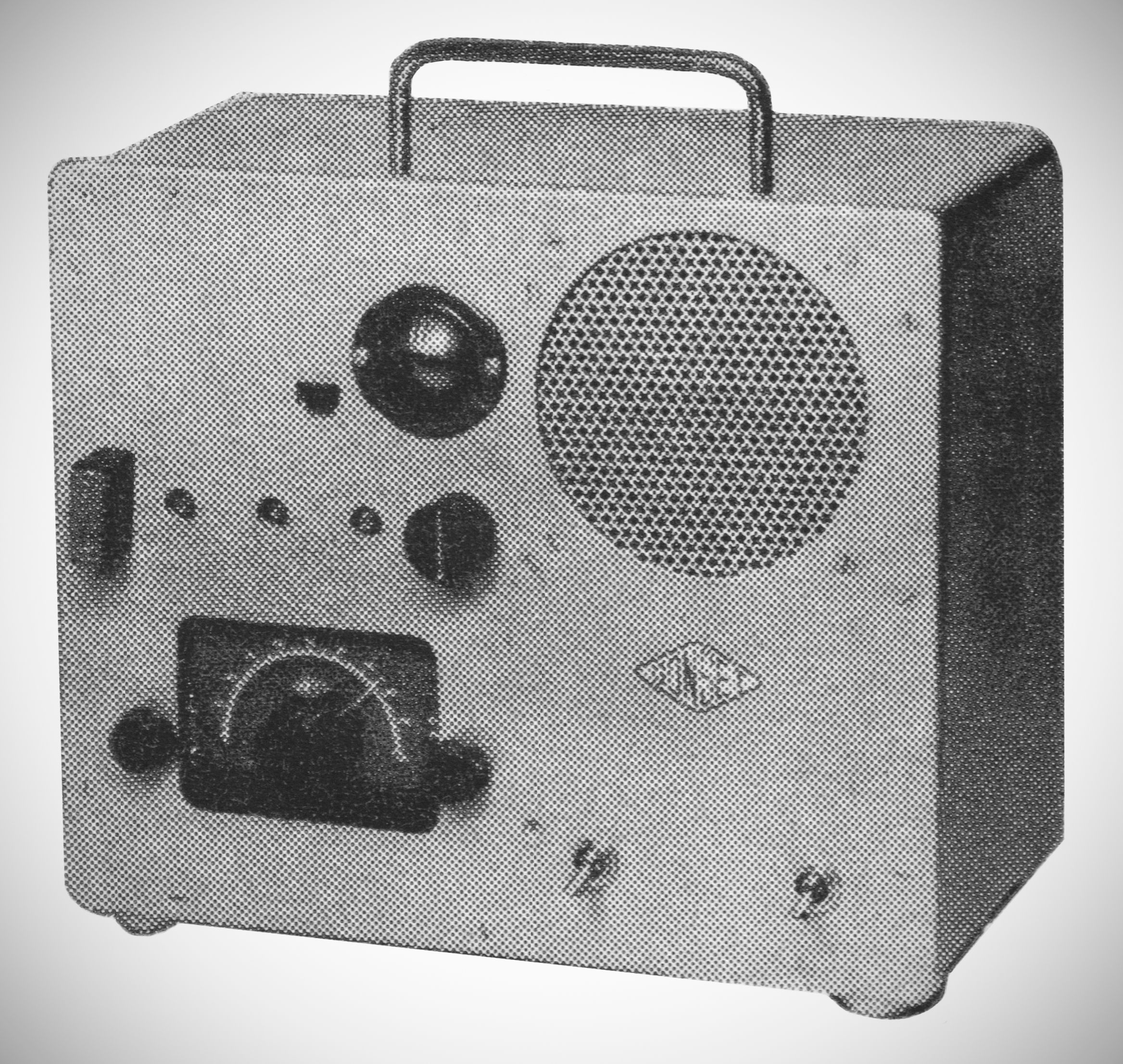
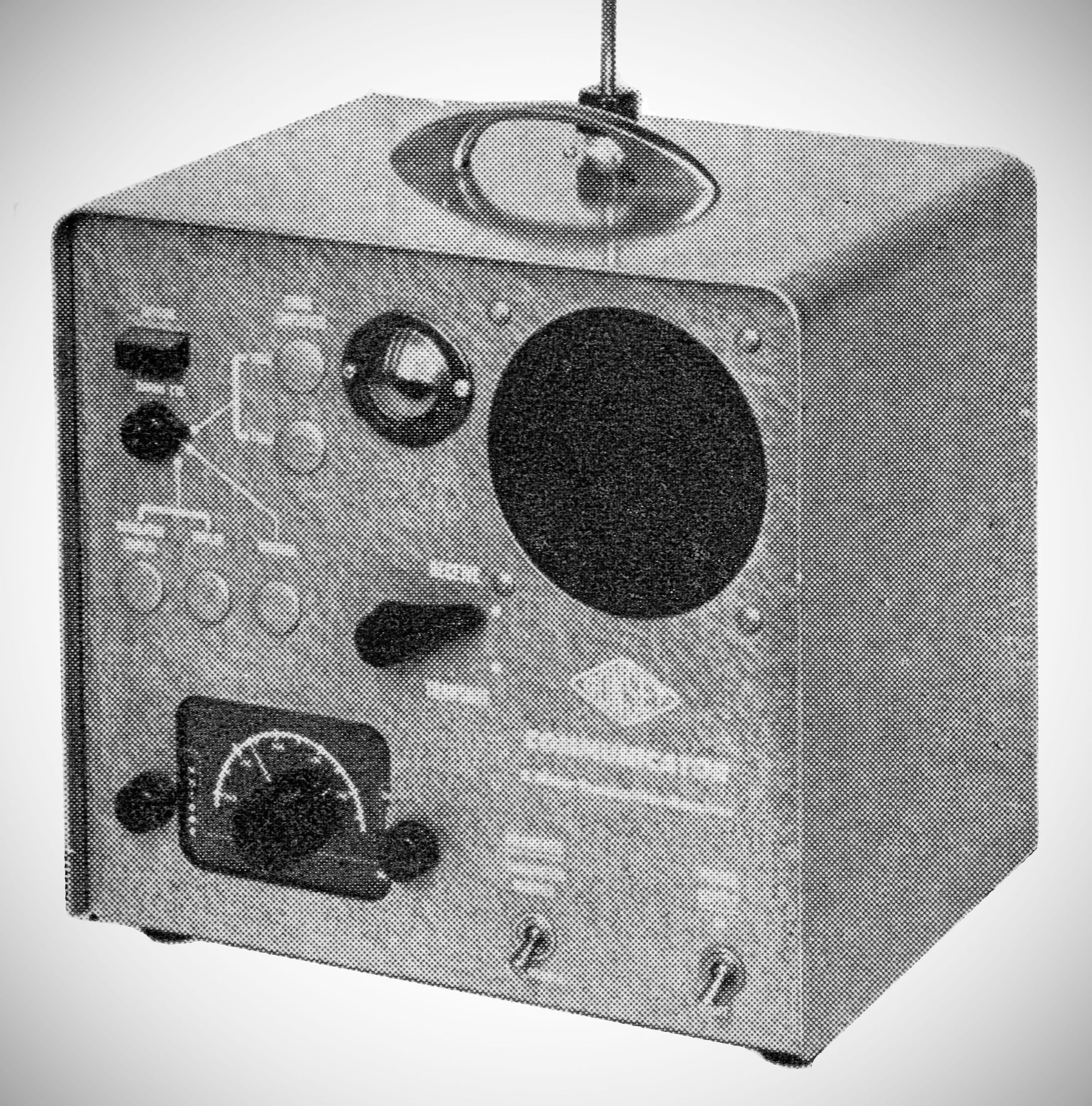
Originally shown with a round speaker, the more familiar rectangular speaker first appeared in September 1953, coincident with the release of the Communicator II.
As originally supplied, the Communicator was fitted with screwdriver adjustable tuning controls. A kit of knobs was offered much later.
As far as can be determined, the model 3026 was never available in a 12 volt version. It ran only on 110 VAC or 6 VDC.
Features
– Dual-Purpose Power Supply: A built-in "universal" power supply allowed it to run on 115V AC (for home use) or 6V DC (for mobile use in cars of that era) using interchangeable power cords.
– The "Magic Eye": Uses a 6E5 electron-ray tube as a tuning and signal strength indicator, which was both highly functional and iconic.
– Crystal-Controlled Transmitter: The original model featured a single front-panel crystal socket for FT-243 style crystals.
– Continuous Receiver Tuning: Unlike the transmitter, the receiver was a continuously tunable superheterodyne, allowing you to "hunt" for signals across the entire 2-meter band.
– Built-in Speaker: Included a front-facing speaker, though it could also be used as a Public Address (PA) system by flipping a switch.
– Screwdriver Tuning: The original "I" model required a screwdriver to peak the transmitter stages through small holes in the front panel (later models added knobs).
Technical Specifications
– Frequency Range: 144–148 MHz
– Mode: AM
– Power input: ~12 watts
– RF Power Output: ~5 to 7 watts
– Receiver Type: Double-conversion superheterodyne
– Power: 115V AC or 6V DC
Tubes (Partial List) 2E26 (Final Amp), 6E5 (Eye Tube), 6BQ7 (RF Amp), 6X4 (Rectifiers)