Note
QST, May 1961, p. 105.
Mark II intro date unknown
QST, Nov 1968, p. 5. (Mark III)
CQ, Sep 1969, p. 41.
73, Nov 1969, p. 138. (Mark IV new porduct announcement)
QST, Jan 1970, p. 5. (Mark IV)
QST, Apr 1973, p. 116.
Matches the GC-102 transceiver.
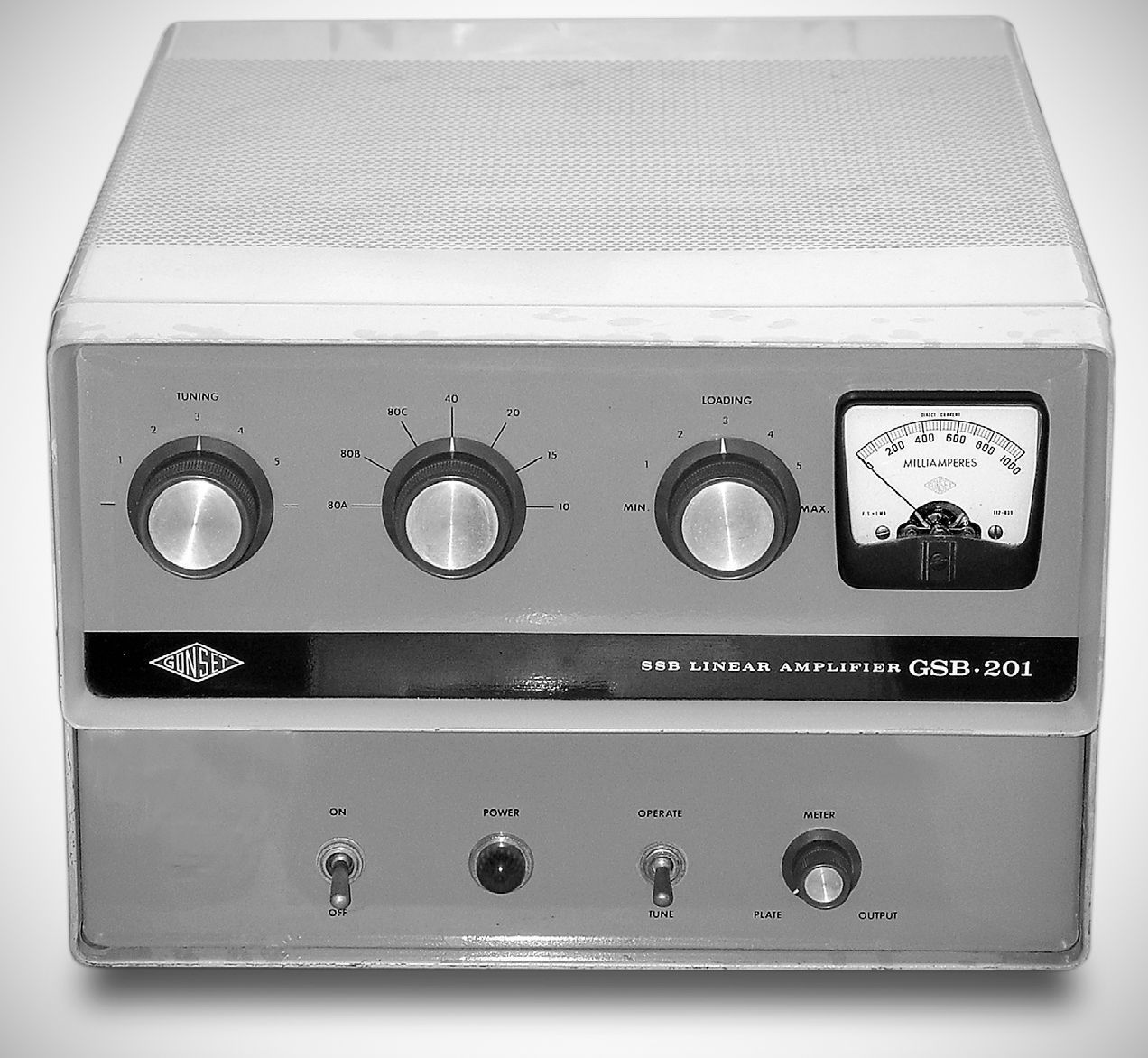
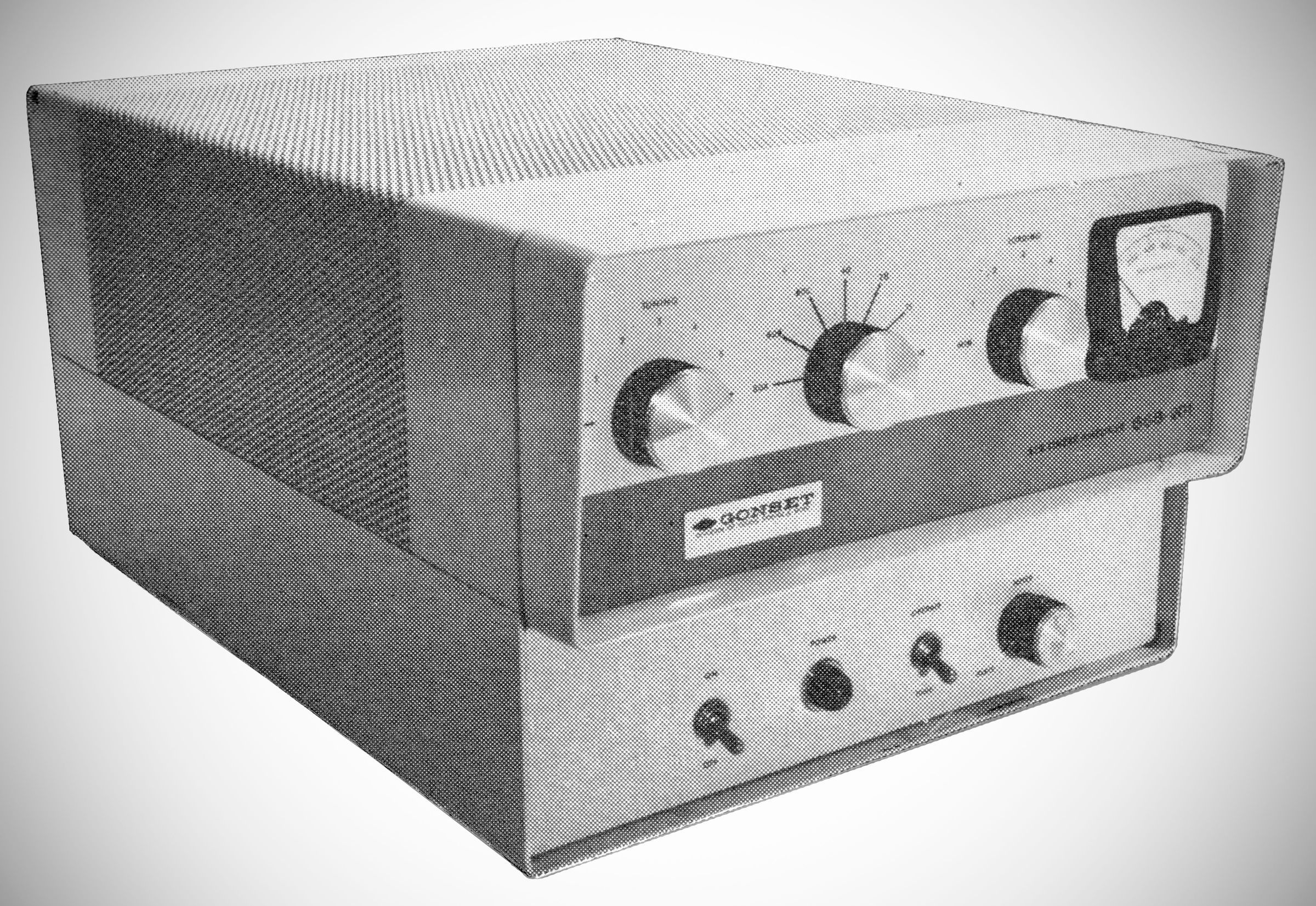
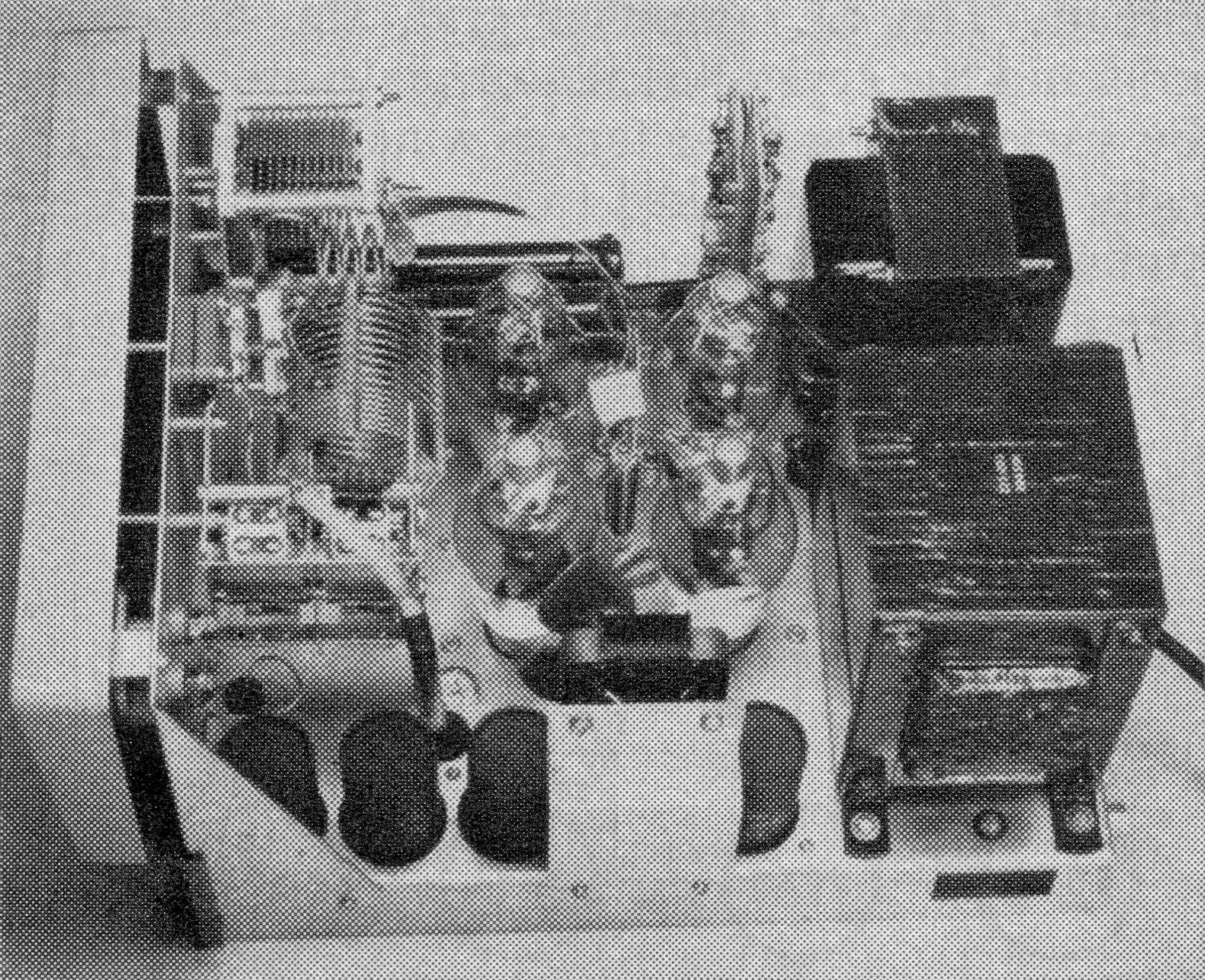
The Gonset GSB-201 series consists of amateur radio linear amplifiers designed to provide approximately 10 dB of power gain for SSB, AM, RTTY, and CW signals across the 80, 40, 20, 15, and 10-meter amateur bands. Operating on a stable, grounded-grid circuitry design, the series integrates both the amplifier and its high-voltage silicon-diode power supply in a single compact desktop cabinet.
Over its production lifetime—transitioning from Gonset's original ownership to Aerotron, Inc. in 1968—the series evolved through four primary iterations:
1. Original GSB-201 (Model 3340)
Tube Complement: Four 811A triode tubes.
Designed primarily for stations utilizing separate transmitter and receiver units rather than transceivers. It required an external -100V bias applied to standby terminals to cut the plate current to zero during receive.
Power Ratings: 1000W PEP SSB input (initially marketed at 2000W PEP, though Gonset later clarified that driving 811As this hard produced unacceptable intermodulation distortion).
2. GSB-201 Mk II (Model 3340A)
Tube Complement: Four 811A triode tubes.
Key Improvements: Introduced a built-in bias supply and built-in control circuitry to support seamless transceiver operation.
Standby/Transmit Bias: Features an internal blocking standby bias (reducing plate current to zero) and retains diode `CR-1` to apply a small standing bias during transmit to keep idling plate current within safe tube ratings.
3. GSB-201 Mk III (Model 3340B)
Tube Complement: Four 572B/T160L heavy-duty, carbon-plate triode tubes. These tubes feature a plate dissipation rating approximately 2.5 times higher than the 811A.
Power Ratings: Robustly rated for a conservative 2000W PEP SSB input, 1000W CW input, 1000W RTTY input, and 600W AM input.
Circuit Changes: Because the 572B is a true zero-bias triode, the transmit bias diode CR-1 is omitted/disconnected during transmit. Upgraded to 20-amp line fuses to handle heavier current draws.
4. GSB-201 Mk IV (Model 3340C)
Tube Complement: Four 572B carbon-plate triodes.
Power Supply Flexibility: Redesigned to support dual-voltage operation (110–120V or 220–240V AC lines) via simple jumper configurations on an internal terminal board.
On-Demand Cooling: The built-in cooling fan is rewired to only operate when the amplifier is actively keyed and transmitting, drastically reducing ambient standby noise and dust accumulation.
Front Panel Upgrades: Features a roughly calibrated plate tuning sector for pre-tuning setup. Includes a push-button high-voltage monitor, allowing the front-panel meter (now calibrated up to 1.5 amperes) to switch between measuring plate current and plate voltage (0–3000V).
References
Review: QST, Feb 1962, p. 51.
Brief description (Mk IV). Ham Radio, Feb 1970, p. 76.